One pineapple on the table, half the city watching
Picture yourself in an elegant home in 18th-century Britain. There are candles, glasses and conversation with that theatrical edge of a social gathering where everyone seems to be sizing everyone else up. Then, suddenly, there it is: a pineapple. Not sliced. Not in pieces. Whole. Imposing. Like a trophy.
At that moment, fruit stops being fruit. It becomes a message: “I have connections.” “I have money.” “I have seen the world.” And here is the astonishing part: accounts and popular histories say a pineapple could cost more than a horse. The situation was so absurd that something even more absurd followed: people rented pineapples to show them off at parties.
Why was a pineapple an almost obscene luxury?
Today you can buy a pineapple, and the most dramatic thing that happens is probably a prickly peel. In the 18th century, getting one in Britain was more like trying to serve fresh-cut mango in the middle of an expedition to the North Pole: not impossible, but it took logistics, risk and money burning at every step.
Pineapples from the Caribbean and other tropical regions had to travel by ship for weeks. That meant losses from bruises, rot and bad luck at sea. Once the fruit arrived, there was no modern cold chain or distribution system to make tropical produce an everyday item. Every pineapple that survived the journey was, in a sense, a survivor.
The result was a limited supply and demand fueled by the elite’s desire to stand apart. When something becomes rare and coveted, it stops working merely as an object and starts working as a symbol—like a luxury watch, a designer handbag or a car bought not just to get from A to B but to make the trip a statement.
The pineapple as a “social trophy”: not eaten, but displayed
The strangest thing is that a pineapple’s value had less to do with its flavor (which is delicious) than its role as a centerpiece. At banquets and gatherings, placing one on the table said: “I managed to get something most people have never even seen up close.” It was the culinary equivalent of hanging a painting in the living room that everyone recognizes—even if you cannot pronounce the artist’s last name.
As with so many status symbols, the logic twisted itself: if the pineapple was too valuable to eat, the most profitable thing to do was not eat it. You displayed it, talked about it and admired it. Then, if it was still in decent shape, it could circulate again.
Think of a fake display cake at a wedding, or the books someone strategically places in view during video calls. Except this “prop” was perishable, smelled tropical and wore a crown of spikes.
The rental market: “One pineapple for tonight, please”
The idea of renting pineapples sounds like a modern joke, but it appears in popular histories and is supported by a broader trade in display goods: rare fruits and other unusual products that could raise a host’s status for a few hours. In a world where reputation was built from visible signals, renting a pineapple was an investment in appearances.
The logic is so human it is almost endearing: you do not have to be truly rich; you only have to look rich long enough for someone important to notice. A rented pineapple was like wearing a sharp suit to a job interview: it does not change your life on its own, but it may get you into a conversation that used to be closed to you.
A whole pineapple could also last long enough to serve as a centerpiece more than once. If what mattered was the scene—the mental picture of a perfect table—renting one made sense. The pineapple was literally edible décor that often went uneaten.
Britain’s obsession with growing the ungrowable
And of course, if imports were expensive and risky, the next thought was inevitable: “What if we grow them here?” The problem was that a pineapple is not exactly a plant that takes kindly to the British climate. Growing one required engineering, patience and a lot of fuel.
Enter the stoves, greenhouses and “pineries”—special structures built by wealthy owners who wanted to prove they could domesticate the tropics in their gardens. This was not just horticulture; it was power turned into architecture. Keeping the heat stable, protecting the plants and getting them to fruit in a hostile environment took money and constant care.
It is a bit like having a heated swimming pool somewhere cold for nine months of the year. You do not need it; you can simply afford to keep paying for it. The luxury is not only the final object but the system that sustains it.
The pineapple as a cultural icon: hospitality, empire and “look at me”
The pineapple became a visual symbol that found its way into decoration: carved in stone, set on doorways, printed on dishes and worked into architecture. It was associated partly with hospitality—an exotic centerpiece offered to a guest—but also with something more uncomfortable: the reach of an imperial world that brought tropical goods to European tables.
In other words, the pineapple said more than “I am rich.” It said, “I have access to routes, goods and networks beyond most people’s reach.” In the 18th century, that was a clear social language.
Like any icon, it became recognizable even to people who could not afford one. The pineapple was a kind of logo for abundance, a seal that needed no explanation.
Dunmore Pineapple: when architecture gets fruity
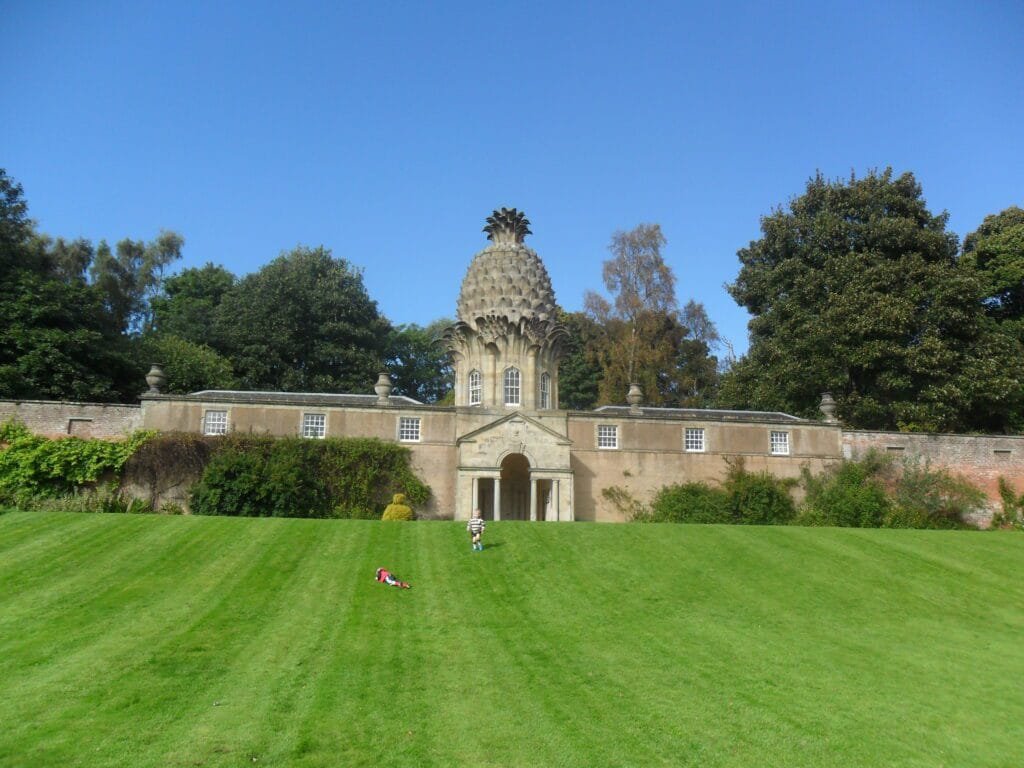
If you want proof of how far the pineapple became an aesthetic obsession, there is an example that sounds like it was invented by someone with too much time and a sharp sense of irony: Dunmore Pineapple in Scotland, a building literally crowned with a giant sculpted pineapple.
Beyond the visual joke, the building captures the spirit of the era: turning an exotic product into a permanent emblem. Imagine someone today building a house with a giant coffee pod on the roof to prove they live in the future. Ridiculous—and perfectly consistent with the logic of status.
Did it really cost more than a horse?
The comparison with the price of a horse appears often in popular accounts of 18th-century pineapples. It helps convey the scale of the luxury, but it should be treated for what it is: a way of describing an extreme in a market where prices changed with time, place, quality and availability.
What is well established is the context: in certain British circles, pineapples were extraordinarily expensive, and their social value could far exceed their value as food. In a world without cameras or social media, showing off happened in person. A pineapple on your table was a live post about your status.
How a fruit came to look like a jewel
The most fascinating thing about this story is that it is not really just about pineapples. It is about us—and how an everyday object can become a badge when it is rare, hard to obtain or simply declared important by the right crowd.
An 18th-century pineapple worked much like limited-edition sneakers, a particular bottle of wine or a reservation at that impossible restaurant today. Its value was not only in the experience, but in what the experience communicated. It was a kind of social password.
It is also a lesson in impermanence. No matter how expensive, a pineapple ripens. It softens. It spoils. Unless a symbol is turned into stone or an ornament, it rots. An uncomfortable reminder: even the most outrageous luxuries come with an expiration date.
From trophy to supermarket fruit: the spell breaks
Over time, better trade routes, growing techniques and distribution made pineapples less rare. The fruit stopped being a mythical creature and became accessible. When something becomes common, it loses some power as a status signal. It can no longer say “look what I have” if anyone can have one.
The cultural echo remained, though. We still see pineapples in décor, patterns and objects meant to suggest something tropical and welcoming. Perhaps we still carry the idea that a pineapple on the table means this is a home where life is good.
The delicious paradox is that a fruit once rented to look rich became so common that we barely notice it. How many things that feel “normal” today were, not so long ago, the social equivalent of putting a whole pineapple in the middle of the table?