
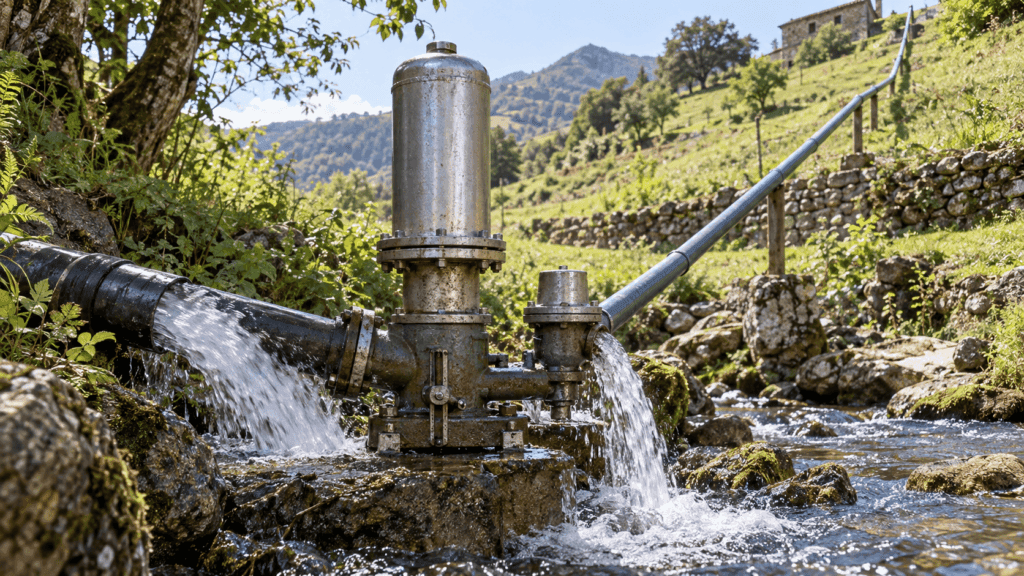
The sound of a hydraulic ram pump is dry and repetitive: a valve closes, pressure rises and a small part of the water climbs through a pipe. There is no motor, fuel or electricity, but there is an elevation drop, continuous flow and a pipe able to withstand pressure transients. The machine transforms the fall of part of the water into the rise of another part.
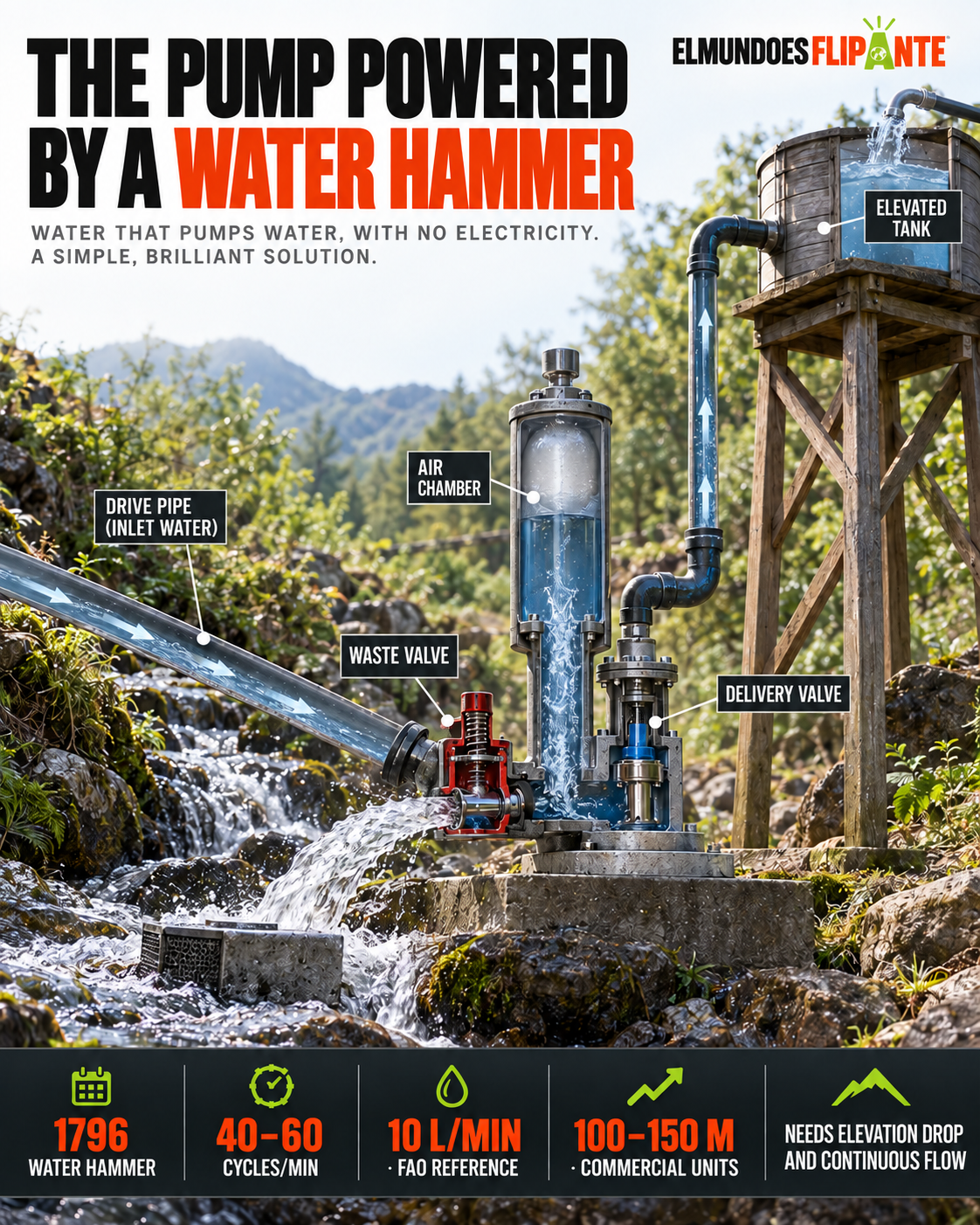
The cycle that repeats
Water runs down the drive pipe and exits through the waste valve. As it gains speed, it pushes that valve closed. The water column transmits pressure: water hammer appears. That pressure spike opens the delivery valve and pushes water toward an air chamber.
The compressed air works like a spring and sends a fraction of the flow to an elevated tank. When pressures equalize, the valves return to position and the cycle begins again dozens of times per minute.
Energy has a physical cost
The pump needs falling water. FAO uses roughly 10 liters per minute and one meter of head as a reference, although an actual installation depends on diameter, length, elevation drop, losses and target height. Some units advertise lifts of 100–150 meters in suitable conditions.
This video shows the hydraulic ram cycle and the pressure pulse that makes it possible:
An idea from 1796
The Montgolfier brothers developed the concept in France. Its strength remains practical: few moving parts, simple maintenance and continuous operation when the stream keeps flowing. Simplicity does not eliminate engineering; it concentrates it.
Six ideas to remember
- The cycle begins with the sudden closure of a valve.
- The air chamber cushions the pulse.
- The pump needs an elevation drop and continuous flow.
- Only a fraction of the water is lifted.
- FAO uses 10 L/min and 1 m as a reference.
- The concept dates to 1796.
Sources consulted
These are the sources and links consulted for this article: