The morning a beach found a man with no name—and a code in his pocket
He is leaning against a low wall, like someone waiting for a person who is late. Legs stretched out, feet crossed, cigarette half-smoked. If you walked past without looking twice, you might think he was a man worn out by the heat. But he does not move. And when someone comes closer, they discover what makes this one of the twentieth century’s most unsettling scenes: the man is dead, well dressed, without identification—and carrying a coded message in his pocket.
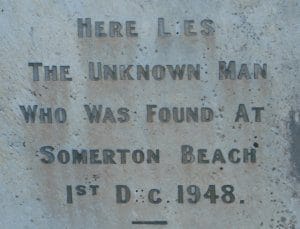
That is how the Somerton Man case began. He was found on December 1, 1948, on Somerton Beach, near Adelaide, Australia. For decades he was “the man with no identity,” a body that seemed to have washed in from a place missing from every map. The strangest part was not just that he had no name; it was as if he had no past.
For context on the best-known details, read about the Somerton Man case and the “Tamám Shud” mystery.
This video helps show why the story remains so unsettling—and why the mystery did not disappear even after a name emerged.
A body too “neat” to feel accidental
The first oddity was not the code. It was the whole picture. The man wore formal clothes: jacket, shirt and tie. Not the usual outfit for lying down on a beach. And yet everything about him seemed carefully arranged to look normal—like someone tidying the living room before guests arrive. Only this time the guests were the police, and the host could not explain anything.
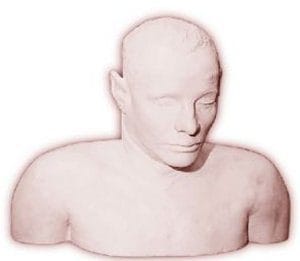
There was no ID in his pockets. No letters, wallet with cards or anything tying him to a specific address. More unsettling still, the labels had been removed from his clothes. That does not prove anything by itself—some people cut labels out for comfort—but taken together it feels deliberate, like someone patiently removing the price tag from a gift to erase the trail.
The investigation hit a wall: no name, no clear origin, no reliable witnesses to his final hours. And yet the case refused to fade. Sometimes a mystery comes not from what is missing, but from what is there: details that feel too strange to be coincidence.
The scrap of paper: “Tamám Shud” and the book that should not have been there
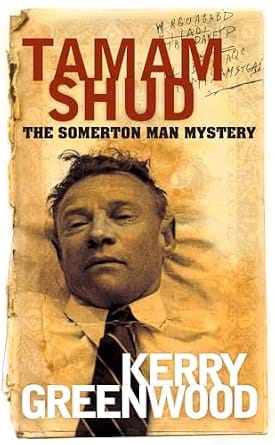
At some point, investigators found the sort of clue that seems designed to keep a mystery alive. In the man’s clothing was a small scrap of paper with two words: “Tamám Shud.” The phrase is Persian and is usually translated as “finished” or “ended.” It was not a long note or a dramatic confession. It was like slamming a book shut.
The unnerving part: the scrap appeared to have been torn from a specific book, the Rubaiyat, a collection of poems attributed to Omar Khayyam. Police located a copy connected to the case, and the mystery gained another layer: the book contained a sequence of apparently meaningless handwritten letters, possibly a code or cipher.
A code in a book of poetry is an odd combination. It is like finding bomb instructions on the back of a grocery list. It does not fit—and that is precisely why it sticks in your mind.
A real cipher, or doodles with terrible luck?
The supposed Rubaiyat code became the heart of the legend. Investigators and amateur codebreakers studied the letters, compared patterns and tried to see whether they were initials, a substitution system or a fragment of a message. For years, the case lived on the border where puzzle-lovers feel at home: the possibility that everything might click if you found the right turn.
But it is worth being honest: something that looks like a cipher is not necessarily one. It could be a personal note-taking system, initials standing for phrases or a quick attempt to remember something. We make accidental “codes” in everyday life: abbreviations in a notebook, mnemonic passwords and stray letters only we understand. If someone found your “B-M-C-H” list, they might imagine a conspiracy; you might simply have been writing down bread, milk, cheese and ham.
The Somerton Man’s letters have been debated for decades, and there is no definitive consensus about what they mean. The message remains a mystery partly because nobody has conclusively shown what it says—or whether it says anything at all.
The death: an ending without a clear explanation
The unavoidable question is how he died. Here the case becomes frustrating: there is no settled answer. People have speculated about poisoning, a natural death that was difficult to detect, or espionage-related theories given the postwar setting and the aura of an erased identity. But speculation is not evidence.
What is clear is that the combination—no identification, removed labels, “Tamám Shud,” the book and the code—fed the idea that this was no ordinary death. It was as if the case had been designed to resist being filed away.
It is a peculiar kind of immortality: not the immortality of a famous name, but of a great blank space. The Somerton Man became an empty canvas onto which generations projected their own stories.
The identity: from “unknown man” to Carl Webb
For more than seventy years, the Somerton Man was officially unidentified. In an era when it feels as if everything leaves a trace, that has an almost poetic quality—as if someone had slipped out of the world through a crack. But the modern world is persistent; it finds traces in places that did not exist before.
In 2022, research using DNA and genetic genealogy led investigators to identify the Somerton Man as Carl Webb. The identification, reported by general-interest and popular-history sources, closed one of the biggest doors in the mystery: he was no longer “nobody.” He was a specific person with a name and a place in a family tree.
And yet the case was not fully solved. Knowing who he was does not tell us what happened to him. Identifying him was like giving a title to a silent movie: it helps orient you, but it does not supply the missing dialogue.
The fascinating part: a name does not switch off the mystery
It might seem that once he was identified, the case would deflate—like finally learning a magic trick and thinking, “Oh, that’s all it was.” But something curious happened: identifying Carl Webb did not erase the mystery; it reorganized it.
The central question is no longer just “Who was he?” It is “Why was he found like that?” How did he get to that beach? What did the scrap reading “Tamám Shud” mean? What role did the Rubaiyat and its letters play? Was it deliberate, an improbable coincidence or a chain of small choices that looks like a script from the outside?
It is like finding the owner of an old key but still not knowing which door it opened. We hate keys without locks because they force us to accept that the world does not always come with instructions.
Somerton: a place “without an explanation” because of the details
Somerton Beach is not a cursed triangle or a magnetic spot that throws compasses off. Its strangeness lies not in the landscape but in what happened there and how it is remembered. It became a place “without an explanation” through accumulation: each detail might have a simple explanation on its own, but together they form an odd constellation.
A well-dressed man dies on the sand. He has no ID. His labels have been removed. He carries a message meaning “finished.” The message came from a book. The book contains letters that look like a cipher. And for decades, no one knows who he is. Told that way, it sounds like a novel. Seen as an investigator, it sounds like a file that never quite lets you go home.
Maybe that is why it still fascinates us: mystery does not always need monsters. Sometimes all it needs is a pocket and a scrap of paper.
One final thought: how much identity can fit in one detail?
For decades, the Somerton Man was a paradox: a real body turned into an abstract symbol. When we finally learned he was Carl Webb, he regained something essential—the connection to a world of names. But the message “Tamám Shud” remains, like a final sentence with no preceding chapter.
It leaves an uncomfortable, deeply human question: if you disappeared from everyday life one day and all that remained was an object—a note, a password, a phrase torn from a book—would it say something true about you, or would it be only the accidental echo of your last day?