
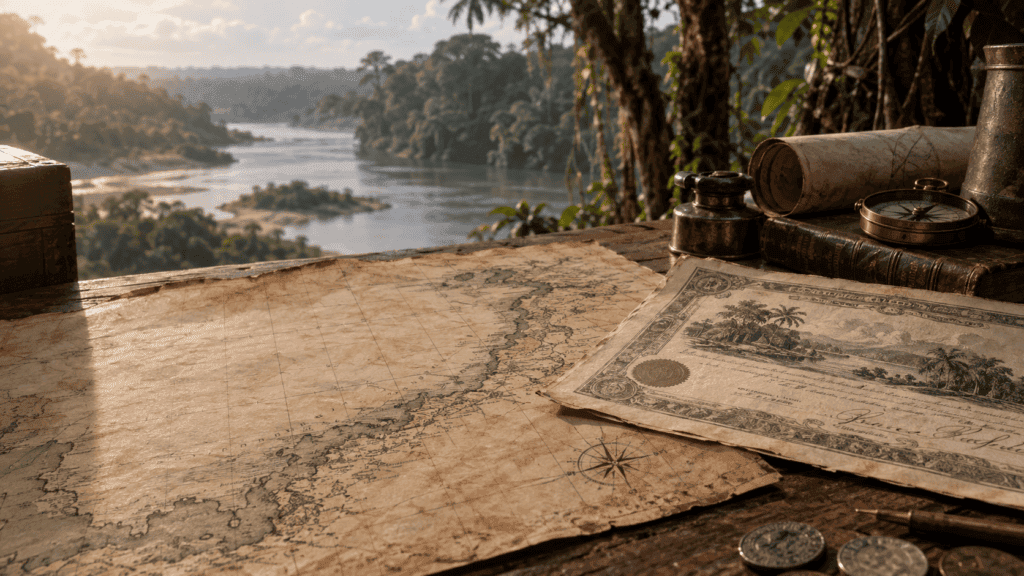
The package looked impeccable: a map, a prospectus, bonds, fertile land and a capital that sounded like the future. The problem was that the country did not exist as a recognizable state. Gregor MacGregor was not merely selling plots in a Central American jungle; he was selling the feeling that the world’s entire bureaucracy had already signed off on it.
In the early 1820s, the Scottish soldier claimed to be the “Cacique” of Poyais, a territory on the coast of what is now the Mosquito Coast. His prospectus described an orderly capital, productive land and mineral wealth. The fiction worked because it rested on real geography: there was a coast, rivers and maps of a poorly known region. The document did not invent a planet; it filled a blurry corner with imaginary institutions.
How authority gets manufactured
MacGregor dressed the story in uniform, titles and diplomatic language. In London, investors had no easy way to verify the territory. Communications were slow, and documents traveled faster than any fact-finding expedition. The historical role of maps helps explain the mechanism: a map does not only orient; it can also give the appearance of ownership and control.
The bonds turned fantasy into a financial product. The buyer did not feel they were handing money to an adventurer, but acquiring a stake in a nation about to prosper. The Bank of England Museum gives context for why a sheet of paper with seals, signatures and a promise of returns could feel more solid than a conversation in a tavern.
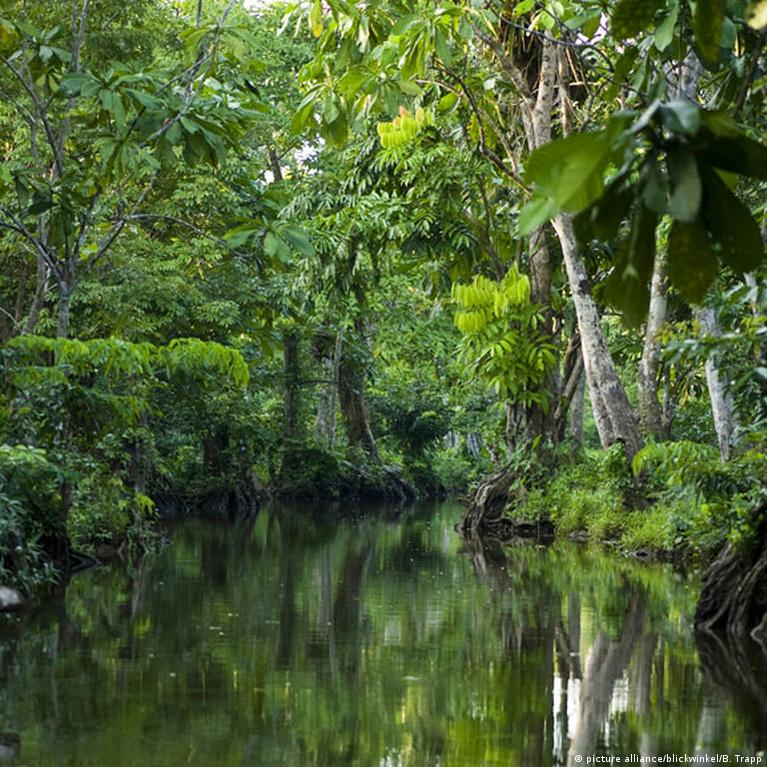
The expedition that reached Black River found the reverse side of the brochure: jungle, disease, hunger and no city ready to receive settlers. The real landscape was not “fake”; what was false was the leap from that landscape to the paved capital promised by the documents. Many settlers were evacuated and others died. Exact numbers vary by source, so they should be presented cautiously rather than as a gruesome scorecard.

The real map was the lie’s most effective ingredient
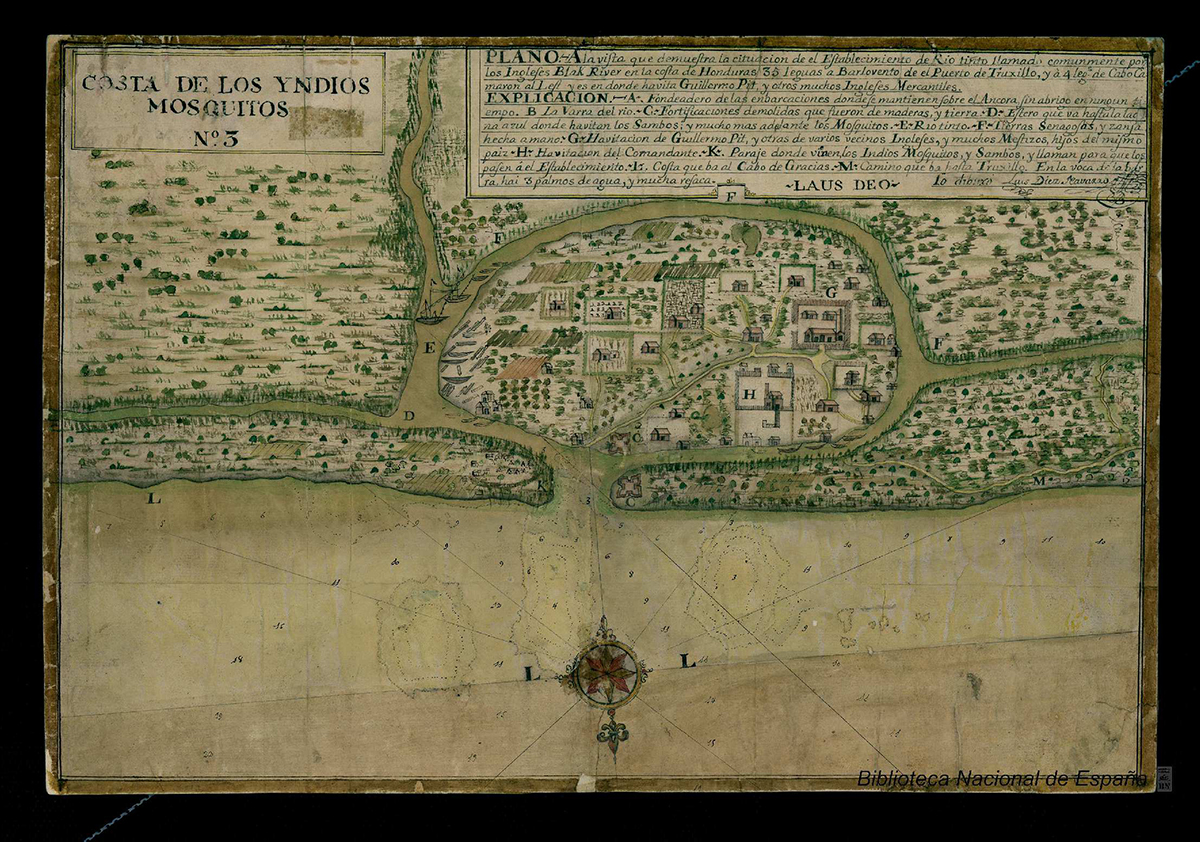
Poyais did not need to invent every tree, river or stretch of coastline. It only needed to take a real region and place an imaginary state on top of it. Historical cartography of the Mosquito Coast helps separate those layers: routes, settlements and territorial disputes existed, but there was no European-style capital waiting for settlers. The trick was that readers saw plausible names and assumed the rest of the document had passed through the same reality filter.
The prospectus worked as an interface. On its pages, a hard-to-visit coast became an administrable destination; jungle became agricultural land; and a promise of mineral wealth took on the appearance of a calculated opportunity. The language did some of the work a website would do today: it organized information, displayed supposed guarantees and hid the gaps where a prudent person would have asked who had verified each claim.
The bonds added a second screen of legitimacy. A financial instrument has a reassuring appearance because it imitates the grammar of familiar institutions: face value, coupons, signatures, dates and conditions. The buyer did not acquire only a promise; they acquired an object they could show someone else as proof that the promise had the shape of a contract. That is the modern part of the case: the fraud did not depend on everyone being gullible, but on every participant being able to pass doubt along to the next link in the chain.
The settlers’ expedition broke that chain at once. The real coast did not match the administrative fantasy, and basic logistics — food, shelter, transport and medical care — became a tougher test than any paragraph in the prospectus. A capital does not appear because a map draws it. It needs roads, safe water, stores, authorities and people able to keep it standing when the first rainy season arrives.
It is also worth not turning every victim into a caricature. Some people invested because they wanted land and work, not because they dreamed of becoming rich overnight. MacGregor mixed the promise of prosperity with the language of colonization, adventure and military honor. That combination could be especially persuasive at a time when borders and concessions changed quickly and information took weeks to travel.
His flight to France shows that Poyais was not a single con, but an identity trying to survive its own failure. MacGregor used titles, contacts and documents again to rebuild authority. The Oxford Dictionary of National Biography traces that path without reducing it to the anecdote of an invented country: there were wars, exile, debts and a remarkable ability to present himself again as the right person for an extraordinary opportunity.
The moral is not “distrust maps.” It is more uncomfortable: a document can be genuine and still tell a false story. The map of the coast was real; the bond could physically exist; the signature could be stamped. What did not exist was the relationship between all those elements. MacGregor sold that relationship, and for a while he made it look more solid than the ground waiting for settlers.
That is why Poyais deserves to be told as more than a curiosity about an imaginary country. It is a story about how trust is manufactured when nobody can check the ground, how paper can travel faster than a person and how real geography can lend credibility to an institution that does not exist. The country vanished from the map; the mechanism of the con remains recognizable.
The final question is not whether we would have fallen for it. It is which check we would have postponed because the document already looked serious. Poyais is a reminder that credibility does not always arrive through the door of facts; sometimes it arrives through typography, a uniform, a signature and the exhaustion of the person who ought to verify everything.
To see the story in motion, this video helps complete the explanation:
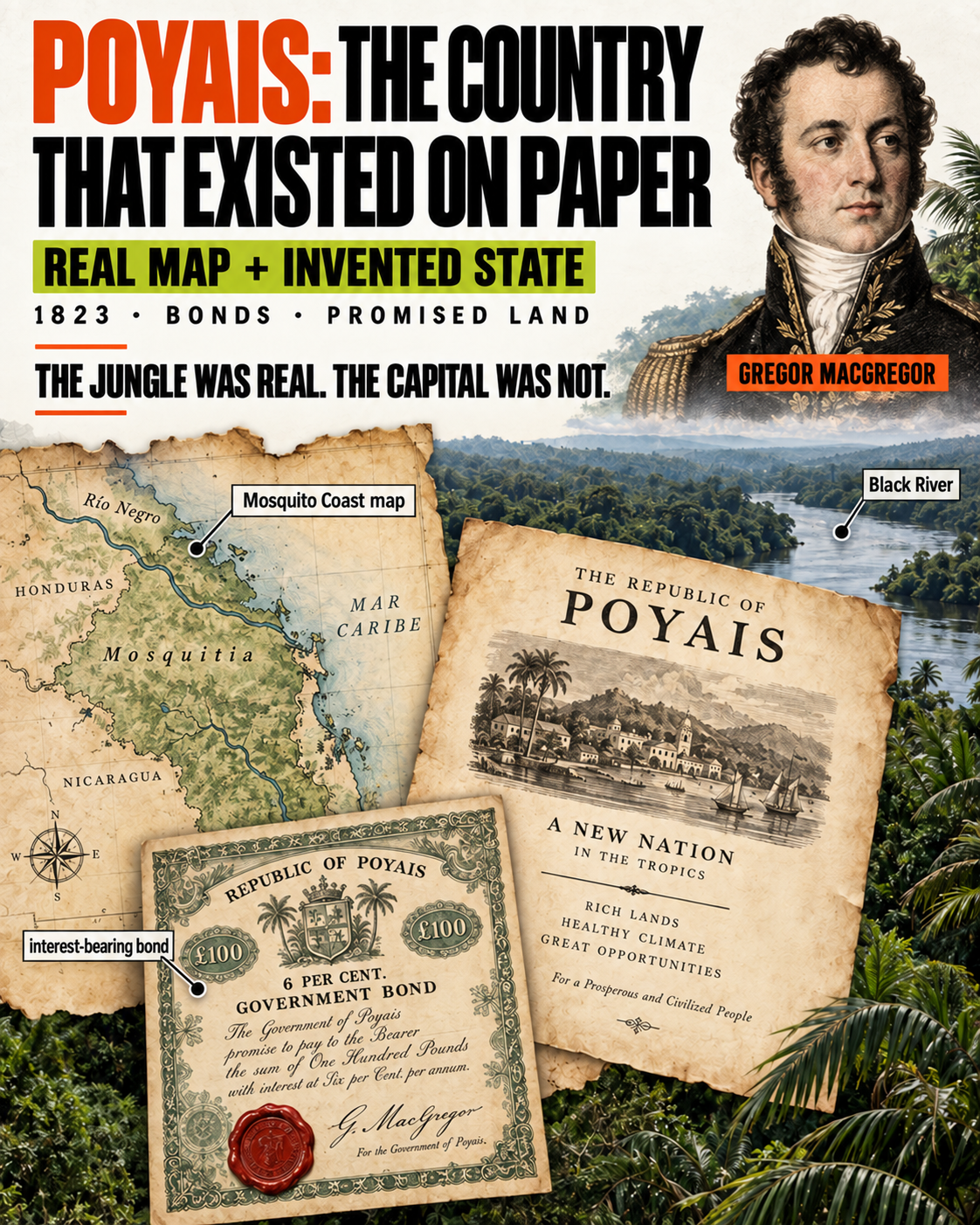
In that sense, the fraud was also a work of editorial design. MacGregor did not only invent a territory: he designed the reading experience his audience was meant to have. First fascination, then trust, then investment. The map was the cover; the bonds were the buy button.
MacGregor fled to France and tried to repeat the operation. The Oxford Dictionary of National Biography places the case in a career of titles, wars and reinventions. Poyais was not a simple improvised lie; it was a layered system. First, an extraordinary identity; then, geography that was hard to verify; then, papers imitating the seriousness of a state; finally, urgency to invest.
The lesson sounds modern because it is. The uniform, seal and map change; the information asymmetry remains. A promise is more dangerous when it comes with enough scenery that nobody wants to be the person asking the uncomfortable question: “Has anyone actually been there?”
Sources consulted for this article
- History: The country that never existed — Timeline of the Poyais fraud and its financial deception.
- Bank of England Museum: Historical bonds — Collection and context for bonds used to sell Poyais.
- Oxford Dictionary of National Biography: Gregor MacGregor — Documented biography of the promoter of the fictional colony.
- British Library: Maps and colonial imaginaries — Cartographic material for understanding how the geographic illusion was built.
- Library of Congress: Map collection — Regional cartographic comparison and historic Mosquito Coast sources.