
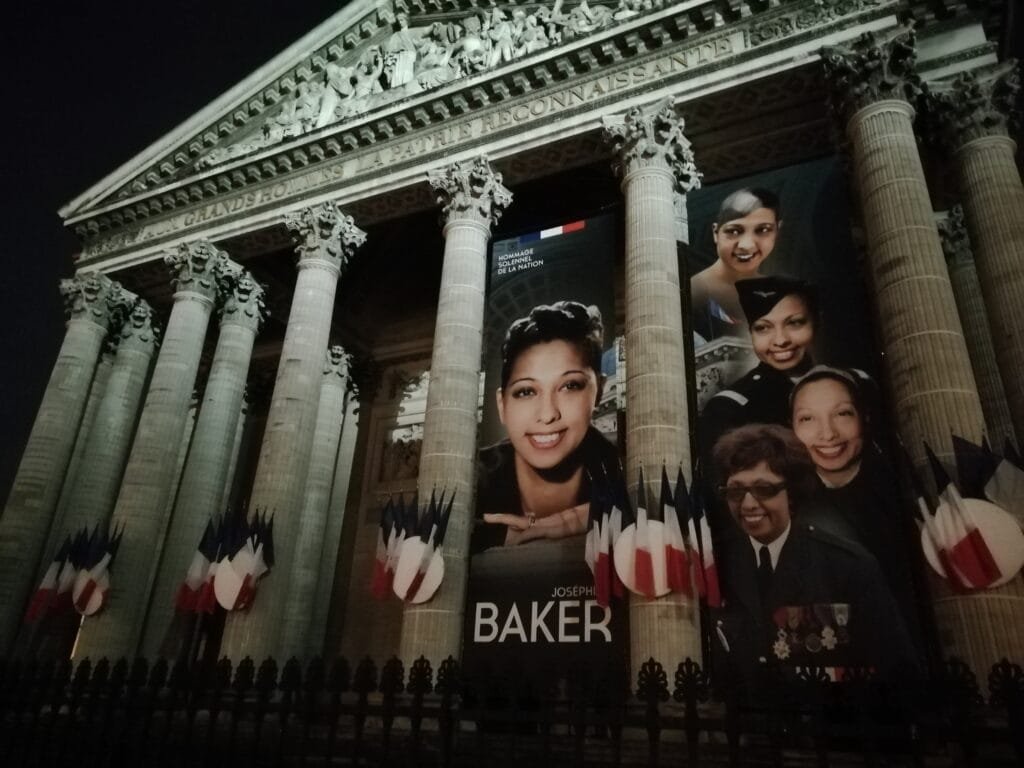
In the dressing room, between feathers and sequins, there was a war, too
The music rises, the audience applauds, and the air holds that blend of cheap perfume and smoke that seems eternal. She walks onstage with a steady smile. But while the lights frame her like a postcard silhouette, Josephine Baker is doing more than singing and dancing: she is moving information. Not in a suitcase’s false bottom or a safe. In her case, the hiding place could be as spectacularly simple as her own costume—even her underwear.
The idea has the shape of a perfect joke: a cabaret star, a symbol of spectacle and excess, turned into a clandestine courier. As if someone told you the neighborhood pizza delivery driver was also a cryptographer. But it happened: Baker, one of the twentieth century’s most famous performers, worked with the Resistance and Allied intelligence services. She used the very thing that made many people consider her untouchable: her fame.
If you want a visual summary of her life and why her story remains so powerful, this video offers some context.
Josephine Baker: celebrity, foreigner and, to many, “unlikely” spy
Josephine Baker was already a phenomenon before Europe caught fire. Her public life made headlines: an African American performer who found success in France, played with provocation and glamour, and built a persona so large it almost seemed like a mask. During wartime, that mask could be useful.
Celebrity does two things at once: people watch you closely, and they question you less. It is a familiar paradox. A star gets doors opened, travel made easier and access to places where others would raise suspicion. If you are also an artist performing at receptions, embassies and diplomatic events, the conversations you overhear are not the ones at the corner bar.
According to popular-history sources such as History.com and the National WWII Museum, Baker was recruited in 1939 to work with French intelligence. That detail matters: this was not vague sympathy or “helping when she could,” but early involvement in an organized effort.
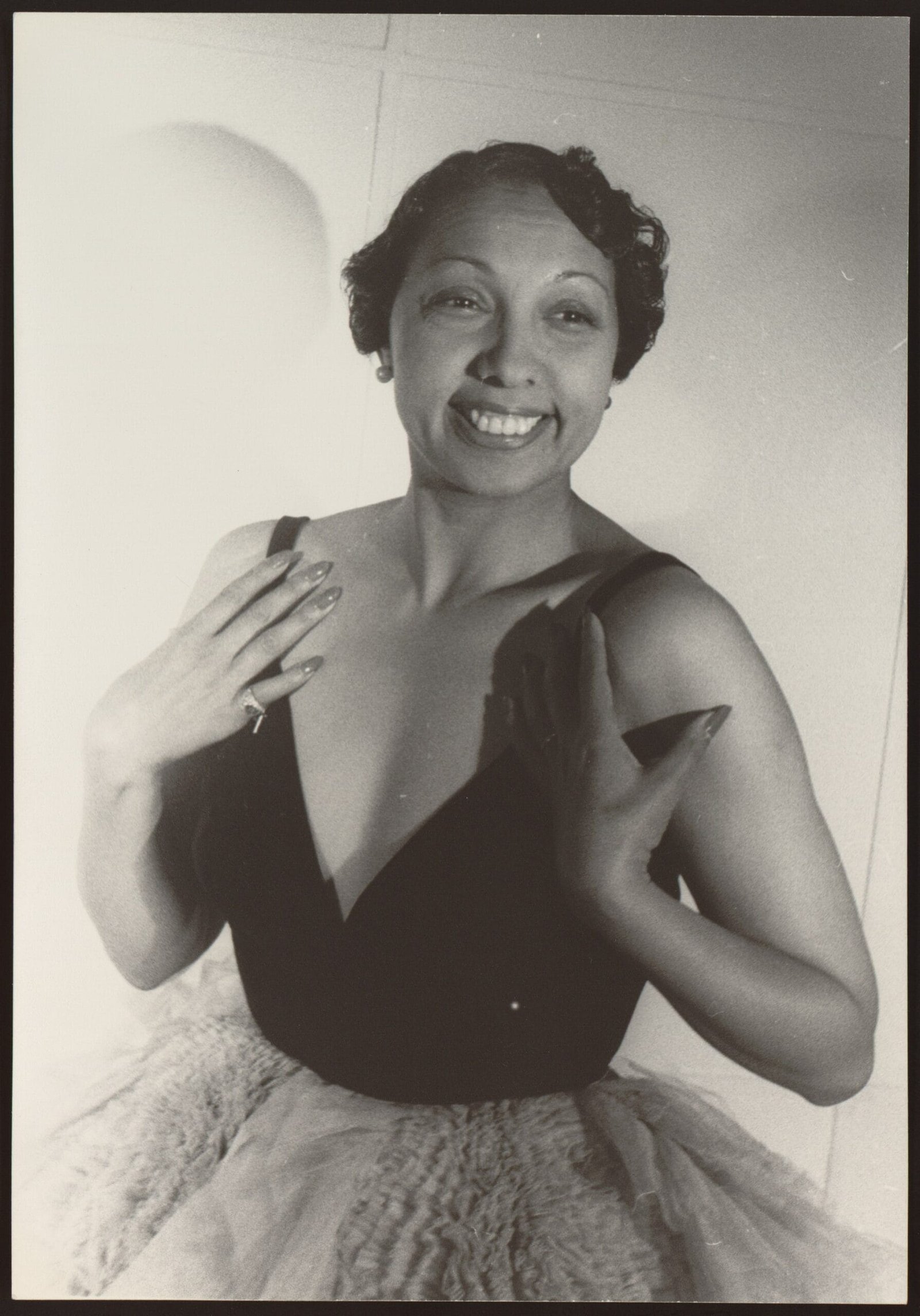
How to hide a secret in plain sight
Real espionage is usually less “movie-like” than we imagine. There are not always rooftop chases; sometimes there are papers, lists, names, routes and the most ordinary problem in the world: how to carry information without getting caught.
That is where the trick that made her story legendary comes in. Josephine Baker used her luggage, costumes and status as a performer to carry messages. Popular accounts, including institutional histories, say she hid information in parts of her clothing, including intimate garments. It was not a theatrical gesture; it was logistics. The hiding place benefited from an unspoken social rule: few things create more discomfort—and therefore less inspection—than searching a celebrity’s intimate belongings, especially where protocol and “respect” could serve as a perfect curtain.
It is like keeping something important in the drawer nobody wants to reach into. Not because it is the world’s best hiding place, but because people censor themselves. In espionage, psychology is sometimes the best technology.
Invisible ink is not magic: it is chemistry (and patience)
Another technique associated with her work is the use of invisible ink on sheet music or seemingly harmless pages. The image is wonderful: a singer traveling with her music as usual, except the notes are not notes. A score can be both art and container.
Invisible ink was not a carnival trick. It was applied chemistry: substances not visible to the naked eye, revealed with heat or reagents. Think of messages that appear when a special light shines on a bill or document. It is not “mystery”; it is design. During wartime, the same logic served clandestine work.
The method fits Baker’s profile: she could travel with papers, notebooks, programs and artistic materials without raising suspicion. The contents could be dangerous, but the wrapping looked as ordinary as a handbag.
Fame as a pass (and a risk)
It is tempting to think a star was “safe” because she was famous. But fame is a shield that makes noise. It may protect you from certain searches, but it also makes you a tempting target if anyone grows suspicious. Baker played a difficult hand between visibility and vulnerability.
In a world where inspections, interrogations and permits could decide your fate, she had an advantage: her presence made sense in many places. An artist could be at a reception, in a hotel, on a train or at a border for a believable reason. Her career was her cover story. It was as if your job gave you access to buildings others could not enter—and nobody was surprised to see you there.
But that same visibility had another side: if you fell, you fell hard. In wartime, that could mean losing your life or putting others in danger.
What information could a performer move?
Specific details deserve care, because espionage stories tend to acquire decoration over time. The broader account is that her role involved collecting and carrying information useful to the Allied cause. In diplomatic and military circles, a casual conversation can be a mine of names, locations, intentions and movements.
In that sense, espionage looks more like listening in an office hallway than decoding an alien cipher. The difference is that gossip can change the course of an operation. Carry it safely, and you become one part of a much larger network.
A medal is not awarded out of fondness
One way to separate myth from reality is to look at the official recognition she received. Josephine Baker was awarded the Croix de Guerre and the Légion d’honneur. These French honors carry enormous symbolic and political weight; they are not handed out simply because someone is famous or likable.
The honors tell us something even without knowing every operational detail: the authorities took her contribution seriously. That fits the accounts from institutions and popular-history outlets such as the National WWII Museum and History.com. This was not a colorful footnote, but real participation in intelligence and resistance efforts.
The contrast: the stage and the clandestine world
There is something almost literary about the image of a woman who, at night, becomes a burst of light onstage while privately measuring silences, memories and risks. Cabaret is often sold as frivolity, but in extreme times, frivolity can be perfect camouflage.
Her body—her costume, presence and persona—became a political tool. Where others saw only a show, she could hide an operation. It is an uncomfortable reminder: wars are fought not only with weapons, but also with mobility, information and trust. Sometimes an international performer has easier access to all three than an ordinary soldier.
An imperfect hero in a world without clean choices
Josephine Baker’s story is often told with an inevitable shine because her life was extraordinary before the war. But perhaps the most interesting part is not the glamour; it is the choice. She used what she had—her fame, access and relative freedom of movement—as a resource for something larger.
We do not need to turn her into a flawless character or a secular saint to understand the essential point: she chose a side and acted. She did so in a world where a mistake could not be fixed with an apology; the consequences could be irreversible.
What is more subversive: the message or the place you hide it?
The image of messages hidden in underwear works because it is more than a trick. It strikes at the logic of control. Authoritarian regimes want to search, classify and surveil. Then information travels against an artist’s body, protected by modesty, protocol and disbelief.
Perhaps that is why the story stays with us. It makes us look at ordinary things differently: a costume, a suitcase, a sheet of music. Things you might put in a bag today as casually as carrying a laptop to work. Yet one of them could have contained a decision capable of saving lives.
When we think about Josephine Baker, one question remains: if resistance can fit inside a hem in a surveilled world, how often do we mistake “light” for “harmless,” and “visible” for “inert”?

If this story caught your interest…
You may also enjoy How an Army of Rabbits Put Napoleon to Flight in 1807.