
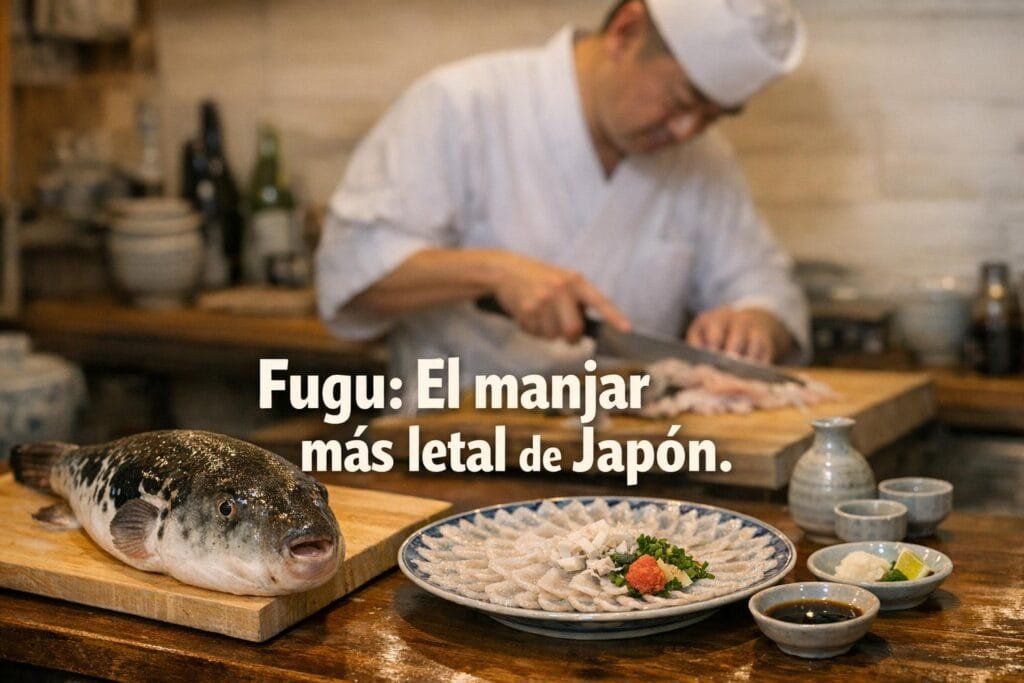
At the counter of a small Tokyo restaurant, someone serves you thin slices of fish, translucent as glass petals. The aroma is delicate, almost nonexistent. But there is something else in the air: a spiritual kind of tension. This is no ordinary plate of food; it is a dance with death. That delicious serving of fugu, or pufferfish, may contain a toxin powerful enough to paralyze your body until your lungs stop working.
It is the kind of fact that makes you raise an eyebrow and ask: why? Why eat something that, if prepared incorrectly, could lead to a conscious, suffocating death? As with so much about extreme cuisine and Japanese culture, the answer is complicated and fascinating.
This short video gives a visual sense of the precision and danger surrounding the dish:
Death disguised as a delicacy: why fugu?
Fugu is no ordinary fish. Several pufferfish species—especially the tiger puffer (Takifugu rubripes)—are famous not only for inflating to scare predators but also for carrying a lethal substance in their internal organs, especially the liver, ovaries and skin: tetrodotoxin. It is hundreds of times more potent than cyanide, and there is no known antidote.
A couple of milligrams can kill an adult. Symptoms can appear quickly: numbness in the lips and tongue, followed by tingling and paralysis spreading through the body until the diaphragm stops working. Most chilling of all, the victim may remain conscious, unable to move or speak but fully aware. It is a slow, deliberate poison.
So we return to the question: why is this dangerous fish considered one of Japan’s most exquisite and expensive delicacies? The answer may not be only its flavor, often described as subtle and unique, with a firm yet delicate texture. Part of its appeal may lie in walking the knife’s edge: sitting down to a meal knowing every bite has been carefully snatched from the jaws of disaster.
Masters of the knife: preparing a lethal dish
Serving fugu is not for amateurs. In Japan, preparing it is one of the most rigorous and respected culinary disciplines. A chef cannot simply decide to cook fugu. It takes years of intensive training, often under an experienced master, followed by an extremely difficult licensing exam.
The exam is legendary. Candidates must identify different fugu species, know exactly where each one’s toxins are located and clean a pufferfish perfectly, leaving only edible meat and removing every trace of poison. The final part is the most intense: the chef must eat the dish they prepared. It is a literal trial by fire—a demonstration of complete confidence in their skill and knowledge.
Fugu chefs are true artisans. Every cut is a life-or-death decision. Using special knives, they meticulously remove the toxic organs, often placing them in a locked container labeled as hazardous material. The meat is rinsed and prepared in different styles, from delicate sashimi (fugu-sashi) to hot pot (fugu-chiri) or grilled dishes.
The ritual of risk: more than flavor
Eating fugu is an experience beyond food. It is a ritual, an act of faith and a status symbol. Some diners seek not only the fish’s umami flavor but also a faint sensation they describe as tingling on the tongue or lips—a kind of electric buzz, supposedly a sign that the chef left a tiny, almost imperceptible amount of toxin. It is a flirtation with the forbidden that adds another layer of excitement to the dish.
Chefs are expected to control the toxin with extraordinary precision; the goal is not paralysis. Still, the danger is an ever-present reminder of what could happen. That is why traditional fugu restaurants often have an atmosphere of reverence and calm that contrasts with the risk on the plate.
A delicate balance: ethics and tradition
Fugu as a delicacy makes us reflect on humanity’s relationship with risk, tradition and the search for extreme experiences. In a world where food safety is paramount, fugu is an anomaly—a remnant of an era when daring and intimate knowledge of nature were intertwined with the pleasure of eating.
Fortunately, thanks to strict regulations and chefs’ exceptional training, deaths from fugu are extremely rare today. They are mostly limited to amateur fishers who try to prepare it at home without the proper license. Tradition has found a balance, allowing this fascinating and dangerous dish to remain part of Japan’s culinary heritage—a quiet challenge for people looking beyond the ordinary.
In the end, fugu is more than a fish; it is a story of mastery, respect for wild nature and perhaps humanity’s eternal curiosity about flirting with the abyss. Would you dare to try it?