
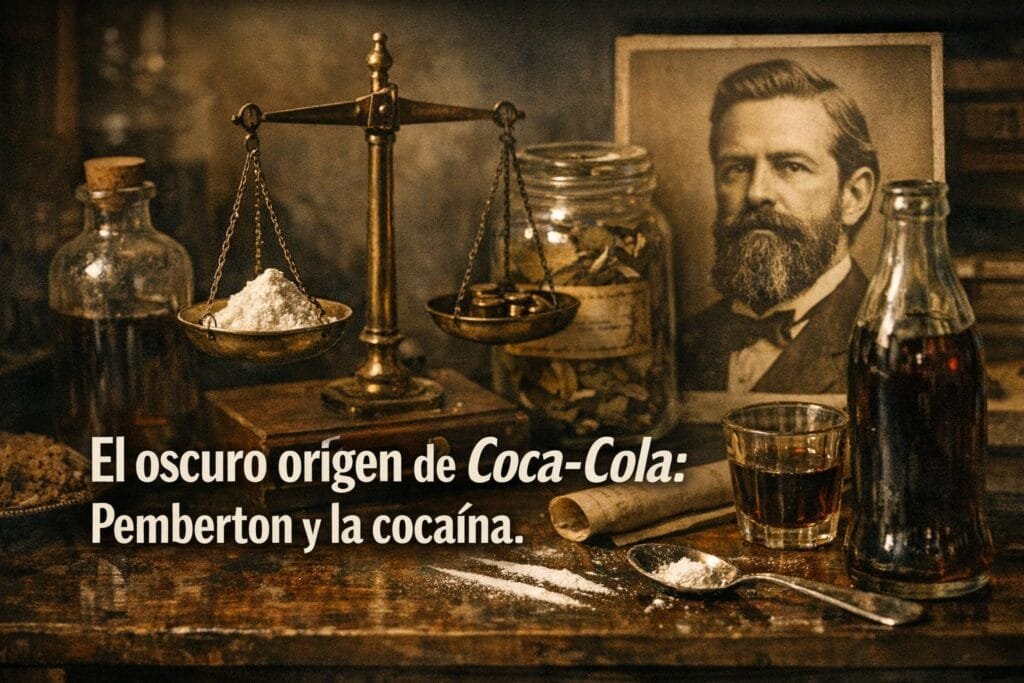
In a late-nineteenth-century pharmacy in bustling Atlanta, a man was wrestling with pain. He was not a visionary plotting to dominate the beverage market, but a war veteran named John Stith Pemberton, dealing with the aftereffects of an injury and a relentless dependence on morphine. He was not looking to build a global empire. He wanted something much more basic: relief. As always, irony makes a fine muse for history.
Pemberton, in a pharmacist’s coat stained by experiments and perhaps with his mind clouded by opiates, was not trying to invent a soft drink. He was searching for a cure—a tonic for the brain, the nerves and the headaches that tormented him, and, if possible, an alternative to his dependence. Medicine at the time was fertile ground for experimentation, and “miracle tonics” were everywhere. Why not try one made with exotic ingredients reputed to be stimulants?
This short video explains how a headache remedy became the world’s most famous drink—a story of happy accidents and brilliant marketing.
The recipe for relief (or the spark of disaster)
In his search for a remedy, Pemberton experimented with ingredients promising energy and relief. Two became the stars, though we know them for very different reasons today: coca leaves and the kola nut. Coca leaves were known for their active compound, cocaine, then a legal stimulant. Kola nut supplied caffeine, another energizing stimulant. The idea was simple: create a tonic to revive people, clear their minds and ease nervous complaints.
In 1886, Pemberton prepared a dark, aromatic syrup in his laboratory. He took it to Jacobs’ Pharmacy in Atlanta, where it was mixed with carbonated water—almost by accident. That day, the first customers tasted the new drink. To the pharmacist’s surprise, it not only seemed to offer relief; it tasted good. A glass cost five cents.
A name, a mystery and a brand are born
The name mattered as much as the recipe. Enter another key figure: Frank M. Robinson, Pemberton’s bookkeeper. With the elegant handwriting recognizable around the world today, he named the mixture Coca-Cola. He also suggested that two interlocking capital C’s would make an appealing brand.
Consider the irony: a drink created to help with dependence initially contained a stimulant. Marketed as a “brain and intellectual tonic,” its real success came from the simple pleasure of drinking it. The line between “medicine” and “soft drink” was much blurrier then than modern regulations allow us to imagine.
From patented medicine to popular drink
Pemberton had found a golden formula, but his health and finances kept him from recognizing its full potential. Shortly before his death in 1888, he sold most of the business. That was when shrewd businessman Asa Candler saw beyond the medicinal syrup. Candler, whose vision extended beyond nervous complaints, bought the remaining rights and secret recipe for a tiny fraction of what they would eventually be worth.
Under Candler’s direction, Coca-Cola began its transformation. It stopped being merely a “tonic” and became the refreshing drink we recognize. Cocaine was gradually removed from the formula—a process that took years and was not without controversy. The company says the beverage had been cocaine-free since 1929; the formula was adjusted earlier, including the removal of active cocaine around 1903. Candler’s vision was clear: a drink available to everyone, everywhere.
- The beginning: A personal remedy for pain and dependence.
- The accident: Carbonated water revealed an unexpected flavor.
- The evolution: A “brain tonic” became the world’s most famous soft drink.
- The controversy: The slow removal of the “secret” ingredient behind its name.
The story of Coca-Cola is a fascinating reminder of how need, chance and business instinct can converge in ways nobody expected. From a pharmacist’s desperate attempt to find relief came a global icon that helped define consumer culture and the idea of a soft drink for generations.
And so a story that began with pain and dependence in an Atlanta pharmacy became a tale of ingenuity, brilliant marketing and a healthy dose of historical irony. Is it not curious how, while trying to solve a personal problem, people sometimes stumble into something that changes the world?
If this story interests you…
Coca-Cola’s origin shows how familiar objects can hide incredible stories. If you want more, here are a couple of surprises: