
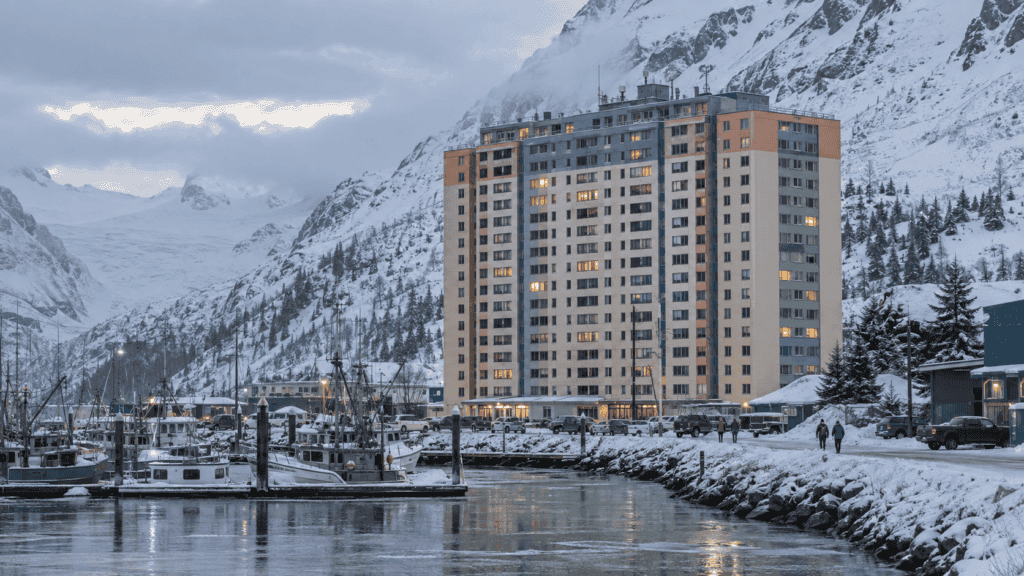
In Whittier, the weather can close a door more important than the grocery store’s: the access tunnel. When conditions turn severe, getting in and out of town stops being a simple trip and becomes part of daily life. In a place like that, keeping services close is not an architectural eccentricity. It is common sense with an Alaska view.
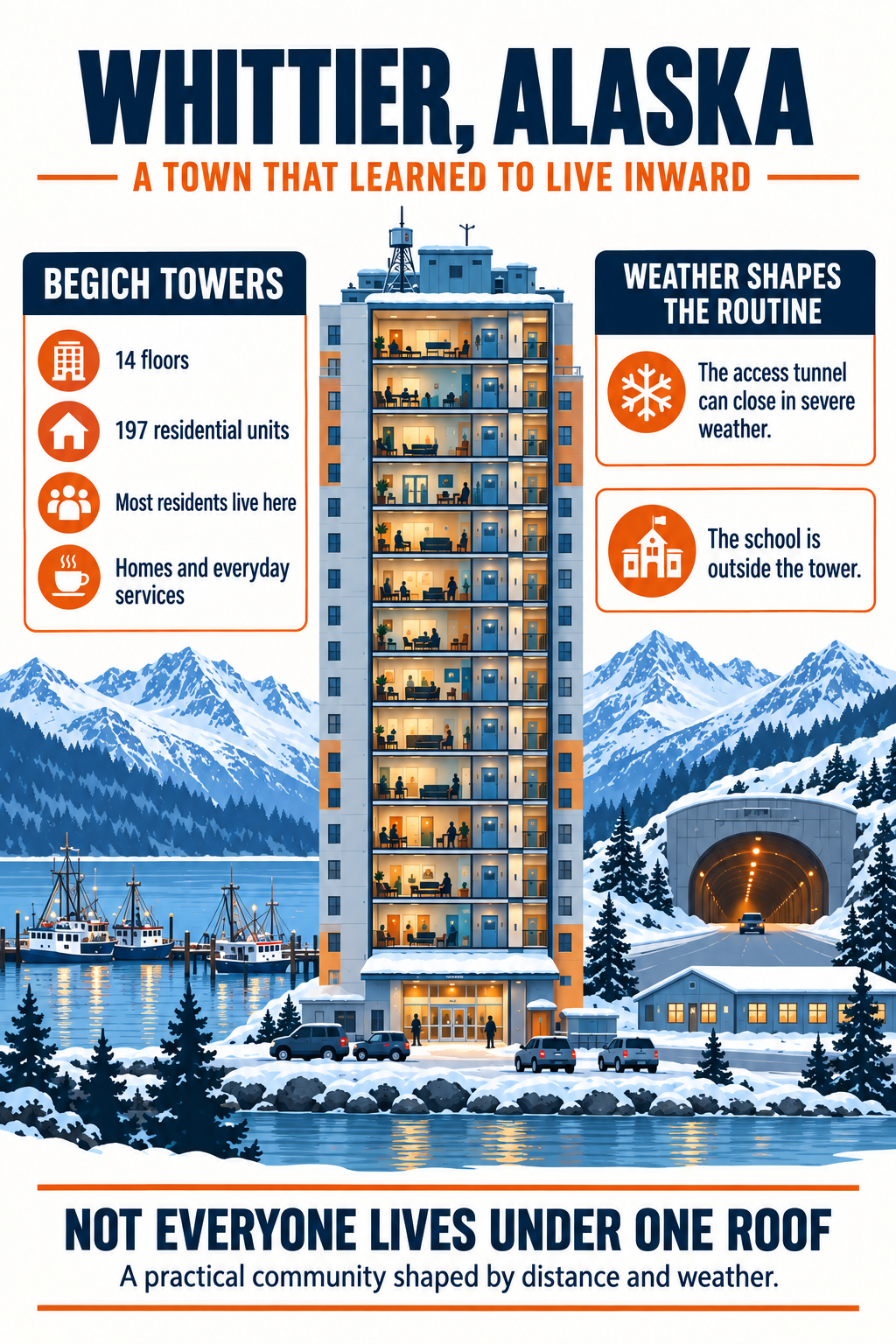
Begich Towers has 14 floors and 197 residential units, according to the City of Whittier plan. Most residents live there. The building brings together homes and several services, but the familiar claim that “the whole town lives in one building” needs a small correction: not everyone lives inside, and Whittier is still a town, not a vertical prison with a ZIP code.
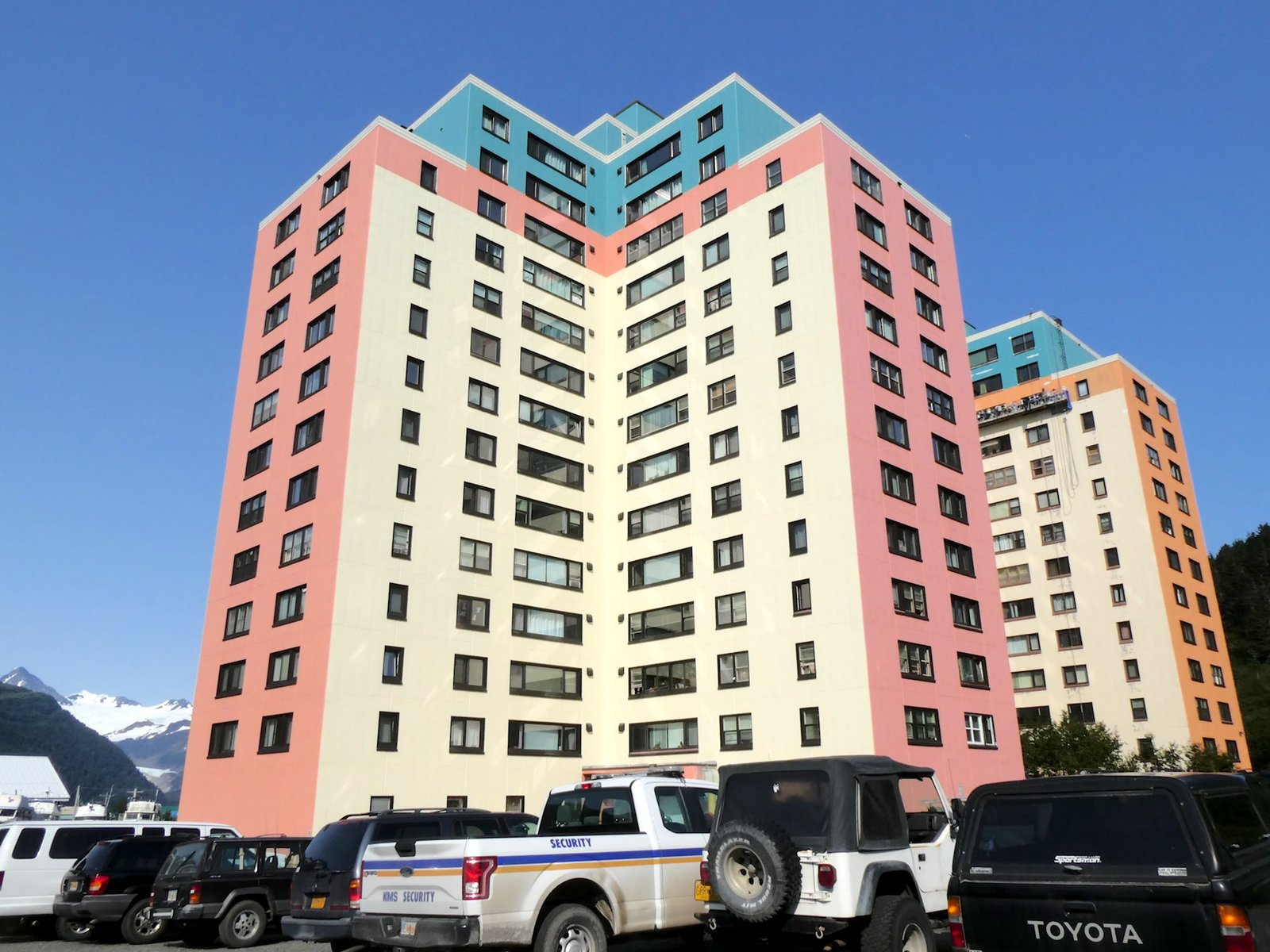
A CBS Sunday Morning report shows how a town organizes life under one roof.
The building began as military housing during the Cold War. When the military presence disappeared, the structure did not become a ruin with broken windows. It became the centerpiece of a civilian community. The climate, the distance and history did the rest.
The arrangement has an obvious advantage: many things are close at hand. It also has a social cost. If the hallway doubles as a street and the elevator as a town square, neighbors turn up in your life all the time. A community can be close-knit, practical and protective; it can also make missing five minutes of anonymity completely reasonable.
The school is not inside Begich Towers, although there are connections and routes designed to help children get there without turning every morning into an expedition. That distinction matters because photos of endless hallways have turned the story into a caricature: Whittier is not trapped in a tower. It has concentrated much of daily life to function in an environment where the outdoors does not always cooperate.
The city’s economic report helps put the building in context, while Alaska Public Media explains what it is like to live and work in a community under one roof. And the Begich Towers image on Wikimedia Commons should retain its attribution if used as the featured photo.
Whittier is not a postcard from the future. It is a concrete solution to a concrete problem: when the weather is in charge, architecture stops posing and starts solving.
The question is not whether you could live in Begich Towers. The question is how long it would take you to appreciate having a doctor, the post office and a neighbor who lends you sugar just a few steps away—especially when the landscape outside has decided to declare war on you.
Whittier is not a caricature of a town shut indoors; it is a practical answer to an unforgiving environment.
Sources consulted for this article
- City of Whittier: municipal plan — Services and urban organization.
- City of Whittier: economic report — Demographic and economic context.
- Wikimedia Commons: Begich Towers — Documentary photograph and license.
- Alaska Public Media — Reporting on everyday life.