
The first time Earth fits in your eyes, something inside you rearranges
From the ground, Earth is the floor beneath us, the horizon, a map divided into countries. From space, the planet becomes a whole: a bright, thin-skinned world surrounded by darkness. Astronauts have described the experience as more than a beautiful view. It can change how they think about home, borders and humanity.
The name commonly used for this shift is the overview effect. It is not a diagnosis or a guaranteed conversion. It is a reported experience, and people describe it in different ways.
This video provides visual context for the view that inspired the phrase.
The “overview effect”: an emotion that sounds philosophical but hits your gut
Writer Frank White popularized the term after interviewing astronauts and looking for a way to describe this perspective shift. People often mention the planet’s beauty, its apparent fragility and the absence of visible borders. The experience can feel philosophical, but it begins with something physical: looking out a window and seeing the place where every human life has unfolded.
That does not mean all astronauts feel the same thing or draw the same conclusions. The overview effect is a useful description of recurring accounts, not a universal rule about what space does to a person.
Apollo 8: when humanity saw itself from the outside
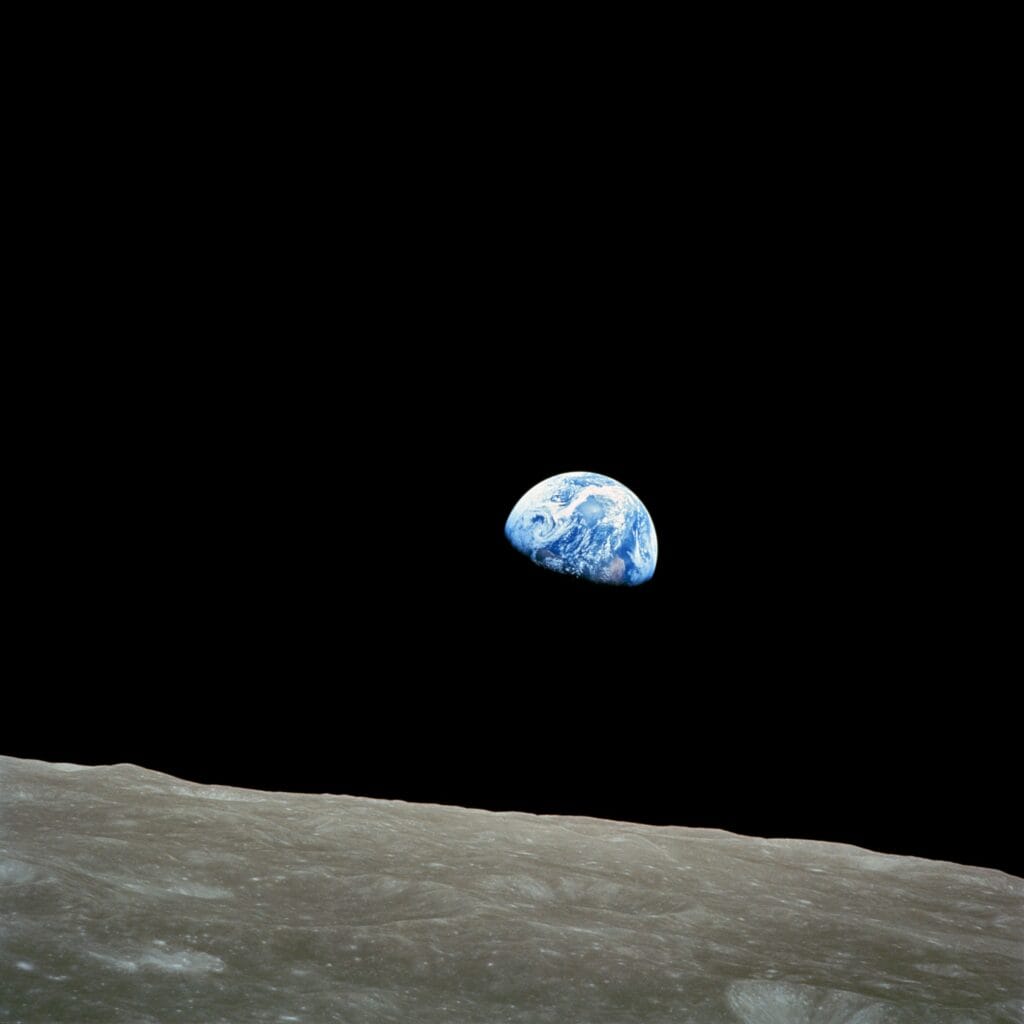
Apollo 8’s “Earthrise” photograph, taken in 1968, became one of the most influential images of Earth. The planet appears over the lunar horizon, vivid and distant. A year later, Apollo 11 landed on the Moon, but Earthrise had already offered a new visual frame: our world as one place in a much larger landscape.
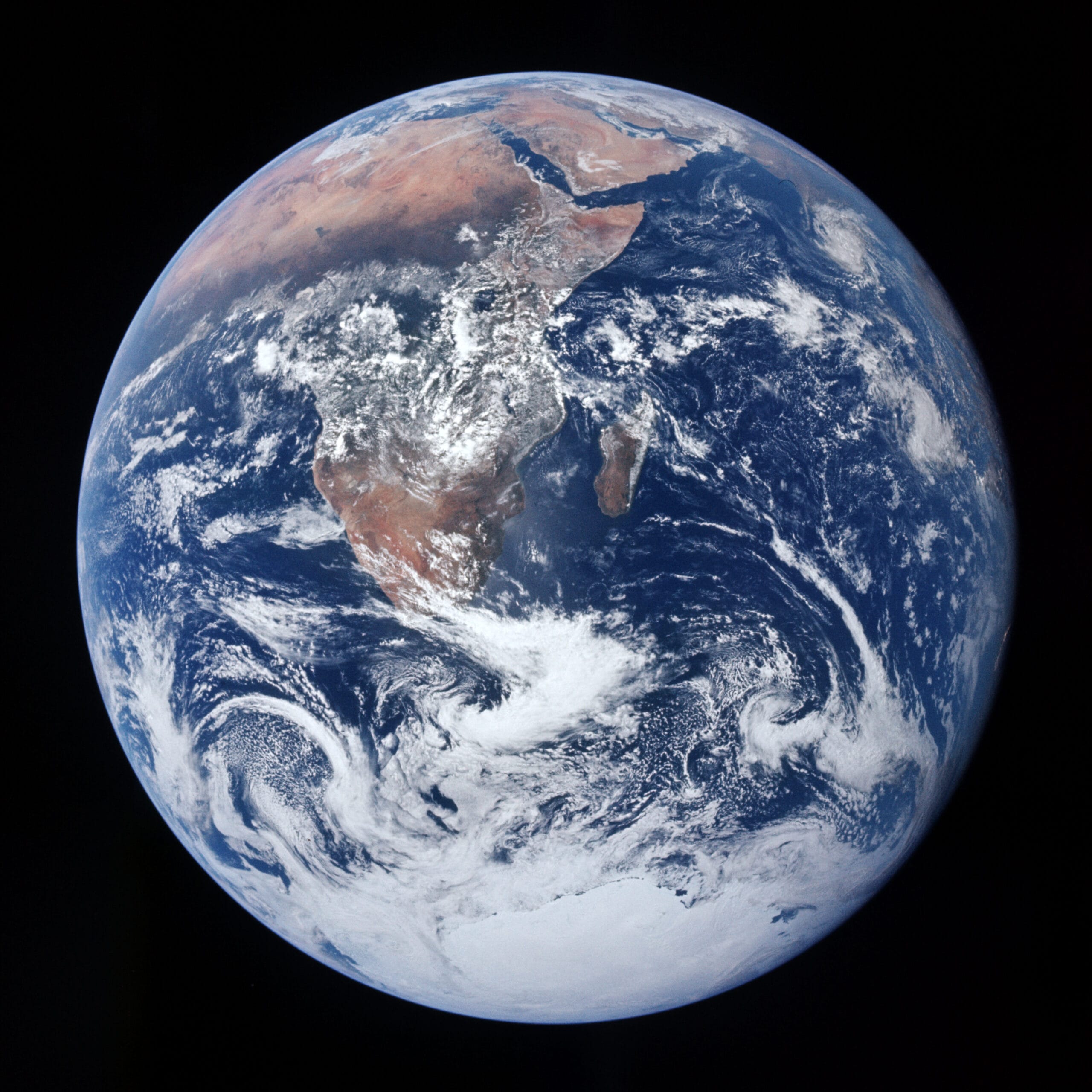
The famous “Blue Marble” photograph taken by the Apollo 17 crew in 1972 reinforced that idea. The picture did not create environmental concern on its own, but it gave the planet a recognizable face and made its finite scale easier to imagine.
What happens to the brain when your whole world becomes a marble?
There is no single brain switch that produces the overview effect. Astronauts describe an emotional and cognitive response shaped by the view, the mission, their expectations and their own lives. Awe can change what feels important; seeing no borders can make political divisions look less natural; noticing the thin atmosphere can make the planet feel vulnerable.
Those are reported reactions, not proof that a brief view permanently changes every astronaut’s behavior. The distinction matters: a powerful experience can be real without being identical for everyone.
1) Ego shrinks—without the need for drama
From orbit, a person’s everyday worries can feel smaller against the scale of the planet. That does not make those worries meaningless. It changes their proportions for a moment.
It is not just a pretty view: it is a change in mental frame
A photograph can show the same object while changing the way we interpret it. Earth seen from space is still home, but now it is also a shared habitat, with a thin atmosphere and no visible political lines. The shift from “my place” to “our planet” is the heart of the overview effect.
Does it happen to every astronaut in the same way?
No. Some describe a deep emotional response; others focus on the work, the equipment or the view’s technical details. Even when people share the same window, they bring different histories and expectations to it. There is no required reaction and no single correct way to describe what they see.
The paradox: we have to go far away to see what is obvious
From Earth, the planet is too large to take in at once. Distance makes the whole visible. That is the paradox: we travel hundreds of miles away to see the home we had been standing on all along—and return with a different frame for thinking about it.
The overview effect does not solve the world’s problems. But it offers a striking reminder: the borders that organize human life are not visible from space, while the atmosphere that sustains it is.