

On December 15, 1967, the Silver Bridge over the Ohio River collapsed. Forty-six people died. The technical report did not need a monster: it identified the fracture of a suspension-chain component and the chain reaction that turned a tiny defect into a huge disaster.
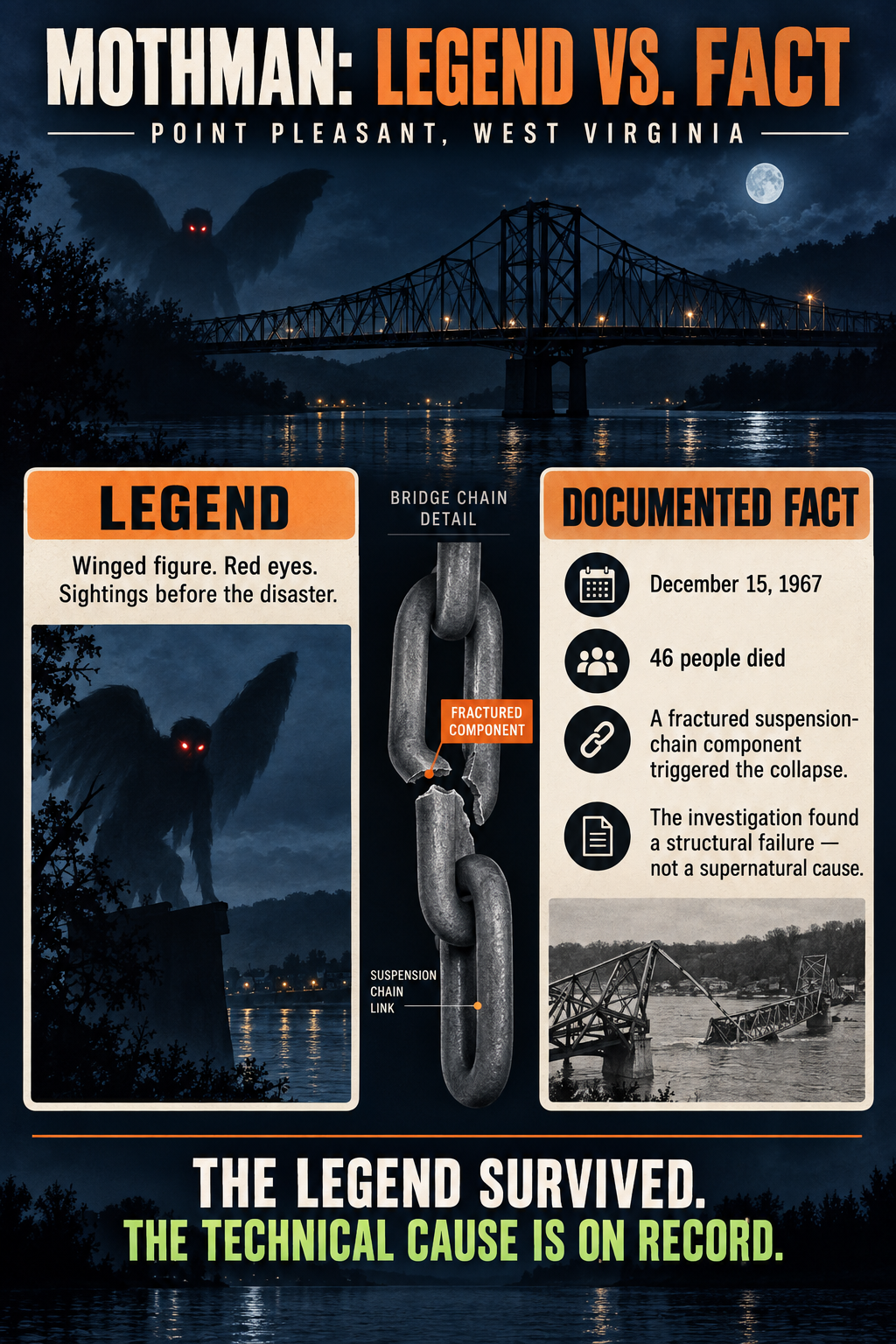
The documentary reconstructs the Silver Bridge collapse and explains why its cause was structural, not supernatural.
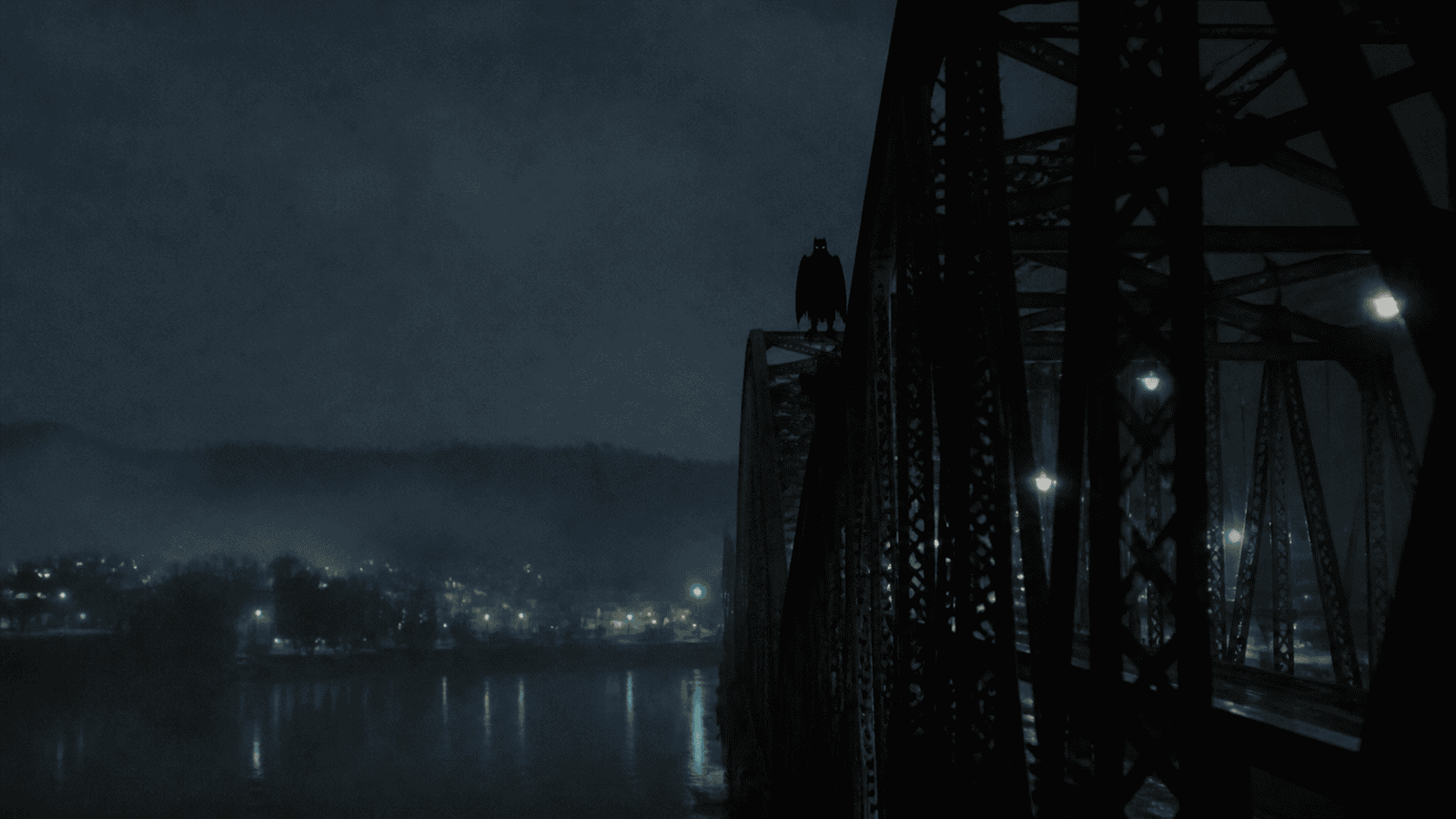
But another story had been circulating in Point Pleasant for months. Several people said they had seen a winged, gray or black figure with red eyes. It seemed larger than a person and strange enough that nobody could find a comfortable comparison. Mothman was born.
After the collapse, the two stories snapped together like magnets. If the creature appeared first, perhaps it was an omen. If it disappeared afterward, perhaps it had done its job. The human brain loves closing a circle, even when someone has to draw part of the line.
The National Transportation Safety Board report is far less cinematic than a red-eyed silhouette, but much more important. It explains how the bridge failed and why the accident changed the way similar structures were inspected. The tragedy needs no supernatural decoration to be frightening: one defective part and a system that did not catch the problem were enough.
That does not mean throwing the legend away. Mothman is part of Point Pleasant’s cultural memory, and the Mothman Museum preserves that layer of the story. The point is not to mix the levels. A photo of a museum proves that a museum exists; it does not prove the monster warned people about the collapse. A testimony proves someone said they saw something; it does not turn that vision into a technical cause.
The legend survived because it offers a way to tell the unbearable. An accident with 46 victims leaves questions that hurt, and a creature turns fear into a character. It is powerful narrative work: where there was a broken eyebar, a portent appears and keeps flying over the town for decades.
The story of Slender Man shows another mechanism for making myths, although through a completely different route. Mothman grew from testimony, local press and tragedy; Slender Man grew on the internet. In both cases, fiction gains muscle when people tell it as if they have just found proof.
Mothman probably did not bring down the Silver Bridge. What it did do was more real: turn a documented accident into a story that has kept flying for more than half a century.
The tragedy is documented; the monster belongs to the legend that grew around it.
Sources consulted for this article
- NTSB: Silver Bridge investigation — Official accident record.
- NTSB Report HAR-71-01 — Documented technical cause of the collapse.
- West Virginia University: Point Pleasant — Local context for the legend.
- Mothman Museum — Popular and cultural memory of the case.