
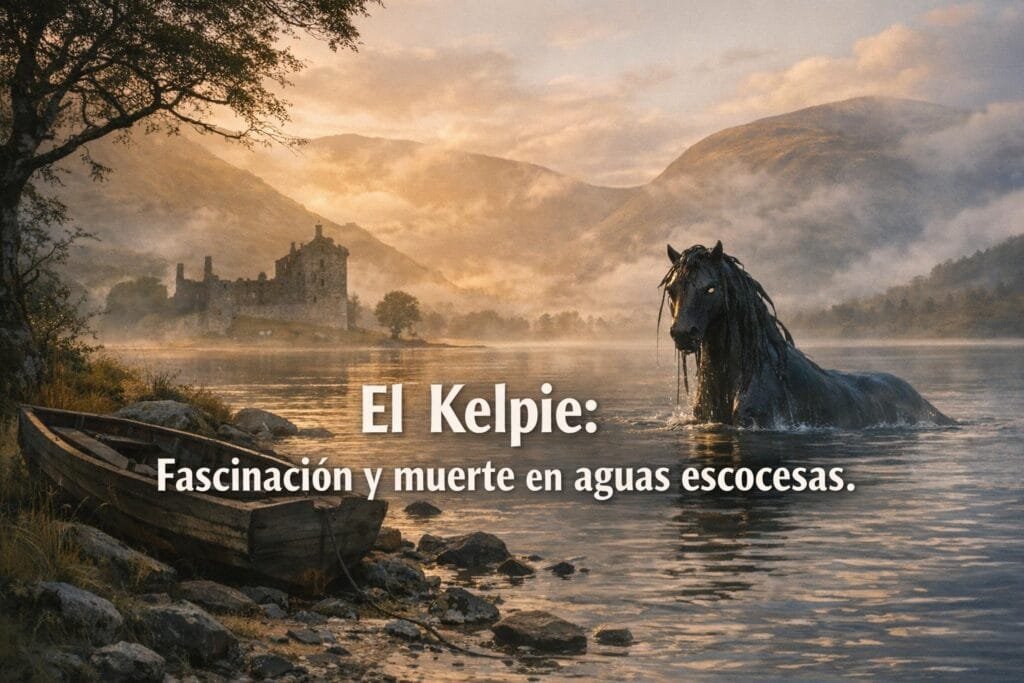
On the misty shores of a Scottish loch, with the silence broken only by soft splashes and the howl of the wind, a figure emerges from the fog: a horse. Majestic, with a smooth coat shining like obsidian and a mane that seems woven from wet reeds. Its gaze is deep, almost hypnotic. It looks at you with an unsettling intelligence, as if inviting you to climb on. An offer that, oddly enough, rarely ended with a toast or a funny story.
Because who could resist such a magnificent horse, even one glowing with an unnatural light beside a mist-shrouded loch at dusk? Few, apparently—and that’s the paradox at the heart of the kelpie, the dark spirit of Scottish waters. Its main trick is simple seduction, a tactic that folklore says still works to drag the unwary into icy depths. For those who accept its invitation, it’s a one-way ride.
To picture the creature’s chilling beauty, this short documentary reviews its origins and defining traits without breaking the spell of the story.
The deadly deception: the promise of a ride
The kelpie isn’t one of those monsters that hides in the shadows and attacks by surprise. No: it’s a patient predator, a master of disguise and manipulation. It appears as the most beautiful horse you’ve ever seen, often a pure black or white stallion with a mane and tail that drip water endlessly. Its presence is magnetic, almost unreal. Children, captivated by its beauty, are often said to be its first victims. Lonely, tired, or simply curious travelers can fall into its trap, too.
The trouble begins when your hands touch its skin—or, worse, when you climb onto its back. Its skin turns sticky as glue and traps you. The harder you try to escape, the tighter it holds on. A kelpie isn’t an ordinary horse; it can grow enormous, large enough to drag several people at once. Then, with a macabre whinny, it dives into the depths of the loch, taking its prey toward a fate of drowning and oblivion. Not a fate anyone would envy—not even someone looking for a shortcut or a ride on a dream horse.
Beyond the horse: the many faces of aquatic terror
Although its equine form is the best known—and the one it uses most often to deceive—the kelpie is a much more versatile creature than you might expect from a simple water horse. It’s said to be a shapeshifter, able to take other forms to suit the situation or perhaps to vary its collection of horrors.
- Human form: Sometimes the kelpie appeared as a handsome young man—or a beautiful woman—sitting by the water, crying or asking for help. The only clues to its true nature might be its soaking-wet hair or seaweed on its clothes. Its hand could feel cold and sticky when offered in help. Once the victim came close, it dragged them beneath the waves.
- Other animals: Less often, some stories describe it turning into other aquatic animals or even mythical beasts, always to lure the unwary.
- Telltale signs: In any form, the kelpie kept some trait that gave away its watery nature: a seaweed mane, the sound of dripping water, or eyes as glassy and cold as a loch in winter. Subtle clues, of course—easy for a credulous or distracted observer to miss.
The kelpie’s changing shape underlines its cunning. It’s not just brute force; it’s malicious intelligence. It knows what people want: compassion for a stranger, admiration for beauty, curiosity about the unusual. And it exploits those impulses without mercy.
The kelpie and the Scottish soul: legend and reality
The kelpie is more than a story to frighten children. In the heart of the Scottish Highlands, with their countless lochs, rushing rivers, and unpredictable weather, this deeply rooted figure in folk belief served as an important warning. Lochs may be beautiful, but they can be treacherous. Their waters are deep and icy, and underwater currents can be deadly. Accidental drownings were—and remain—a real danger.
For people in the old Highlands, perhaps it was easier to believe an evil spirit carried the unwary away than to face the simple, brutal force of a dangerous current or the risks of an incautious plunge. The kelpie legend encouraged caution and respect for nature’s untamed power. It’s a reminder of how folklore can shape real decisions, as with Iceland’s Huldufólk. It warned that beauty can disguise danger—and that not everything sparkling at the water’s edge is harmless.
Even today, in an age of GPS and life jackets, the kelpie lives on in Scottish culture, immortalized in striking modern sculptures and in our enduring fascination with what lurks beneath the water’s surface. It reminds us that fantasy can be a poetic, frightening way to talk about very real truths—a mechanism not unlike the one behind a modern myth that also leapt from fiction into reality: Slender Man.
So next time you find yourself beside a lonely loch and spot something impossibly beautiful, a figure that looks as though it stepped out of a dream, take a moment to think. In a world full of astonishing things, the most beautiful can sometimes be the most dangerous. Who knows what other wonders—or terrors—wait in the depths of the legends we haven’t told you yet?