
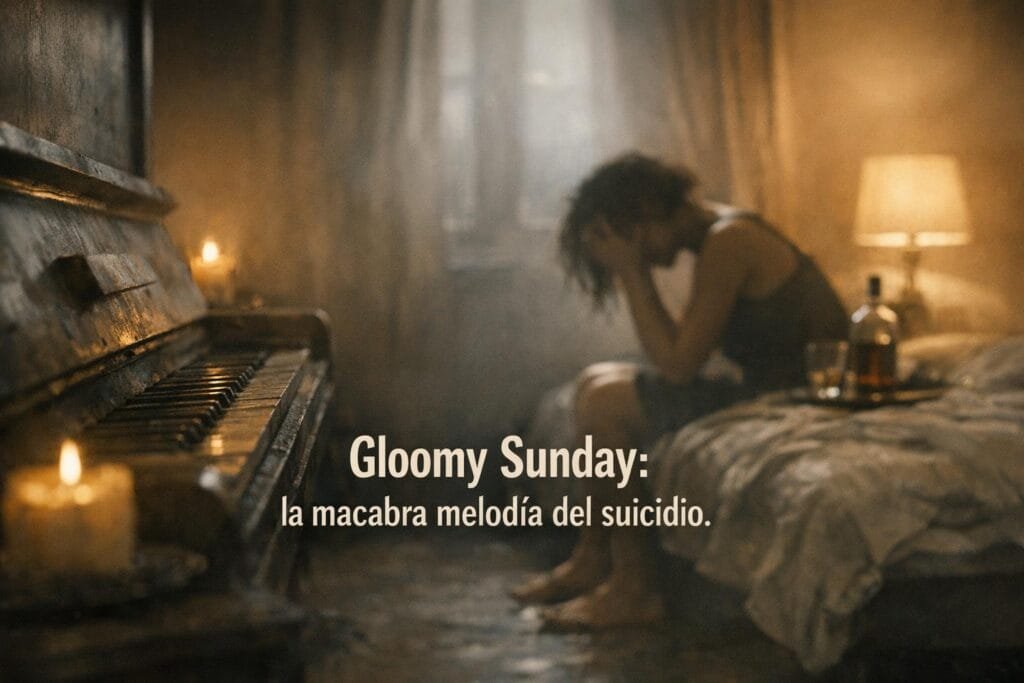
It’s 1933. The Great Depression is tightening its grip on people across Europe. Desperation has moved into countless homes. Then comes a melody—not just a companion to that sadness, but, rumor has it, something that seems to push it toward the abyss. A piece of music so powerful it was blamed, without hesitation, for a wave of suicides. Sounds like an urban legend, right? It’s the dark and fascinating foundation of “Gloomy Sunday.”
It may sound absurd that a simple composition could have such power over the human mind. Art moves us, inspires us, comforts us—but kill us? And yet there was a time when people not only believed it, but nearly took it for granted. Sensationalist newspapers did the rest, cementing its reputation as the “Hungarian suicide song.”
The most iconic version—the recording that made the song famous around the world—was sung by Billie Holiday in 1941. Press play to feel the weight of its legend, but a warning: its reputation is as dark as its melody.
The birth of a cursed melody
The story begins in Budapest, Hungary, in 1933. A pianist and composer named Rezső Seress, struggling to make ends meet and earn recognition, wrote a melody. His girlfriend, who had left him, was the original inspiration for the lyrics, written by poet László Jávor and first titled “Szomorú vasárnap.” The words spoke of loneliness, longing for a lost love, and a desire to join that person in the afterlife. Deeply sad, yes—but at first, no more extreme than many other ballads.
The trouble was that the song didn’t appear in a vacuum. Hungary was in a devastating state. The effects of the Great Depression were palpable: mass unemployment, widespread poverty, and uncertainty about the future. In this atmosphere of despair, “Gloomy Sunday” began playing in cafés, on the radio, and in living rooms. Its melancholy found an echo in people’s hearts.
When the legend outgrew the music
Not long after the song was published, rumors began to circulate. One, then another, then a flood of stories directly linking “Gloomy Sunday” to a string of suicides. It was said that a Hungarian shoemaker left a note citing the song before taking his own life. Then came stories of people drowning in the Danube with the sheet music in their pockets. An officer, a shopkeeper, a teenager…the list grew, and a press hungry for sensational headlines eagerly fueled the lurid tale.
How much of it was true? It’s hard to know from this distance. What is clear is that the song became a perfect scapegoat. Blaming a melody for rising suicide rates was much easier than confronting the harsh socioeconomic and political realities of the time. It was a simple, dramatic explanation—and, by the standards of the day, a hugely viral one.
The BBC ban: a hellish seal of approval
The song’s fame crossed borders. It reached the United States in 1936, where Hal Kemp’s orchestra adapted it and, more importantly, the incomparable Billie Holiday recorded it in 1941. But its reputation as “the suicide song” had arrived first. The hysteria grew so intense that the prestigious BBC, the British Broadcasting Corporation, banned Holiday’s version from its broadcasts for decades. The reason? Concern that its gloomy tone might “demoralize” audiences during wartime. The instrumental version was allowed, though—which raises an ironic question: was the melody or the lyric the real poison?
Far from burying the legend, the ban sealed it. If the mighty BBC prohibited the song, there had to be a reason! It became a kind of forbidden musical fruit, a taboo that only heightened its mystique and appeal. It was no longer just a sad ballad; it was a dangerous artifact said to have the power to manipulate the soul.
The truth behind the myth: a musical serial killer?
There is no scientific evidence that a piece of music, however sad, can cause someone to die by suicide. The supposed link between “Gloomy Sunday” and a wave of deaths was correlation, not proof of causation. The song wasn’t the cause; it was a symptom, an amplified reflection of collective pain that already existed.
The real killers were poverty, loneliness, hopelessness, and a lack of prospects. Seress’s melody simply put those feelings into words in a deeply resonant way. Collective suggestion and the power of the media of the time did the rest, turning a melancholic song into a Gothic horror legend.
Today, “Gloomy Sunday” remains a classic of melancholy and a testament to art’s ability to capture complex human emotions. It’s also a fascinating reminder of how urban legends take root, how people look for simple explanations to complex problems, and how reality and myth blur when despair is the backdrop. The song may invite sadness, but what you do with that feeling is, fortunately, still your choice.
In the end, the paradox of “Gloomy Sunday” is that it lives on not just because of its musical beauty, but because a macabre legend turned it into something far more than a song. It invites us to think about art’s power to change us, for better or worse. Stories like this show how a composition can transcend its notes—a power taken to an extreme in The Incredible Megaphone War: Sonic Battle and an Unexpected Peace. And if you’re fascinated by how a composition can outlive its own notes, discover John Cage and the astonishing 639-year song that’s still playing.