
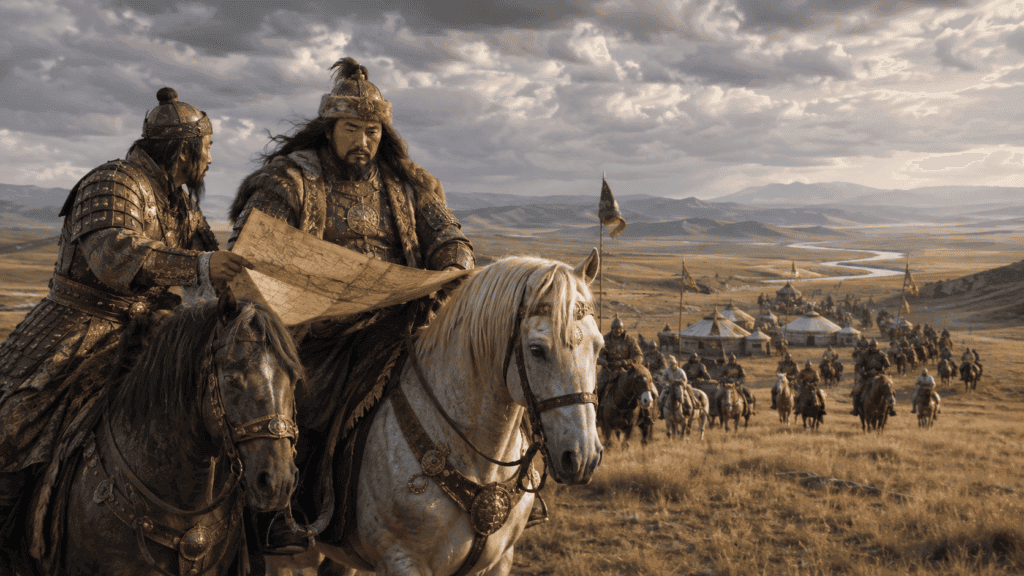
Genghis Khan’s armies crossed distances that should have slowed them down. They moved quickly, carried several horses per rider, shared information through relay stations and made decisions before their enemies understood where the main force was. The result was not magic. It was a disciplined system built around mobility, intelligence and coordination.
Speed was an organization problem
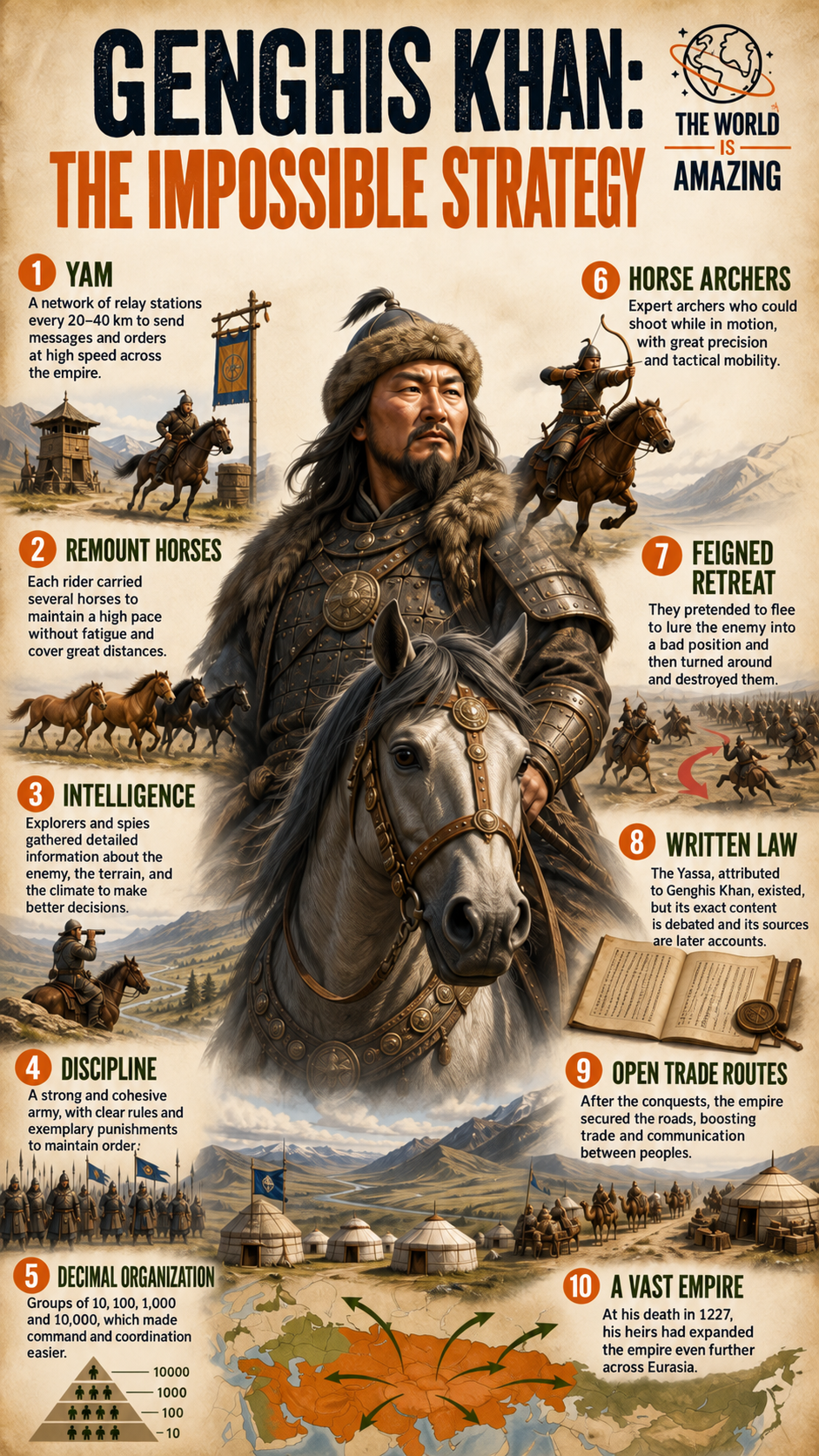
The Mongol army relied on remount horses: each rider could change animals and keep moving without exhausting one mount. Units were organized in tens, hundreds, thousands and ten-thousands, allowing orders to travel through a clear chain of command. A messenger system known as the yam connected relay stations roughly every 20 to 40 kilometers across the empire.
Information before impact
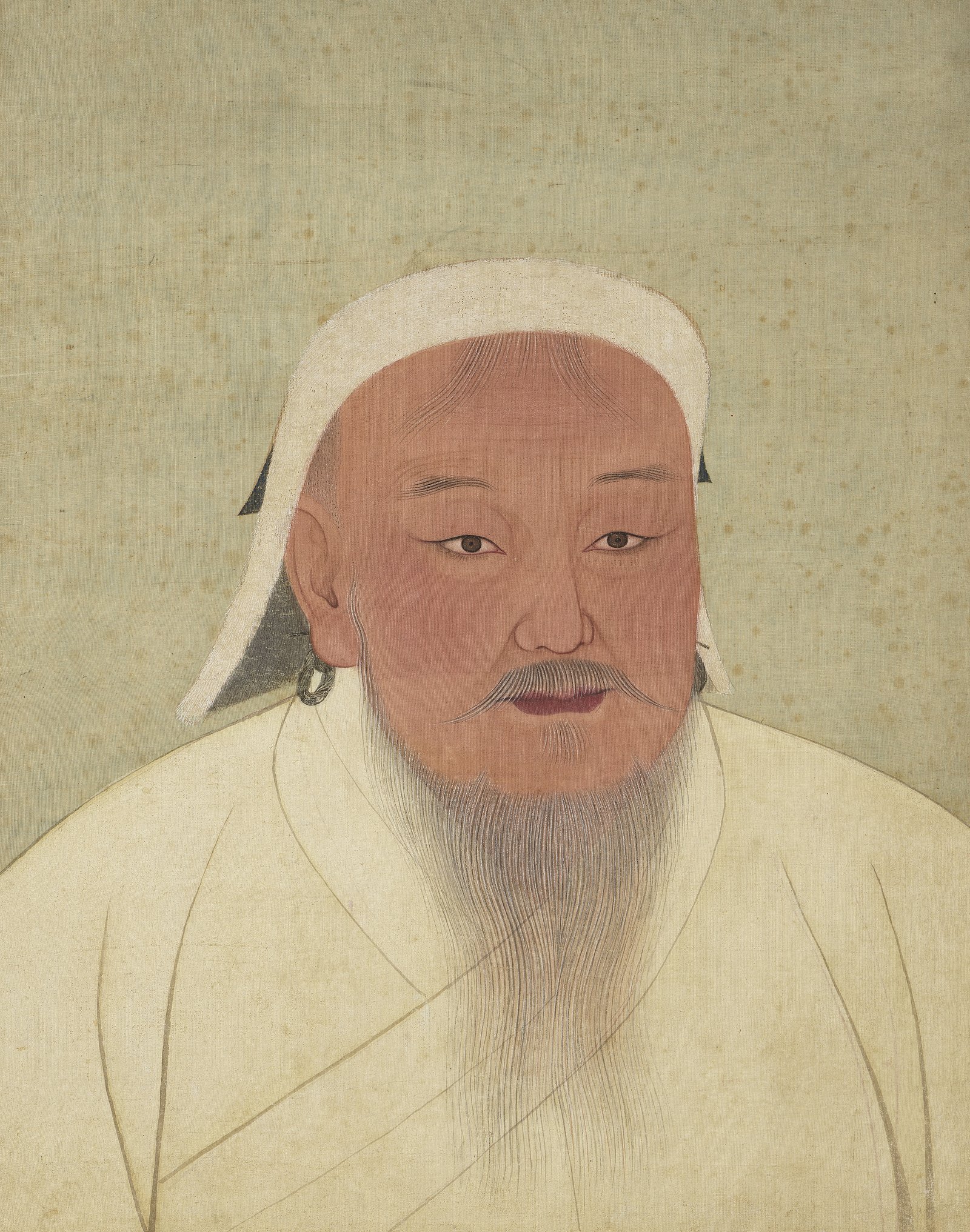
Scouts and spies gathered information on terrain, weather, routes and rival forces. The army used feigned retreats to draw enemies into unfavorable positions, then turned with mounted archers who could shoot while moving. The point was not only to move fast; it was to make the opponent react too late.
An empire larger than one man
By his death in 1227, Genghis Khan had created the foundations of an empire that his heirs expanded across Eurasia. Its effects included violent conquest and vast destruction, but also secured routes, exchange among distant regions and an administrative system that depended on written communication as much as on cavalry.
The historical lesson is not to romanticize conquest. It is to recognize how an apparently impossible scale became manageable: break movement into systems, share reliable information and make each unit able to act without waiting for a single distant command.
Sources consulted for this article
- Encyclopaedia Britannica — biographical and historical context.
- The Metropolitan Museum of Art — Mongol visual and material culture.
- Cambridge University Press — scholarship on the Mongol Empire.