
The man who made bread from air—and poison from air
Fritz Haber’s legacy contains two truths that are difficult to hold together. The chemistry he helped develop made it possible to produce ammonia on an industrial scale, supporting synthetic fertilizers and modern food production. The same chemist later became a leading advocate of chemical warfare during World War I.
It is tempting to choose one label—hero or villain—and stop there. The history is more uncomfortable: scientific achievement and moral responsibility belong to the same life.
This video introduces Haber’s scientific work and its wartime consequences.
A Nobel Prize for a reaction that changed the world’s menu
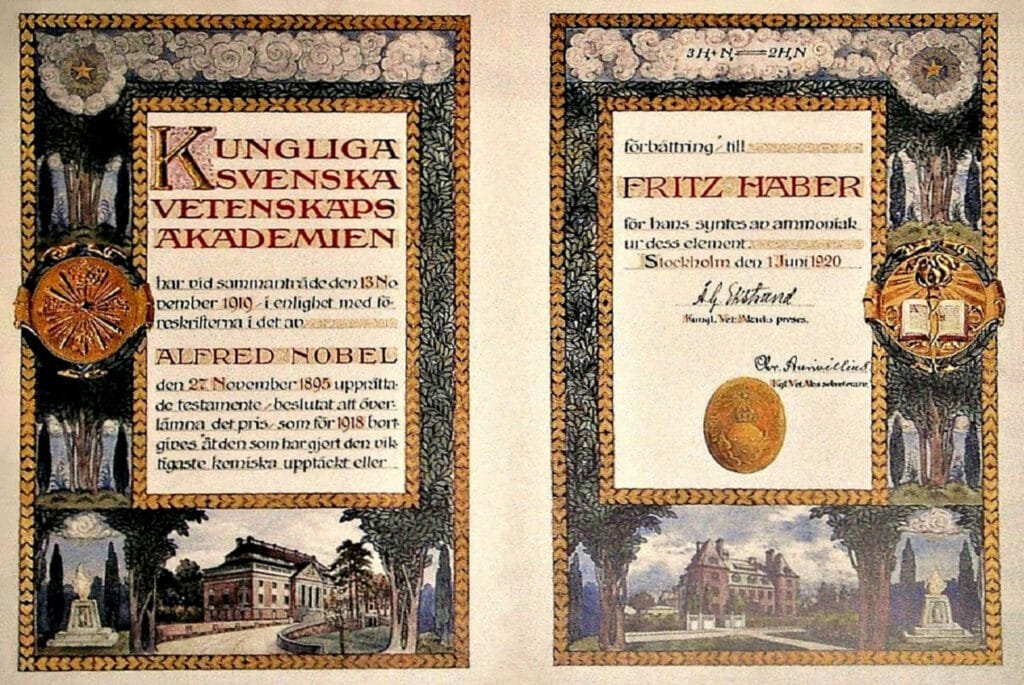
The Haber–Bosch process combines nitrogen from the air with hydrogen to produce ammonia. Industrial ammonia became a key ingredient in nitrogen fertilizers. In 1918, Haber received the Nobel Prize in Chemistry for the synthesis of ammonia from its elements.
The process helped remove a major limit on agriculture: access to usable nitrogen. It did not single-handedly “feed the world,” but it became one of the technologies that made much higher crop yields possible—and tied food production to energy-intensive industrial chemistry.
The same door opens into two rooms: fertilizer and explosives
Ammonia and related nitrogen compounds can serve very different purposes. They can support plant growth or become part of explosive and military supply chains. Chemistry does not decide how a discovery will be used; people, institutions and governments do.
The chemist who tried to weaponize the air
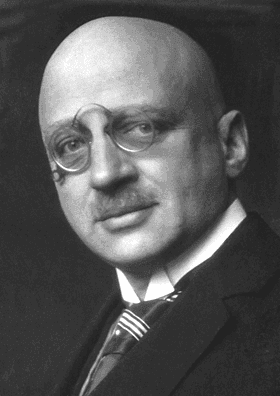
During World War I, Haber became deeply involved in Germany’s chemical warfare program. He supported the use of chlorine gas and helped organize its deployment at the Second Battle of Ypres in 1915. Poison gas attacks caused horrific injury and death; they also triggered an international arms race in chemical weapons.
Haber viewed the work as service to his country, but his wife, chemist Clara Immerwahr, opposed it. Their different positions are part of the tragedy surrounding his wartime role, though her life and work deserve to be understood on their own terms rather than only as a footnote to his.
Scientific success, moral disaster: a Nobel amid the noise
The Nobel Prize recognized a major scientific achievement. It did not erase the consequences of Haber’s work in war. Awards can acknowledge a discovery; they cannot settle the ethical questions attached to its uses.
A life shaped by identity and politics
Haber was born into a Jewish family in the German Empire and converted to Christianity as a young adult. He identified strongly with Germany and served it during the war. Under the Nazi regime, his Jewish ancestry made his position untenable; he left Germany in 1933 and died the following year while in exile.
His life exposes the cruelty of a state that rejected a person whose service and patriotism had once been celebrated. It also shows how political identity can be imposed from outside, regardless of what someone believes about themselves.
The impossible legacy: savior, villain—or something harder?
Haber was neither a simple savior nor a cartoon villain. His work helped transform food production and helped make chemical warfare more systematic. Recognizing both does not excuse one with the other. It gives us a more accurate account of how knowledge, power and responsibility interact.
What his case asks us to look at today
New technologies often arrive with promises of benefit and risks that are easier to postpone than to confront. Haber’s story asks a difficult question: when a discovery can nourish millions and also increase the capacity for harm, who is responsible for deciding how far it should go?