
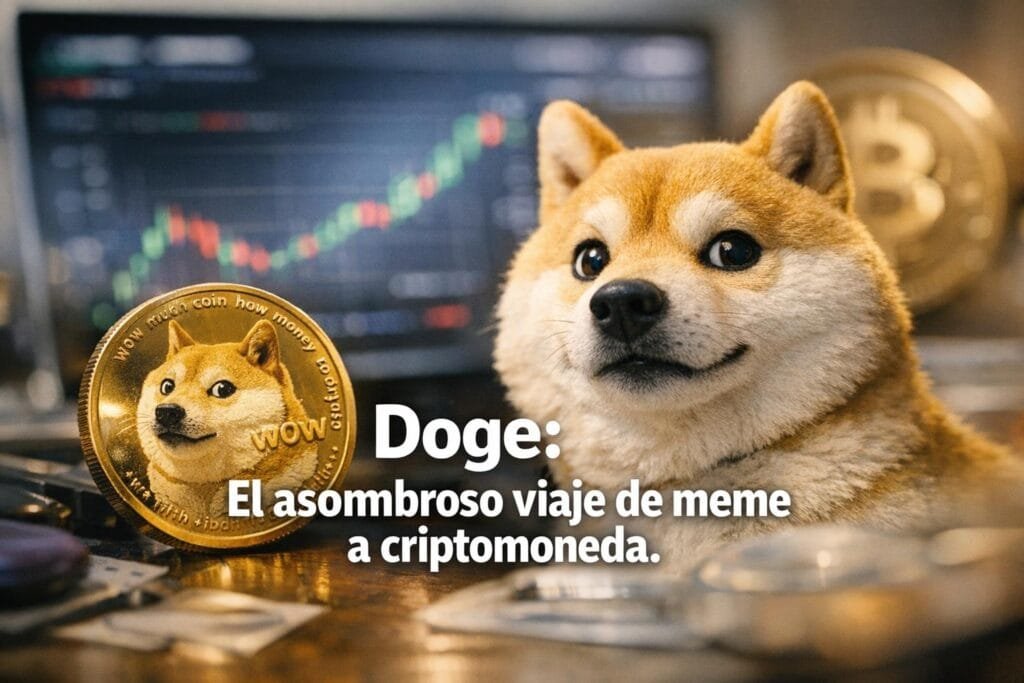
One ordinary Tuesday, you’re scrolling through your feeds when you spot a photo of a Shiba Inu with an expression that’s equal parts stoic and absurdly funny. You have no idea that this image, charged with a strange canine dignity, will become the foundation of a universal internet language—and kick off one of the most surreal financial adventures of our time. What began as an innocent joke on the internet’s most obscure forums grew and evolved until it challenged serious ideas about money, community, and the power of collective belief. We’re talking, of course, about the world of Doge.
Before we go on, this video sets the scene nicely: how a dog’s face took on a life—and consequences—of its own.
The little grin that conquered the digital world
It all began with Kabosu, a female Shiba Inu rescued and adopted by Japanese kindergarten teacher Atsuko Sato around 2008. Like proud pet owners everywhere, Sato shared photos of her beloved dog on her personal blog. Among them, in 2010, was a series of shots of Kabosu sitting on a sofa with her paws crossed, wearing that particular Shiba Inu look: skepticism, mischievous joy, and a hint of ancient wisdom. One photo in particular would capture the internet’s imagination.
It wasn’t long before the image landed on forums like Reddit and Tumblr. It was as if people had found the perfect canvas for their inner thoughts, usually absurd ones written in deliberately broken English. “Such wow,” “very amaze,” “much skill,” and “so confuse” started appearing around the dog in colorful Comic Sans. And so the Doge meme was born. It was absurdity personified, a canine inner monologue poking fun at internet culture—and somehow impossible not to love.
“Doge” language went viral. Suddenly, everyone was using it to comment on everything from epic video-game achievements to funny everyday mishaps. Its charm lay in its simplicity: it could express amazement or irony with so few words that it felt universal. But Kabosu’s meme was about to make an even more unexpected leap.
From doggy joke to “the people’s coin”
It was December 2013. The early cryptocurrency boom, led by Bitcoin, was entering the public consciousness, though many people still viewed it with suspicion. Against that backdrop, Portland-based IBM programmer Billy Markus had an idea. Inspired by Bitcoin’s success and the Doge meme’s ubiquity, he decided to make a “joke cryptocurrency.” He wanted something fun and laid-back—a coin people could use to tip each other online, without Bitcoin’s seriousness or the speculative aura already surrounding it.
Meanwhile, in Sydney, Australia, software engineer Jackson Palmer, who followed crypto with some skepticism, jokingly tweeted, “Investing in Dogecoin, pretty sure it’s the next big thing.” To his surprise, Markus saw the tweet and got in touch. Within days, with help from an anonymous developer, Dogecoin (DOGE) was born. Its logo, of course, featured Kabosu’s iconic face.
The original idea was clear: it was a joke. But the community embraced Dogecoin with surprising enthusiasm. It was cheap, accessible, and—most importantly—had a friendly, generous community. People began using it to:
- Tip content creators.
- Fund good causes, including the Jamaican bobsled team’s trip to the 2014 Sochi Winter Olympics and clean-water projects in Kenya.
- Simply have fun and feel part of something.
Its motto, “Do Good Every Day,” perfectly captured the community’s spirit. DOGE had become the “people’s cryptocurrency,” almost the opposite of traditional finance.
The Shiba Inu that went to the Moon—and beyond
For years, Dogecoin remained a cult favorite. Its value rose and fell, but the financial establishment never took it very seriously. Then came Elon Musk. The Tesla and SpaceX CEO, a self-professed fan of memes and irreverence, began tweeting about DOGE in 2021. His often humorous and always influential tweets helped fuel a frenzy. Suddenly, a coin born from a meme—with a supply that can grow over time, unlike Bitcoin’s capped supply—began seeing dramatic price swings.
The community, already nicknamed the “Doge Army,” mobilized. People talked about sending DOGE “to the moon,” a rallying cry for retail investors who saw the cryptocurrency not only as a chance to make money but as a way to push back against the traditional financial system. Its peak value was astonishing, turning some holders into millionaires—at least on paper—and demonstrating the undeniable power of meme culture and the influence of high-profile figures like Musk.
The story of Doge is a fascinating reminder that something trivial can become monumental. In the digital age, value isn’t always defined by complex financial equations or meticulous business plans. Sometimes it comes from laughter, community, and a healthy dose of absurdity. Kabosu didn’t just change the internet forever; indirectly, she also helped reshape what we mean by money and showed the cultural impact a single image can have.
The good boy’s legacy
So what does Doge’s unlikely odyssey—from a funny photo to a multibillion-dollar cryptocurrency—tell us? Maybe that in a world growing more complex and often too serious, there’s always room for the unexpected, the human, and the playful. Online communities can wield enormous power: they can create value from nothing, challenge the rules, and ultimately change the world, even if it starts as a joke. It’s the ultimate paradox: a parody taken seriously, a game that generates wealth, a picture of a dog that explains it all.
Next time you see a meme, take a moment to think. You never know what seed of an idea, spark of ingenuity, or adorable canine expression might be growing into the next phenomenon to blow the world’s mind. The world really is mind-blowing.