
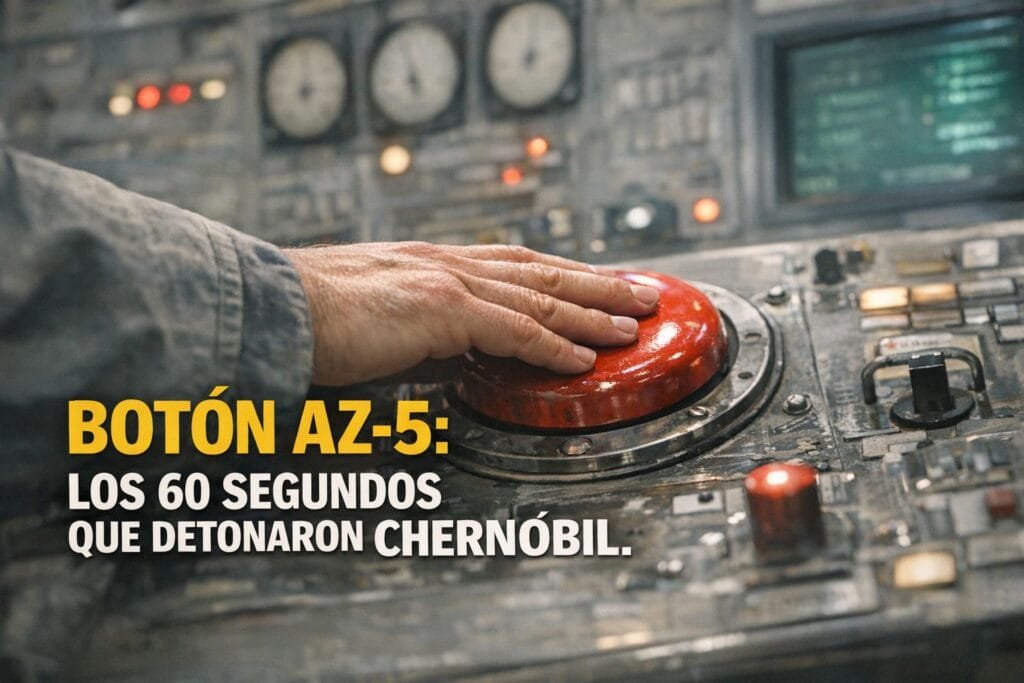
It’s 1:23 a.m. on April 26, 1986, in the control room of Reactor 4 at the Chernobyl nuclear power plant. The night is tense—not because danger seems imminent, but because a safety test has been delayed for hours and, by this point, has become a mess. The crew is tired; rules have been stretched beyond recognition. Then someone presses a button. It was designed for safety, to shut everything down, to serve as the last line of defense. But instead of silencing the metal giant, in those decisive seconds it helps set off a disaster that changes the world they knew.
It’s one of history’s cruel ironies, isn’t it? An effort to improve safety became part of the chain of events leading to one of the worst nuclear accidents in history. Most chilling of all, much of the tragedy unfolded in a handful of minutes, through a chain of human decisions that, with hindsight, reads like a guide to what not to do.
To make the sequence easier to follow, this video reconstructs the key moments:
The “safety test” no one wanted to run
To understand those fatal seconds, we need to rewind. That night, Reactor 4 was scheduled for a turbine rundown test: a simulation to see whether the turbines, as they slowed, could generate enough electricity to keep the cooling pumps running until the emergency diesel generators came online. In theory, it was a safety measure in case of a total loss of power. The test had been attempted and failed before, and the plant staff—especially the day crew who had prepared it—were no longer there. The night shift, less familiar with the details of the plan, had to take over.
Leading the test was deputy chief engineer Anatoly Dyatlov, an authoritarian man with a difficult temperament who pushed to finish it at all costs. Under his supervision, young, inexperienced reactor operator Leonid Toptunov and unit shift supervisor Aleksandr Akimov found themselves in an increasingly dangerous situation. Pressure and overconfidence were central to what followed: Dyatlov believed he had everything under control, dismissing alarms and procedures that warned of danger.
A risky dance with the reactor
Things began going wrong well before those famous seconds. For the test, reactor power had to be lowered to a specific level. But because of an operator error, the power plunged far lower than intended, nearly to zero. A reactor in that condition is unstable and difficult to control. Instead of aborting the test, as common sense and safety called for, Dyatlov ordered the crew to raise the power again.
To do so, the crew withdrew more control rods than permitted. These rods act as the reactor’s brakes, absorbing neutrons and slowing the nuclear chain reaction. Pulling too many out pushed the reactor into an extremely unstable configuration and reduced its safety margin. Indicators and the computer issued warnings, but Dyatlov ordered the test to continue. It was a contest between the machines’ cold logic and human stubbornness.
They had reached a point of no return and violated numerous safety procedures. The reactor also had an inherently flawed design: the notorious positive void coefficient could increase reactivity as coolant turned to steam, and the control rods’ graphite tips could briefly increase reactivity as they entered the core. It was a dangerous setup waiting for a trigger.
Seconds from the abyss: the AZ-5 button
The rundown test began. The reactor’s cooling pumps were running at full power, although the flow and operating conditions were outside the safe limits for the test. Reactor power remained unstable. At 1:23:40, as power began rising out of control, Akimov and Toptunov decided to do what they believed was right: press the emergency shutdown button, the famous AZ-5.
The button was meant to insert all the control rods quickly and shut down the chain reaction. The goal was to stop the uncontrolled rise in power. But here’s the irony: because of the rods’ design—their graphite displacers could initially push water, a neutron absorber, out of the lower part of the core—inserting them briefly caused a massive reactivity spike. For a few critical seconds, the graphite effect drove reactor power sharply upward.
The timeline of those seconds is brutal:
- 1:23:40: The AZ-5 button is pressed.
- 1:23:44: The reactor becomes critically unstable and power surges.
- 1:23:47: Two major power peaks are recorded; the reactor begins to rupture.
- 1:23:50: Superheated steam creates immense pressure.
- 1:23:58: Pressure destroys the core. The first blasts are heard.
- About 1:24: A steam explosion tears open the reactor structure. Further explosions followed, destroying the building and releasing radioactive material into the atmosphere; the exact mechanisms behind the later blasts remain a subject of technical discussion.
In those few horrifying seconds, logic, safety, and technical foresight were overwhelmed by a lethal mix of flawed design, human overconfidence, and a chain of bad decisions. The emergency button became part of the trigger.
The thunder of hell and the dawn of denial
What followed was chaos. The operators, including Akimov, could hardly believe what they were seeing. Instruments suggested a complete loss of power, not an explosion. In the initial confusion, the scale of the disaster was denied or minimized. Dyatlov, injured but insistent, still believed the reactor was intact. Outside, however, the blown-open roof, burning graphite, and scattered nuclear fuel beneath a sky beginning to glow with radiation told a far more sinister story.
Those seconds, set in motion by the press of a button, destroyed Reactor 4 and unleashed a radioactive cloud that spread across Europe. They forced the evacuation of hundreds of thousands of people and left a legacy of illness and fear that endures. Faith in nuclear power as it was understood then was shattered alongside the reactor building—and the world had to reckon with the consequences.