
The glow that stayed inside
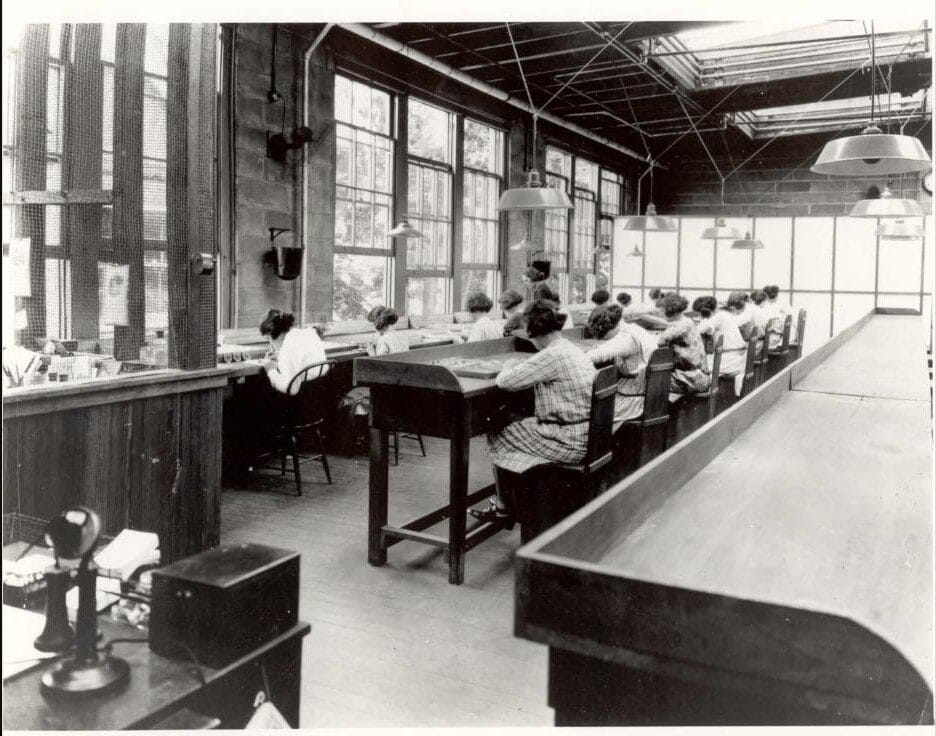
The room is silent except for the soft scrape of brushes. In rows, young women bend over tiny watch faces and miniature numbers. The paint is milky, almost pretty, and when the lights go out, the magic happens: everything glows green. Some laugh. Others think it is a fairground trick.
To sharpen the brush tip, they do what they have been taught: wet it with their mouths. One quick, automatic gesture, like licking a finger to turn a page. What they cannot see is that the glow does not stay on the dial. It stays in them.
This video helps put images to the story—and shows why that “glow” was a trap.
A “modern” job for young women
In the 1910s and 1920s, radium had become a kind of magic word. It was the star ingredient of a luminous modernity: watches visible in the dark, military instruments readable at night and a public fascination with anything “radioactive” that now sounds like a macabre joke.
Radium was mixed with a phosphorescent compound, often zinc sulfide, to make luminous paint. Radium does not shine like a light bulb on its own; its radiation excites the phosphorescent material, which emits visible light.
Industry needed precise hands and steady brushwork. Many of the workers hired were very young women. The job paid relatively well for its time and carried an air of prestige: they were working with a cutting-edge material. The finished product was almost poetic—time glowing in the dark, as if the future had its own light.
The trouble was a fatal habit built into the process: “lip-pointing,” or sharpening the brush with the lips. They ingested tiny amounts of paint constantly. It was not a spoonful; it was a routine. Like accidentally swallowing crumbs every day: it seems like nothing until you realize you have been eating the whole loaf for years.
Radium was not “just another powder”
We now know radium is chemically similar to calcium. When the body encounters something that resembles a useful mineral, it can make a tragic mistake: it incorporates it. Radium tends to settle in the bones, where it irradiates tissue and bone marrow for years.
The most sinister part was that radium did not warn you with a strange taste or smell. It did not sting, burn or hurt on the way in. It was like an invisible debt: everything seemed normal at first, then the interest came due.
At the time, radium also had an almost medicinal aura. Consumer products advertised “radioactive” benefits—a trend that would later be banned. That culture of trust helped workers suspect nothing. If something “gave you energy” and glowed, how could it be bad?
When the body began to shut down
The first symptoms did not look like an industrial story, just a run of bad luck: toothaches, fatigue and infections that would not heal. Some women went to the dentist. Then the unthinkable happened: after a tooth was pulled, the wound did not heal properly and the jaw weakened. In severe cases, bone tissue died.
The image that remained in the public memory was “radium jaw,” a devastating injury associated with internal exposure. Anemia, fractures from minor knocks and bone pain appeared too. This was not one sudden accident but a slow, systematic deterioration—as if their bodies were being filed down from the inside in the same way they sharpened their brushes.
The cruelest part was that many of them were young. At a time when youth was supposed to mean automatic health, their bodies began to behave as if they had aged overnight. And there was no clear explanation that fit the public image of the job: clean, seated and “safe.”
Science, business and time—which also plays a role
Radium’s dangers were not completely unknown. The risks of radiation had been recognized, and injuries from other kinds of exposure had been documented. But between “knowing something” and protecting thousands of people lies an abyss made of incentives, denial and bureaucracy.
Companies had a great deal to lose if people accepted that the material was dangerous in industrial use. The pattern of radium injury made responsibility harder to prove: the effects could take years to appear. By the time illness became obvious, it was easy to claim it had nothing to do with work, or that it was something else.
And the critical gesture—bringing the brush to the mouth—was taught as part of the job. It was not an isolated worker’s mistake; it was the technique. That is a huge moral difference. It is not “someone ignored a safety rule” when the rule itself is “swallow the risk.”
The “Radium Girls”: from invisible workers to a landmark case
Over time, the dial painters’ cases became a symbol. They are often remembered collectively as the “Radium Girls,” a popular term for several affected workers in different factories. It was not one story but many similar stories, repeated in different places with different names, lawsuits and outcomes.
What changed the course of events was not only the tragedy but the decision by some of the women to take their employers to court. Suing a large company as a young, sick woman in the 1920s was no simple task. They risked being called hysterical, dishonest or opportunistic. They were racing the clock in the most literal sense: legal time, medical time and biological time.
They did it anyway. Their fight helped establish precedents for corporate liability and compensation for occupational illness. It was not a clean or quick victory; there were settlements, defensive tactics and delays. But the cases became a turning point in the public conversation about workplace safety.
How a tragedy rewrote occupational public health
“It changed the law” is true, but sounds too tidy. In practice, these workers’ story pushed the United States to take seriously something that now seems obvious: work can make you sick in invisible ways, and the individual cannot simply be blamed.
The case helped consolidate ideas that later became part of occupational health: exposure limits, monitoring, independent research and recognition that some illnesses are not “bad luck” but consequences of an industrial environment. It also left a lesson about latency: harm may not appear the next day, even though it is accumulating from day one.
Think of smoke in a room. At first it seems like a tolerable haze, even “atmospheric.” Then you realize you have been breathing it for hours and can no longer ignore the sting in your eyes. With radium, the smoke is invisible. The body still remembers it.
The irony of the glow: “harmless” sold as a virtue
One detail makes the story especially unsettling: this was not a hidden, clandestine or dirty substance. It was a selling point. It glowed. In a sense, radium became a victim of its own cultural marketing—the idea that something new and scientific must be good simply because it is new and scientific.
Here is a gentle but sharp irony: putting radium on one’s lips—or, more accurately, bringing a brush loaded with radioactive paint to the mouth—was not rebellion or an oddity. It was a work routine, like biting your nails without thinking. Except this habit did not stay on the skin; it entered the body and settled in the skeleton.
The story also reminds us that safety rarely fails for lack of “good intentions.” It fails through haste, willful ignorance and the phrase that has killed more people than many poisons: “It’ll be fine.”
What remains when the light goes out
Radium no longer holds the glamorous place it once did, and luminous paint is now made with other materials. But the workers’ question remains: how often do we mistake something eye-catching for something safe?
They painted time so others could see it in the dark. In the end, their case illuminated something else: progress without protection is only an elegant way of shifting risk onto the people with the least power to refuse it.
If a glow can mislead us so easily, what else do we accept today as harmless simply because, in one way or another, it shines?
If this story caught your interest
Explore the Tunguska airburst that flattened Siberian forest without leaving a crater.
For more on the case, look for books about the Radium Girls.