
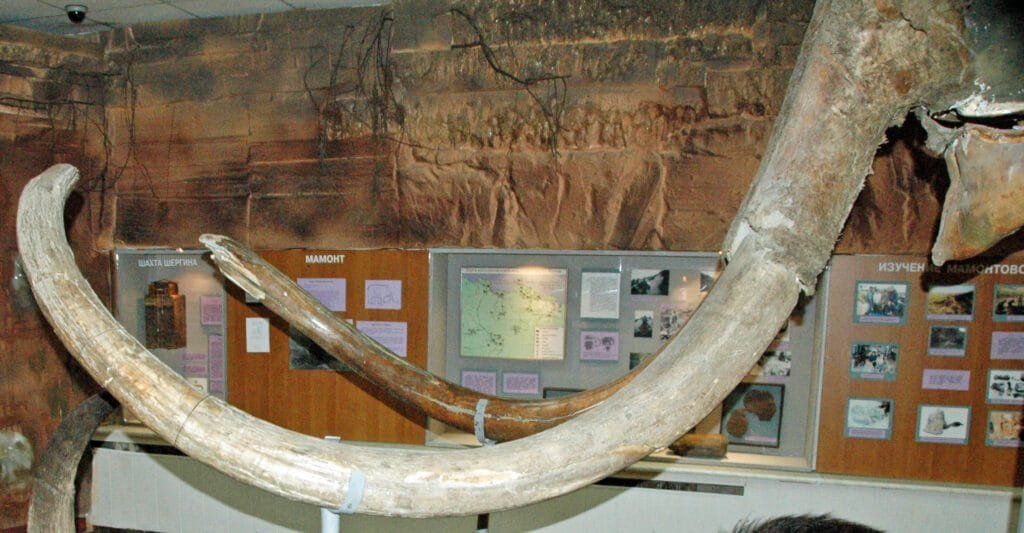
While freshly cut stone was in the air at Giza, mammoths were still walking somewhere in the Arctic
Picture the scene: the sun beats down on the Giza plateau, the air shimmers and dust sticks to your skin. Work has a steady rhythm. Sledges creak, ropes pull taut and blocks move inch by inch. The Great Pyramid is under construction—or perhaps nearly finished—and the project has the mix of routine and obsession that only happens when an entire society takes a gigantic idea seriously.
Now cut to another scene, far away, so far the map seems to fold over itself: a cold, windswept island in the Arctic called Wrangel. There are no quarries, ramps or scribes. There is tundra, silence and, surprisingly late in human history, a small population of woolly mammoths still breathing, feeding and leaving tracks in frozen mud.
Here is the mind-bending part: mammoths were still alive centuries after Egypt had begun building pyramids. Not “in some distant age,” but while humans were already organizing monumental construction, administrations and states. It sounds like a history meme—but research reported by outlets such as Sci.News, ScienceAlert and PBS, along with the usual archaeological chronology, supports it: the Wrangel mammoths disappeared around 2000 B.C., while the Great Pyramid dates to around 2560 B.C.
If you want to see the timeline comparison, this video helps put the dates in perspective.
Two timelines our brains refuse to put together
We are used to sorting the past into boxes: “prehistory” over here, “civilizations” over there. As if a door shuts when you cross the threshold, and there are no more Ice Age animals on the other side. Reality is messier—and that is what makes it more interesting.
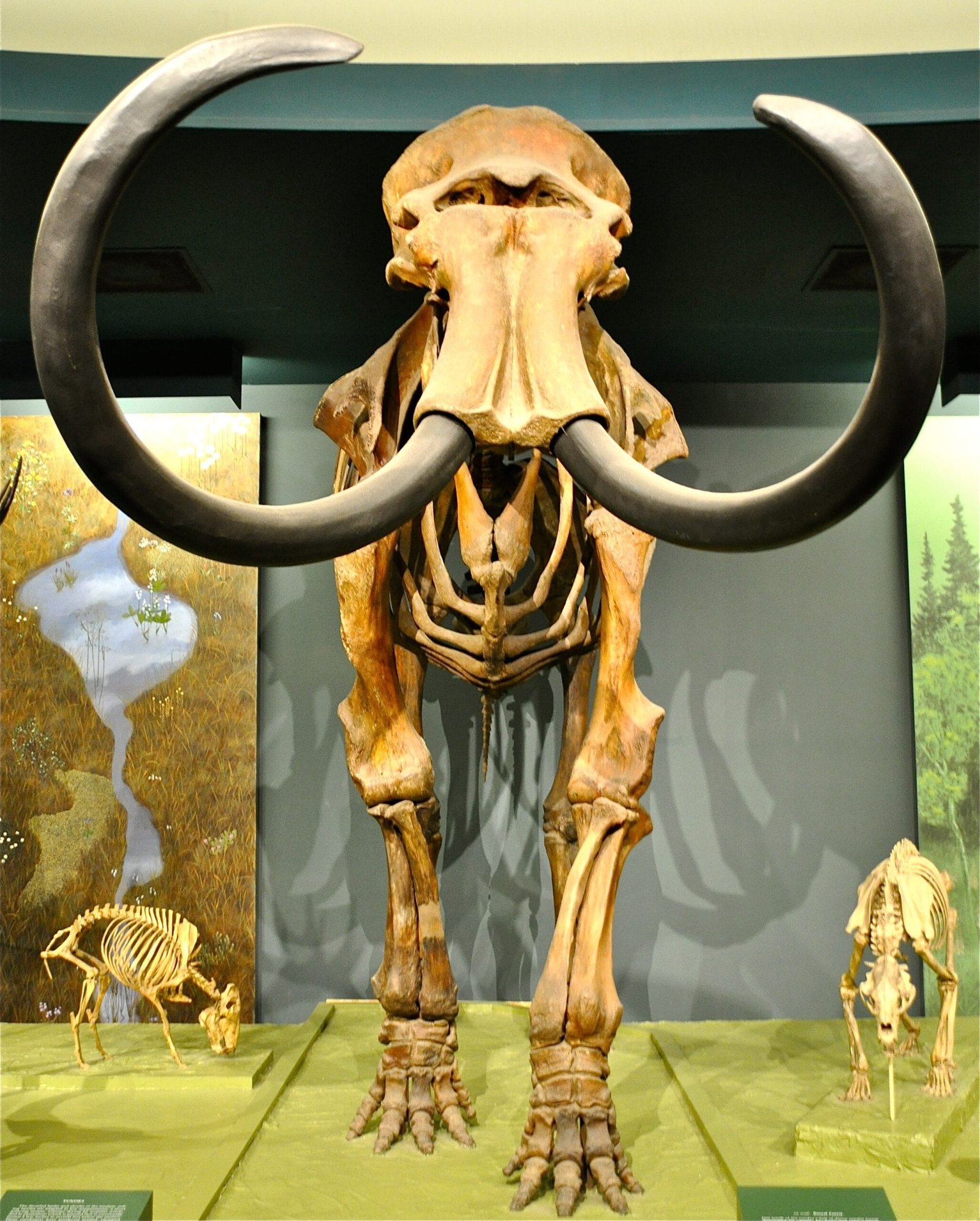
The Great Pyramid of Giza was built during Egypt’s Old Kingdom, in a world with monumental architecture, complex administration and a culture that left its mark everywhere. Meanwhile, woolly mammoths—animals we associate with cave paintings and hunters carrying spears—had not vanished from the planet. They had simply retreated to places where they could hang on.
For a modern comparison, we sometimes think of mammoths as nature’s floppy disks and pyramids as the ancient world’s smartphones. Well, for a while, the floppy disk and the smartphone coexisted. Not on the same desk, obviously, but on the same planet, under the same sun.
Wrangel: the last refuge (and an undramatic ending)
Wrangel Island lies in the Arctic, north of Siberia. Even today, it sounds like the edge of the world. And that is exactly why it became a refuge: as the climate shifted after the last ice age and many mammoth populations disappeared from the mainland, some groups survived in isolation on islands.
A population of woolly mammoths survived on Wrangel for thousands of years. We are not talking about one lonely “last mammoth,” but a small community that kept the species going there until a surprisingly recent point in historical terms: around 2000 B.C. (estimates vary by study and method, but that is the right ballpark).
The unsettling part is that their disappearance does not seem to have been the cinematic finale we might imagine. There was no “final battle” against the ice. In many accounts, extinction sounds like a cataclysm; here, a combination of vulnerability and bad luck is more plausible. An isolated population is like a tiny town with one access road and few resources. Any blow—environmental change, disease, freshwater problems or loss of genetic diversity—can be fatal.
Researchers have debated what finished off the Wrangel mammoths. Some studies have pointed to possible signs of environmental stress and ecosystem problems; others have explored the role genetics can play in small populations, as discussed in this look at the genetics of the last woolly mammoths. And an uncomfortable question always lingers: were humans involved? There is evidence of human presence on Wrangel at different times, but linking that to the mammoths’ final extinction is harder than it sounds. Here it is worth being precise: their late survival and approximate disappearance date are well supported; the exact “how” remains a matter of probabilities.
Egypt, pyramids and the mental trap of “ancient”
The chronology of Giza carries symbolic weight of its own. The Great Pyramid is usually dated to around 2560 B.C. (with some variation across sources and methods) and belongs to a period when Egypt already had a tradition of monumental construction. It was not a first attempt; it was the result of accumulated knowledge, organization and a clear political and religious vision.
When you hear “pyramids,” your brain opens a folder called “ancient” and closes it. But “ancient” is not one uniform block. Roughly five centuries separate the Great Pyramid’s construction from the disappearance of the Wrangel mammoths. To make that feel real, that is about the distance between us and the beginning of the 16th century. If someone told you that animals we associate with the Ice Age still existed during the time of the early Habsburgs, it would sound absurd. And yet that is the kind of overlap that happened.
History does not move like an orderly line at the grocery store. It moves like a shared house where every room runs on its own schedule: something sophisticated is invented in one room, something ancient survives in another, and styles that “shouldn’t” overlap according to our mental map share the hallway.
How do we know mammoths survived that late?
The answer is scientific evidence: mammoth remains—bones and tusks—dated using techniques such as radiocarbon dating. Dates from Wrangel fit that late survival, around 2000 B.C. That is the solid part of the story: it is not a legend or a headline writer’s exaggeration. For more context, read this study on why mammoths survived so late on Wrangel Island.
There is another detail that adds an extra layer of strangeness: Wrangel mammoths were generally smaller than their mainland relatives, which fits what is known as island dwarfism. On islands with limited resources, evolution sometimes favors smaller bodies, as if nature were adjusting the budget. It is the biological equivalent of moving into a smaller apartment because the rent has gone through the roof: you reduce your body’s square footage to make do with less.
What this overlap tells us about ourselves (and our labels)
There is something almost funny about the way we label the past. We stamp mammoths “prehistoric,” as if that means “before anything interesting.” We stamp pyramids “ancient mystery,” as if they mark the beginning of human sophistication. But the planet does not run on labels; it runs on overlap.
While Egyptians raised monuments with a precision that still impresses us, an iconic species from a changing climate survived on the other side of the world. That does not mean Egyptians could have seen mammoths or that the two worlds were in contact. It means something simpler and more powerful: the Ice Age did not end all at once, and the age of civilizations did not begin all at once. The two timelines overlap in the real calendar, which is stranger—and more human—than we like to admit.
It is also a reminder of an uncomfortable idea: extinction is a process, not just an event. Sometimes it is fast and dramatic; sometimes it is slow and quiet, like a candle going out when nobody is watching. The last mammoths on Wrangel did not fall to an imperial civilization. They probably succumbed to a collection of factors that, together, made survival impossible.
A planet where the impossible coexists
If you keep one image, make it this: pyramids rising in the sun while, thousands of miles away, mammoths walk across the tundra. Two icons your mind had filed under different eras, existing in the same world at the same time.
And the question left hanging in the Wrangel wind is hard to avoid: if the past could combine such wildly different pieces without asking permission from our categories, how many things in the present do we think we understand only because we have put them in boxes that are too comfortable?