
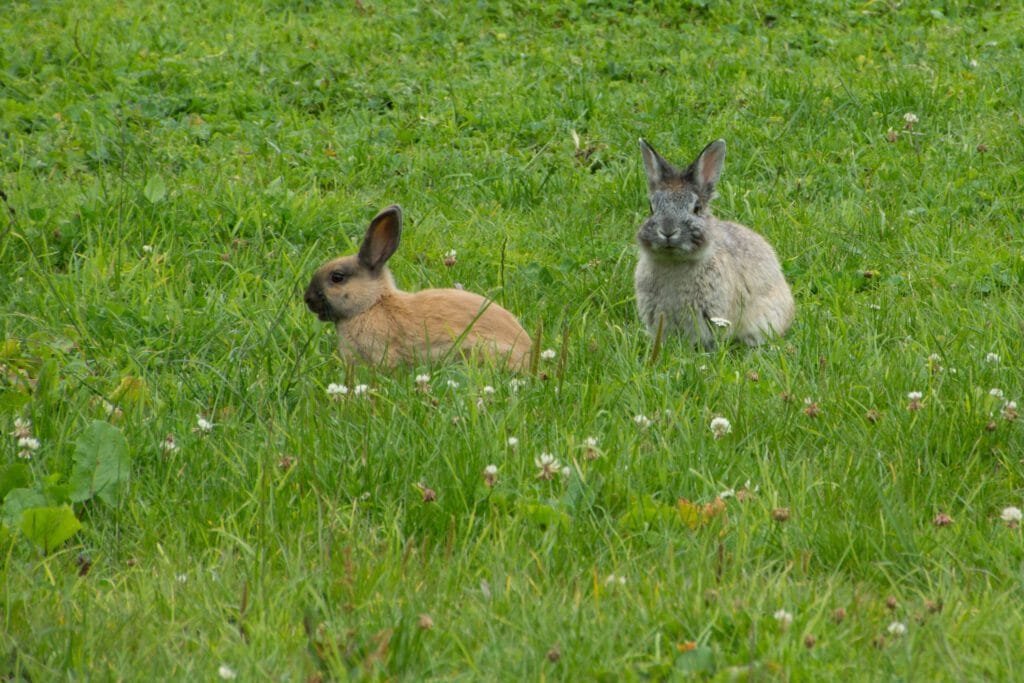
The day an army of rabbits put Napoleon himself to flight
The emperor is in a good mood. There is a celebratory air, gunpowder still lingers in recent memory, and after so many maneuvers and signatures there is a rare, almost domestic calm. A group of men moves across the field, preparing some “harmless” fun: a hunt. Then someone gives the signal, and rabbits begin emerging from the grass. First a few. Then more. And more. Suddenly they no longer look like separate rabbits, but a living mass advancing as if it had one idea in mind.
Napoleon Bonaparte, the man who had made entire armies retreat, finds himself in a scene of physical comedy: he is not the one charging; he is the one being charged. And they are not Cossacks or hussars. They are rabbits.
If you want a visual summary of this anecdote, and a sense of the way it has been told ever since, here is a video that puts it in context:
A hunt to celebrate peace (and ego)
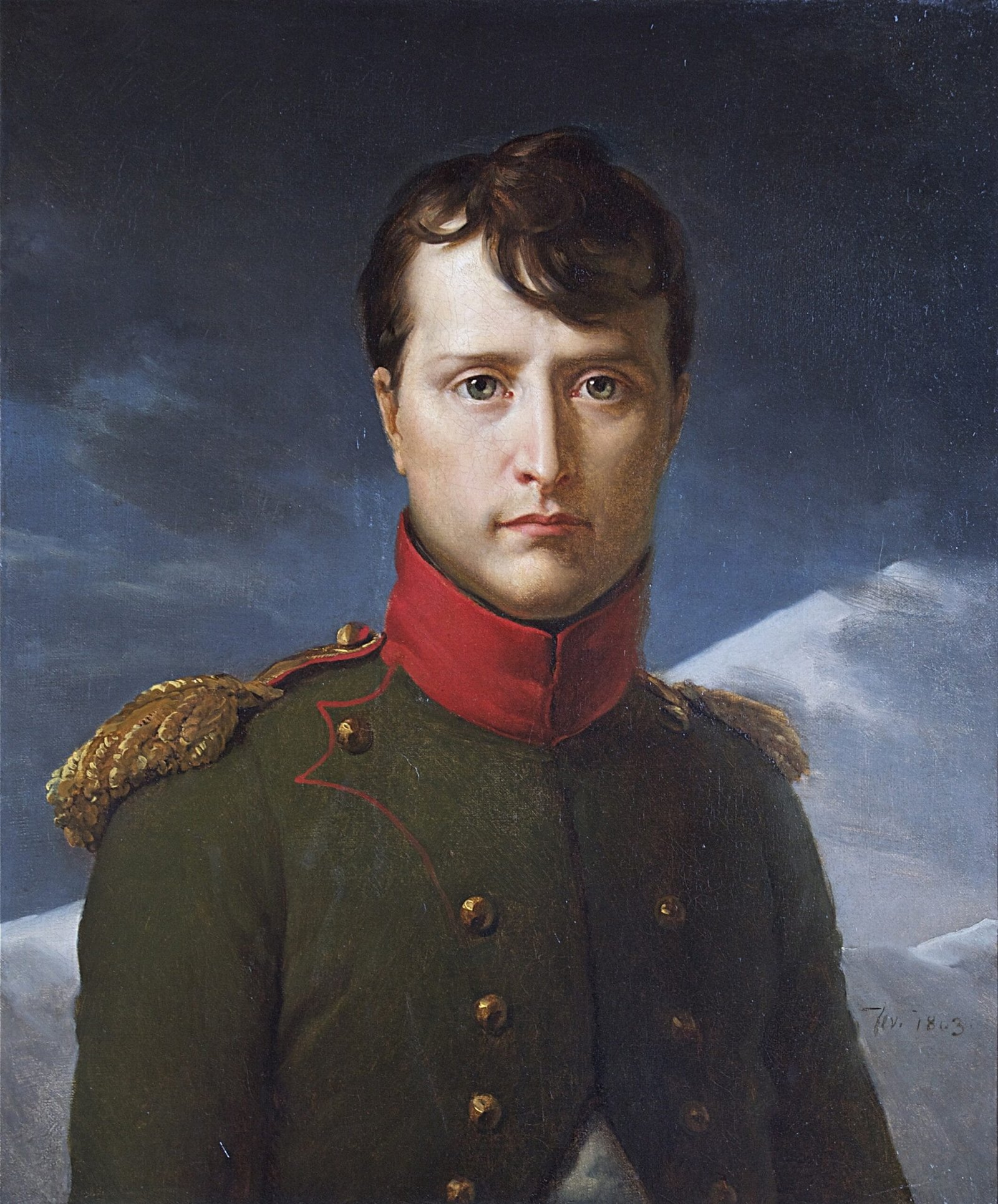
The setting could hardly have been more solemn. In July 1807, after the Treaties of Tilsit were signed, Napoleon and his circle were enjoying a political truce and a little self-congratulation. In that mood, Marshal Louis-Alexandre Berthier—a key part of the Napoleonic machine—organized a hunt to entertain the emperor and his guests.
The idea was classic: gather animals, release them in a controlled area and turn the day into a display of marksmanship, authority and mastery over nature. A kind of imperial team-building exercise, but with gunpowder and waistcoats.
So far, so normal. The strange part was the casting logistics. In this story, the “enemy” did not behave like an enemy, but like an enthusiastic audience that mistook the main character for the person handing out food.
The detail that ruined everything: they were not wild rabbits
The key—and the reason the episode survives as an anecdote—is a detail that seems minor: the rabbits used were not necessarily wild animals caught at random. They had been gathered for the occasion and were probably, for the most part, domestic rabbits or animals accustomed to people.
That changes the whole script. A wild rabbit faced with a noisy group of humans tends to do what anyone with common sense would do: bolt in the opposite direction. A rabbit used to people approaching with food, on the other hand, may read the scene as an opportunity. Not a threat, but a buffet.
It is like organizing a “battle” against pigeons in a plaza and, instead of fleeing, they surround you because they see a bag of bread. Except here the “bread” was the emperor and his entourage, and the expectation was food and routine.
The charge: when small becomes unstoppable
Modern popular accounts say that when the animals were released, the rabbits did not scatter. They moved toward Napoleon and the hunters, not timidly but in waves. The picture is easy to imagine: a group trying to preserve its dignity while a carpet of ears and whiskers rolls toward them.
There is something deeply unsettling about a small crowd that is not afraid. One rabbit can look like a detail in the landscape; hundreds at once are something else. It is like raindrops: one does not matter, but when a downpour arrives, you stop negotiating and look for shelter.
The scene has a delicious irony, too: the emperor who controlled maps and borders faces a problem in basic physics. You cannot “intimidate” a mass of animals that does not understand your rank. If that mass also interprets your presence as a good sign, the result is an absurd siege.
Did Napoleon and his party really “run away”?
The usual story says Napoleon tried to scare them off—with gestures, help from his entourage, perhaps even shots into the air—but the rabbits kept coming. Eventually, the situation supposedly escalated until Napoleon retreated, and some versions add that he took shelter in his carriage.
It is worth being honest about the kind of story this is. We are not looking at a military dispatch or an official document sealed with wax, but an anecdote passed down through historical compilations and repeated by popular media. Those compilations accept the central event—a hunt organized by Berthier after Tilsit and the rabbits’ unexpected behavior—but the exact details can vary: how many rabbits there were, what Napoleon did, and whether he actually “ran” or simply withdrew with wounded dignity.
The point is not whether the emperor sprinted as if cavalry were after him. The point is the reversal of the symbol: for a moment, power looked ridiculously vulnerable in front of something meant to be little more than background decoration.
Why a rabbit can “beat” an emperor
The story works because it combines two irresistible ingredients: a mismatch and a misunderstanding. An emperor cannot lose to a rabbit—unless the rabbit is not playing the role of “prey.” If the animal approaches because it expects food, your authority is not merely useless; it works against you. In war, your presence may intimidate. On a farm, it can mean “dinner time.”
There is also a collective-behavior factor. Rabbits are not wolves, but any animal in a group can create a sense of pressure. No conscious aggression is needed: each one advances a little, and before you know it, a steady force is pushing toward you.
It is an everyday phenomenon wearing a historical mask: think of a subway exit at rush hour. Nobody is trying to knock you over personally, but if you stop in the wrong place, the human current still pushes you. Swap coats for fur and you have your rabbit “army.”
The cultural detail: hunting as a theater of control
Hunting, especially among powerful circles, was not just recreation. It was theater: a stage where the leader demonstrated composure, marksmanship and command of the surroundings. It told a story without words: “I am in charge here.”
That is why the anecdote survived. It reverses the performance. The stage rebels, but not with epic violence—with adorable clumsiness. The result is more corrosive than a serious defeat. If you lose a battle, you can explain it. If rabbits surround you because they think you are a food dispenser, the explanation sounds childish even if it is true.
In miniature, it is a lesson about how fragile symbols can be. Authority depends on others accepting the script. The rabbits accepted nothing; they did not even know there was a script.
How many rabbits would it take?
Many versions mention hundreds, sometimes suggesting a very large number, because the scene needs enough animals to feel like a wave. But it is easy to fall for a round, spectacular number. The prudent conclusion is simply that there was a mass release large enough for the collective behavior to feel intimidating—and impossible to ignore.
In terms of sensation, you do not need thousands to feel overwhelmed. You only need the ground to seem as if it is moving. It is like spilling a jar of chickpeas in the kitchen: they are not dangerous, but suddenly the floor becomes a logistics problem, and your dignity goes down the drain as you try to stop them rolling under the refrigerator.
Now imagine those “chickpeas” have legs, curiosity and no respect for your uniform.
What the anecdote says about history (and us)
We like Napoleon as a bronze figure: strategist, lawmaker, legend. But real history is full of moments when the bronze softens. This anecdote changes no campaign or treaty, but it does prick a bubble—the belief that power is constant, coherent and always frightening.
Power also depends on ridiculous things, such as a bad logistical choice. If the rabbits had been wild rather than accustomed to people, perhaps the hunt would have been routine and nobody would be talking about it two centuries later. But the world does not always cooperate with the script written for great men. Sometimes it follows the script written by small animals.
That is the paradox that makes the story so sticky: Napoleon built his legend by moving human masses like chess pieces, yet a mass of rabbits—with no strategy, ideology or map—managed something many generals would have celebrated: making him retreat.
If an emperor can lose control of a scene because of a furry misunderstanding, how often in our own lives do we confuse “authority” with “control,” and “control” with the world behaving as expected?
Read more about the episode
If you want to see how modern popular history tells the story, here is the account of the time Napoleon was attacked by rabbits during a hunt, along with the story of Napoleon “defeated” by a horde of domestic rabbits.
If this story caught your interest…
You may also enjoy Josephine Baker, the Resistance spy who hid messages in her costume.