
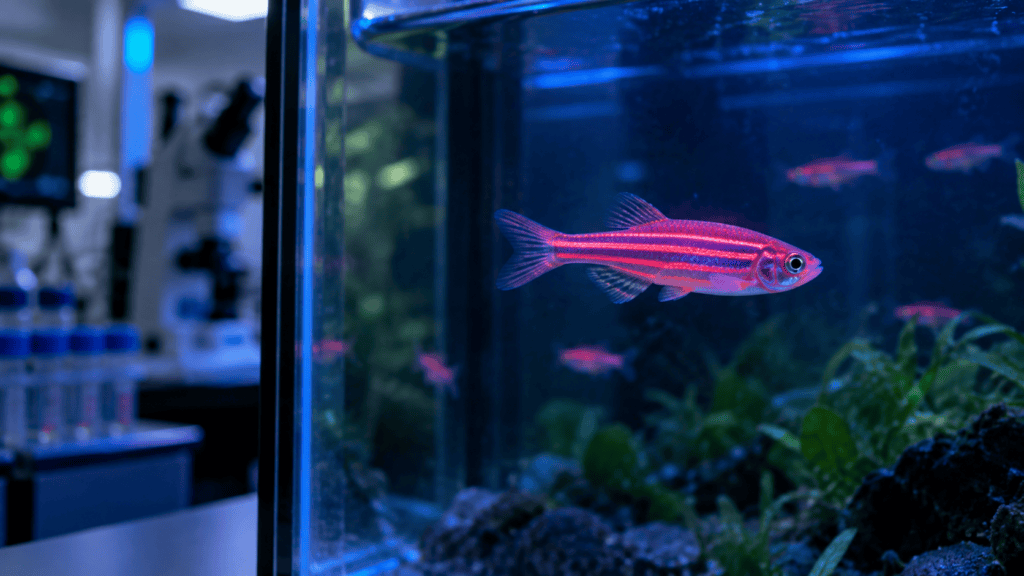
GloFish began with a scientific idea: use fluorescent proteins to make changes in water visible. Researchers introduced genes associated with coral fluorescence into zebrafish, a hardy freshwater species widely used in biomedical research. The resulting fish were not painted; their cells produced the color.
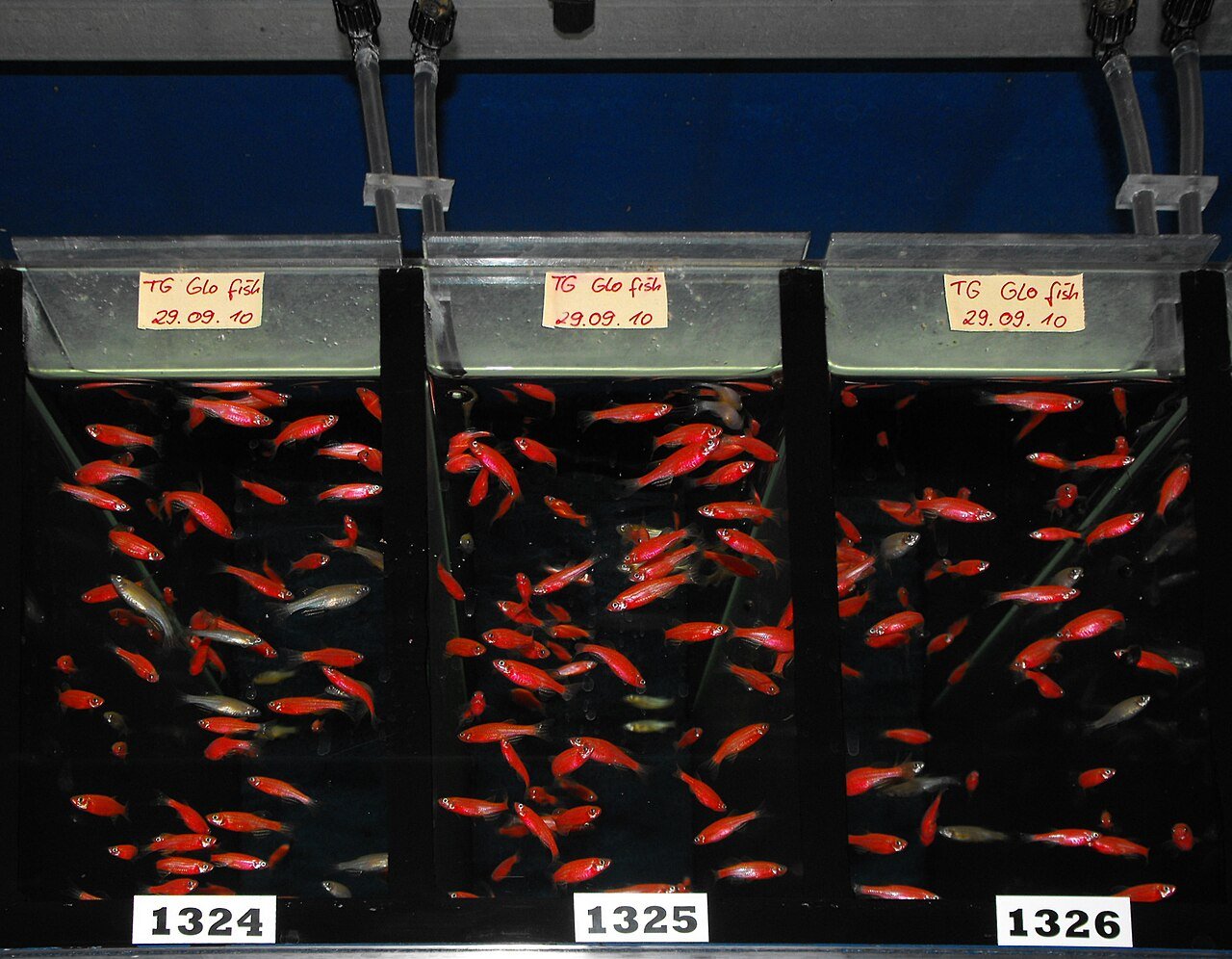
From signal to pet
The original goal was environmental: changes in fluorescence could help signal toxic substances in water. Commercial use followed because the fish were colorful, resilient and easy to keep. GloFish became a familiar example of how a laboratory organism can become a consumer product.
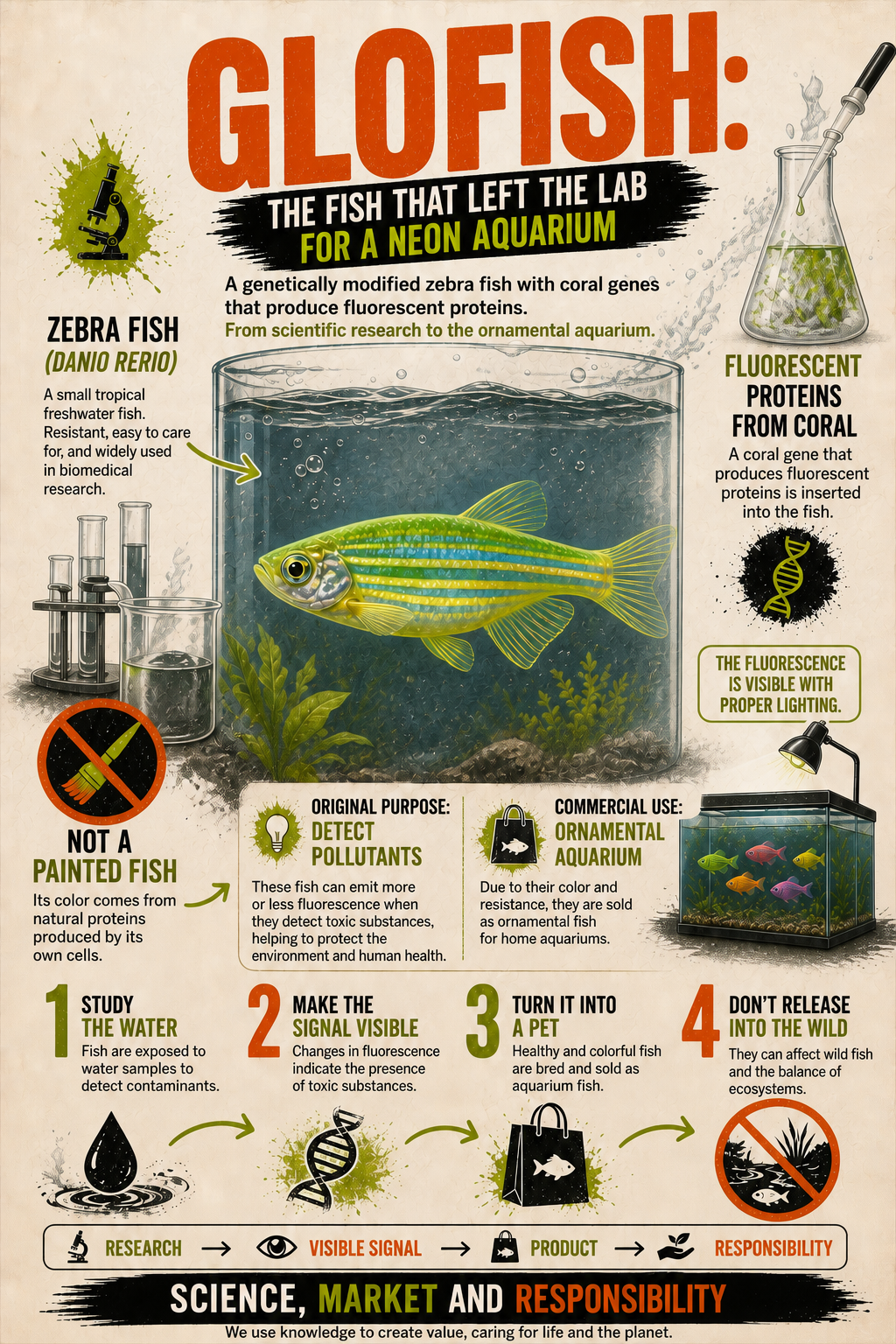
Responsibility beyond the aquarium
Like any ornamental species, GloFish should not be released into the wild. Biotechnology can make a valuable tool or product, but responsible use includes understanding where it belongs and what it can affect outside the aquarium.