

Try a quick thought experiment. Read this: you have abilities you do not always use; you need other people to value you; at times you feel very sure of yourself, and at other times you doubt your decisions. If it sounds familiar, that does not necessarily mean the text has peered into your soul. It means it was built to leave room for you.
Bertram R. Forer tested this in a classroom. He gave his students a personality questionnaire and told them they would receive an individual analysis based on their answers. Then he handed every student the same paragraph: a mix of vague statements, compliments and gentle contradictions. The average rating was about 4.26 out of 5. Their supposedly personal portraits had been mass-produced.

The original experiment was published in 1949 as The Fallacy of Personal Validation. The title is dry for a phenomenon that explains why a horoscope can walk into a room, sit on your couch and start talking as if it has known you since childhood.
Forer’s original paper is the reference worth keeping—not the pile of viral quotes that circulate without context. The recipe works for several reasons. General statements feel specific when we connect them to concrete memories. Compliments lower our defenses. Contradictions let almost anyone find a match. And when a sentence fits, we tend to remember it better than the ten that missed.
That is why “you are reserved, but you can also be very outgoing” is so hard to resist. It is not describing you; it is giving you two doors and waiting for you to walk through the one that suits you. The text provides the frame, and you supply the biography: the arguments, the weird Tuesday in 2017 and that time you said you hated parties while planning one.
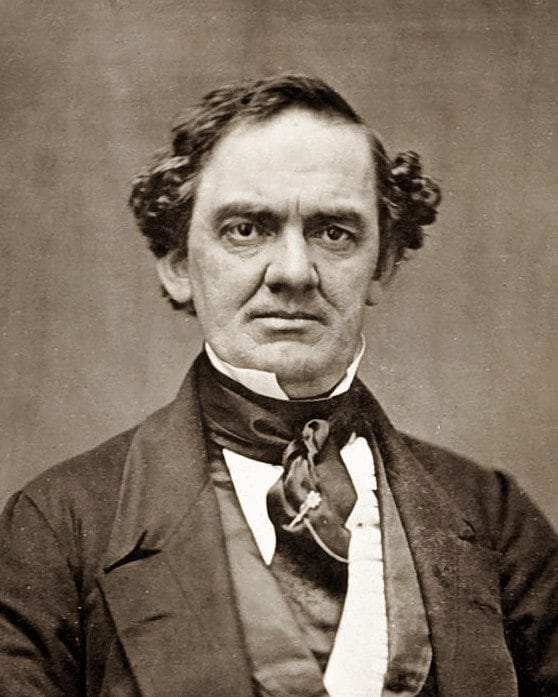
The effect is also called the Barnum effect. The name points to the idea of offering something for everyone, like the famous line attributed to P. T. Barnum that there is something for everybody. The connection should be explained carefully: Forer’s experiment is the documented anchor; Barnum is the popular name for the effect.
This does not prove horoscopes are always useless or that people have no measurable personality traits. It shows that feeling recognized and being described accurately are not the same thing.
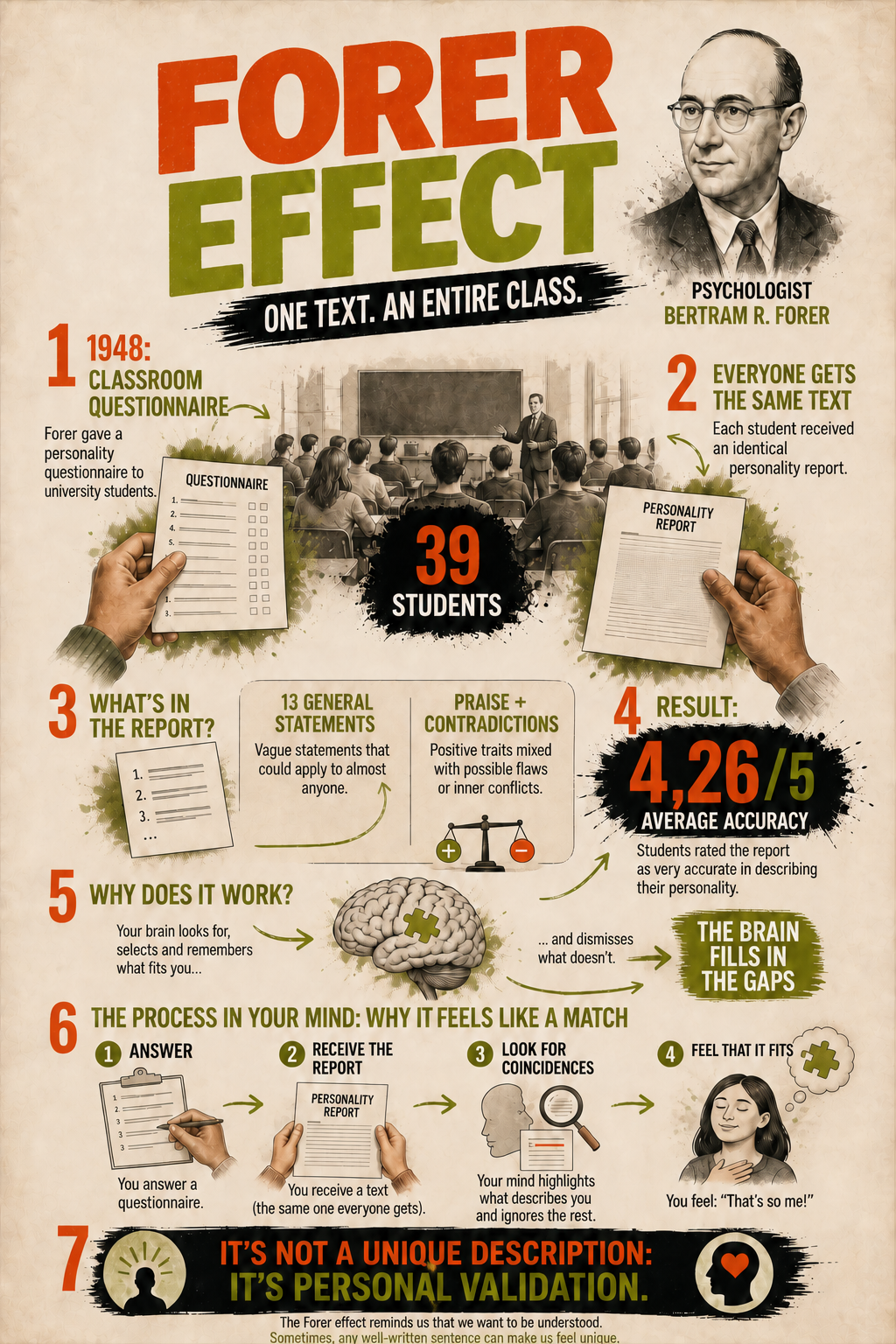
If you want to test it, swap two profiles without telling anyone who gets which one. The brain will work overtime to explain why yours fits. You can also connect this story to confirmation bias, because both share a bad mental habit: paying more attention to what confirms our first impression.
Next time a description seems to have read your soul, do not tear it up or obey it. First ask how much room it leaves for you to finish writing it yourself.
Sources
- Bertram R. Forer, “The Fallacy of Personal Validation” — original study (published in 1949).
- Encyclopaedia Britannica — overview of the Barnum effect.
The same text was given to everyone, yet almost all felt it was speaking directly to them. The experiment worked because the supposed portrait felt intimate and personal.