
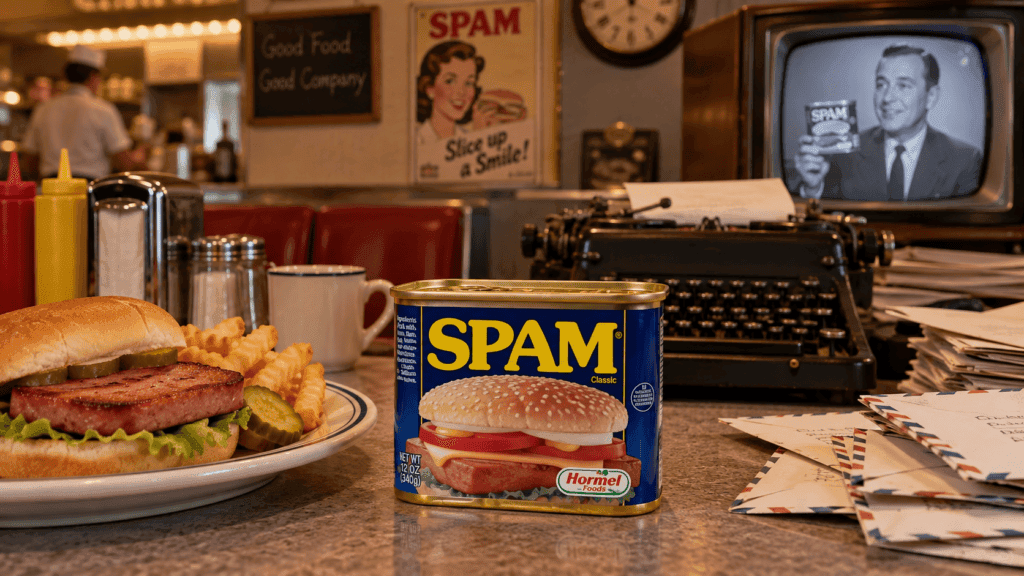
Before it filled inboxes, SPAM filled shelves. Hormel introduced the canned pork product in 1937, and during World War II millions of cans traveled with soldiers around the world. Its name was short, memorable and impossible to avoid—qualities that later made it perfect for a different kind of nuisance.

From a comedy sketch to the inbox
Monty Python’s 1970 sketch repeated the word “spam” until it drowned out every other conversation. Early online communities adopted the term for intrusive, repetitive messages; by the 1990s it had become the common label for unsolicited bulk email.
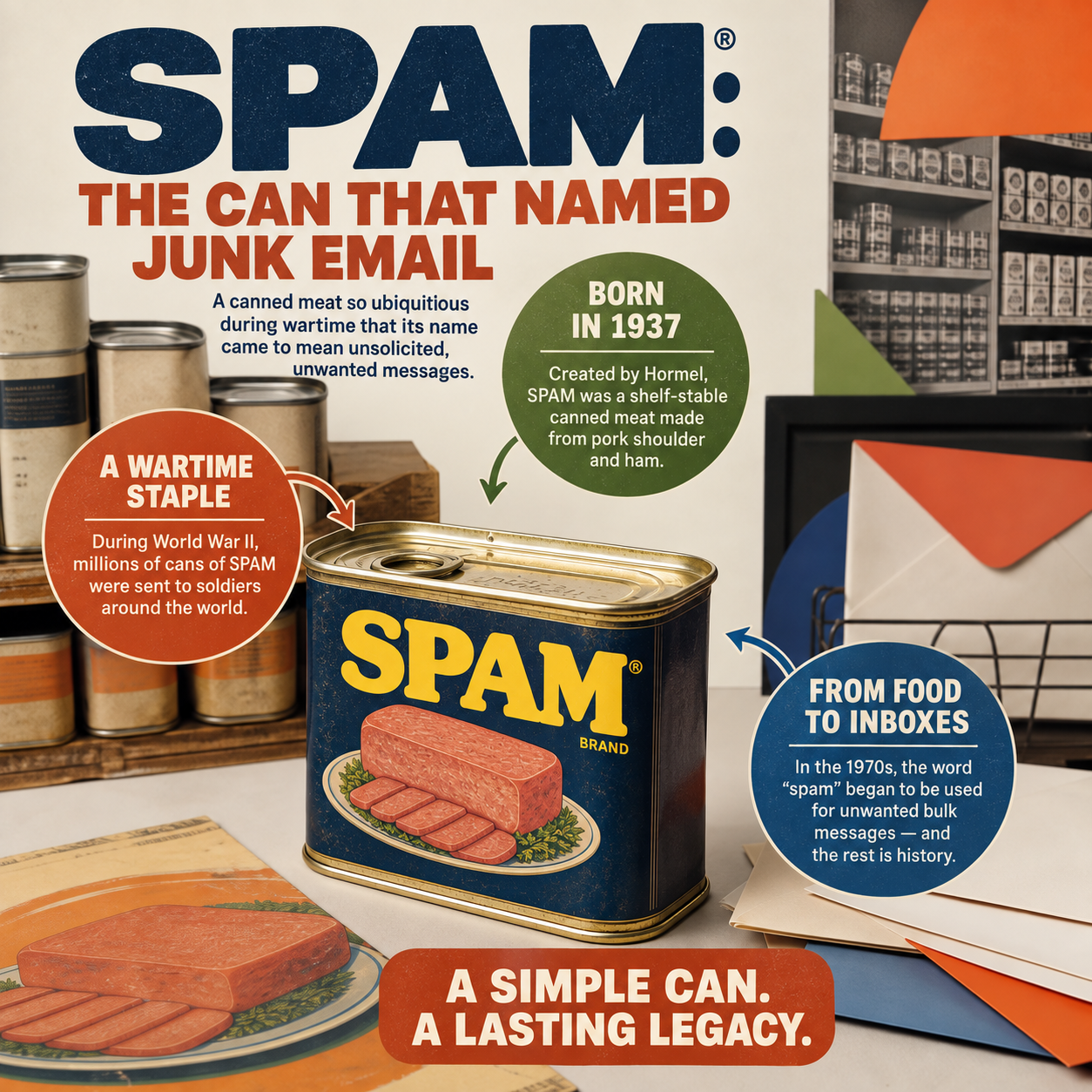
The name stuck because it describes the experience better than technical language ever could: too much of the same thing, delivered where it was not wanted.
Sources consulted for this article
- SPAM Brand — product history.
- Monty Python — comedy context.
- IETF — email and anti-spam standards.