
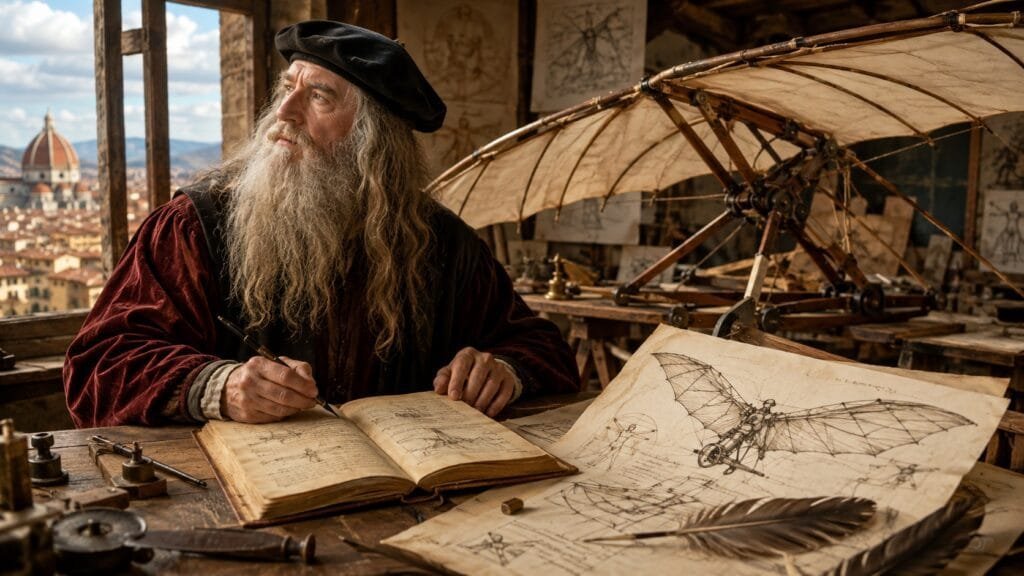
Leonardo da Vinci watched birds, drew wings, dissected bodies and filled notebooks with machines that tried to answer one question: how could a human leave the ground? He did not build an aircraft that flew, but he treated flight as a problem of observation, force and design long before modern aviation existed.
Drawing as research
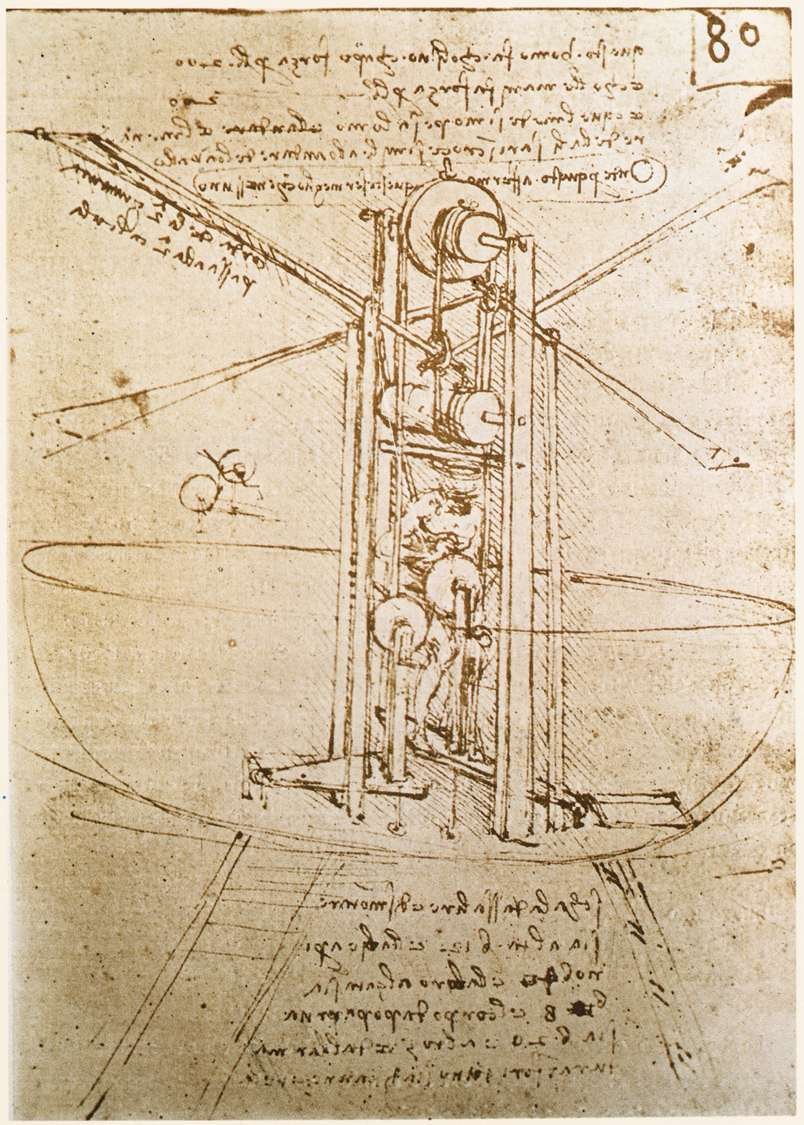
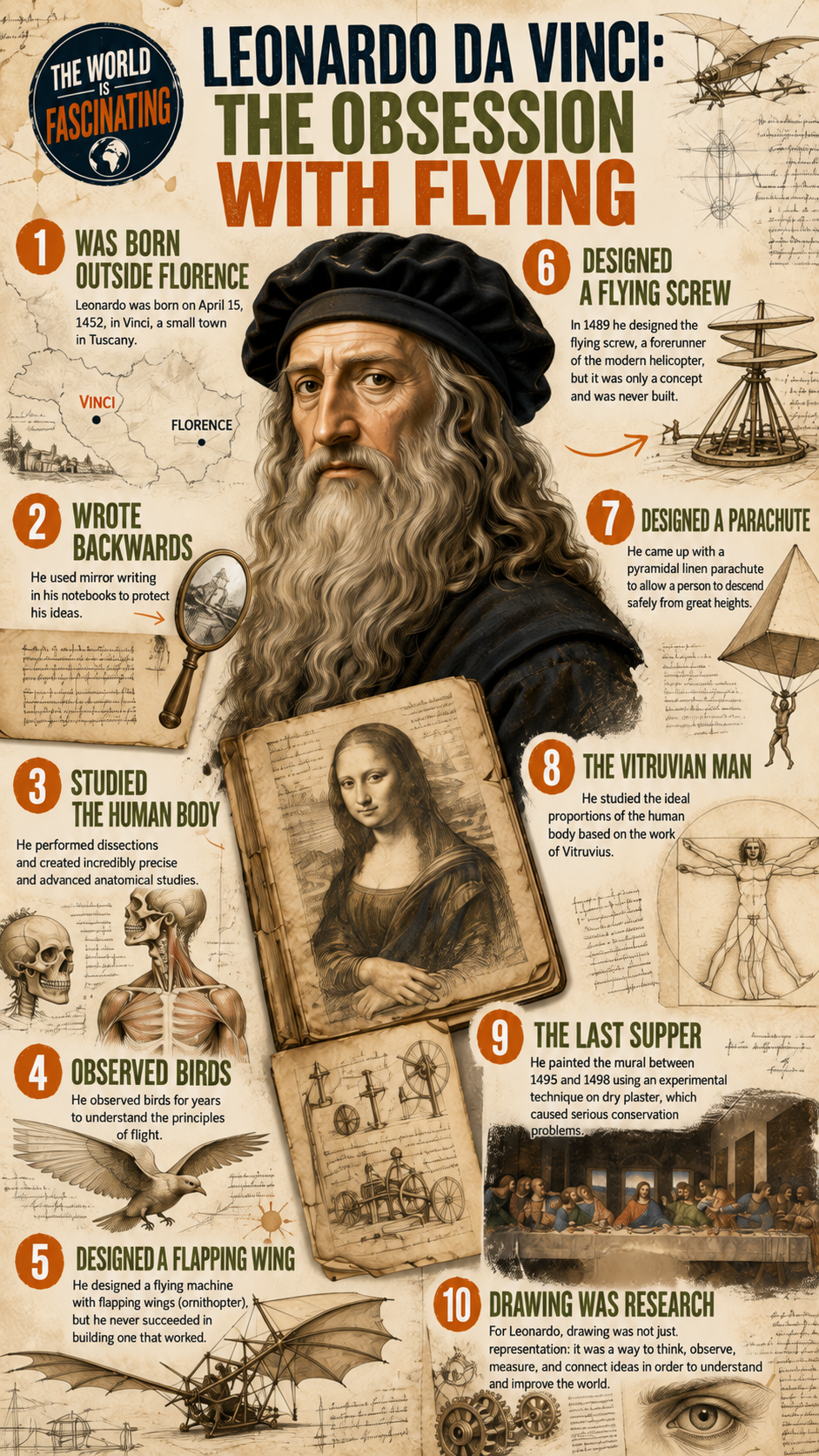
Leonardo used mirror writing, diagrams and repeated studies to protect and organize his ideas. His flying machines included flapping wings, a helical “aerial screw” and a pyramidal parachute. Each design reveals a mind trying to understand lift, balance, muscle power and air resistance with the knowledge available in the fifteenth century.
What the drawings got right
Leonardo understood that birds mattered because they solved a physical problem rather than a decorative one. He observed wings and air movement, and his parachute design anticipated a workable principle: a sufficiently large canopy can slow a descent. But human muscles could not provide the sustained power his ornithopters required.
The value of an impossible machine
Leonardo’s importance is not that he invented the airplane. He did not. His importance is that he treated drawing as a way to test ideas: observe, measure, compare and revise. His notebooks show a method that remains useful even when the technology needed to finish a project has not yet been invented.
Sources consulted for this article
- Victoria and Albert Museum — Leonardo collections and context.
- Leonardo da Vinci Museum of Science and Technology — models and notebooks.
- Encyclopaedia Britannica — biographical overview.