
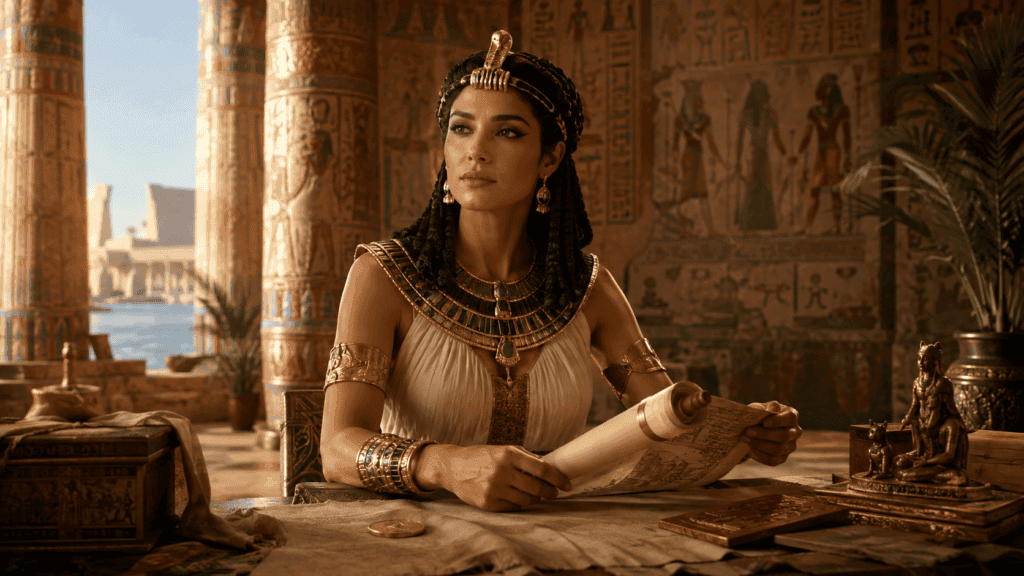
Cleopatra VII ruled Egypt from 51 to 30 B.C. and spent her reign navigating the pressure of Rome, family conflict and the fragile independence of the Ptolemaic kingdom. The legend often reduces her to beauty and seduction. The evidence points to a multilingual monarch who used ceremony, coins, alliances and public image as political tools.
A ruler in a dangerous century
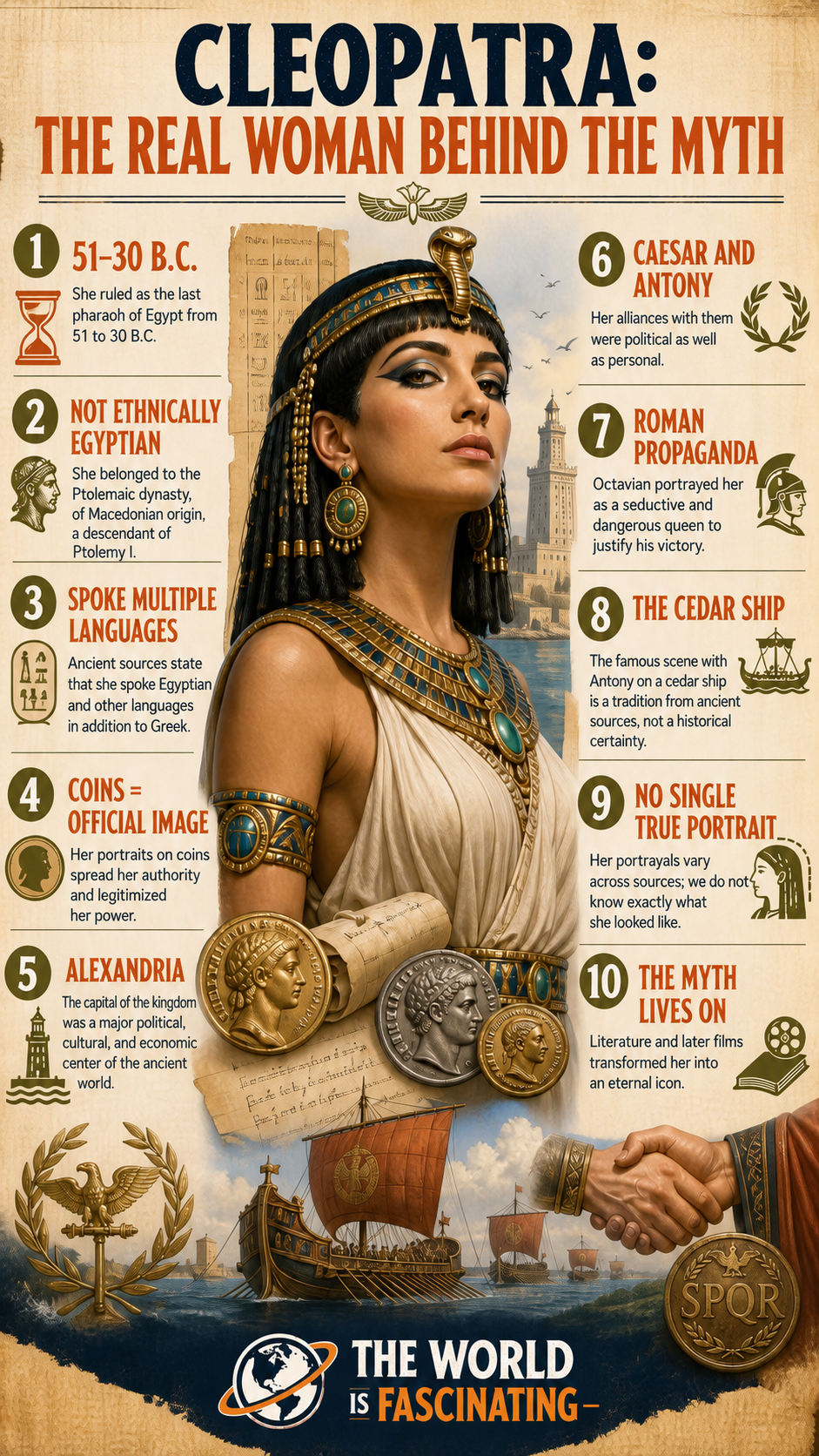
Cleopatra belonged to the Macedonian Greek Ptolemaic dynasty, not to an ethnic Egyptian royal line. Ancient accounts say she spoke Egyptian in addition to Greek and other languages. Her capital, Alexandria, was a major political, commercial and intellectual center.
Coins, alliances and propaganda
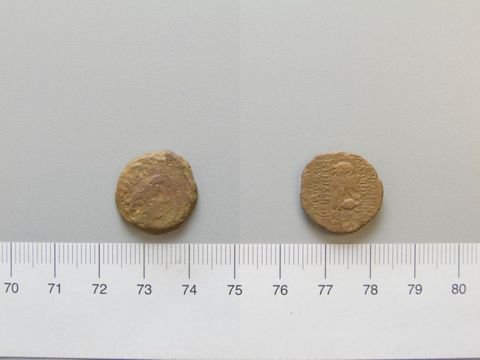
Her portrait on coins projected authority. Her alliances with Julius Caesar and Mark Antony were political as well as personal, linking Egypt’s survival to Roman power struggles. Octavian later portrayed her as a dangerous foreign seductress to help justify his victory over Antony.
The myth outlived the ruler
Some famous details—including the scene of Cleopatra arriving to Antony on a cedar ship—come from ancient literary traditions rather than certain historical evidence. No single true portrait tells us exactly what she looked like. What remains is a ruler whose image was contested in her own lifetime and remade by every generation after her death.
Sources consulted for this article
- The Metropolitan Museum of Art — coins and ancient-world context.
- The British Museum — Ptolemaic and Roman collections.
- Encyclopaedia Britannica — historical overview.