
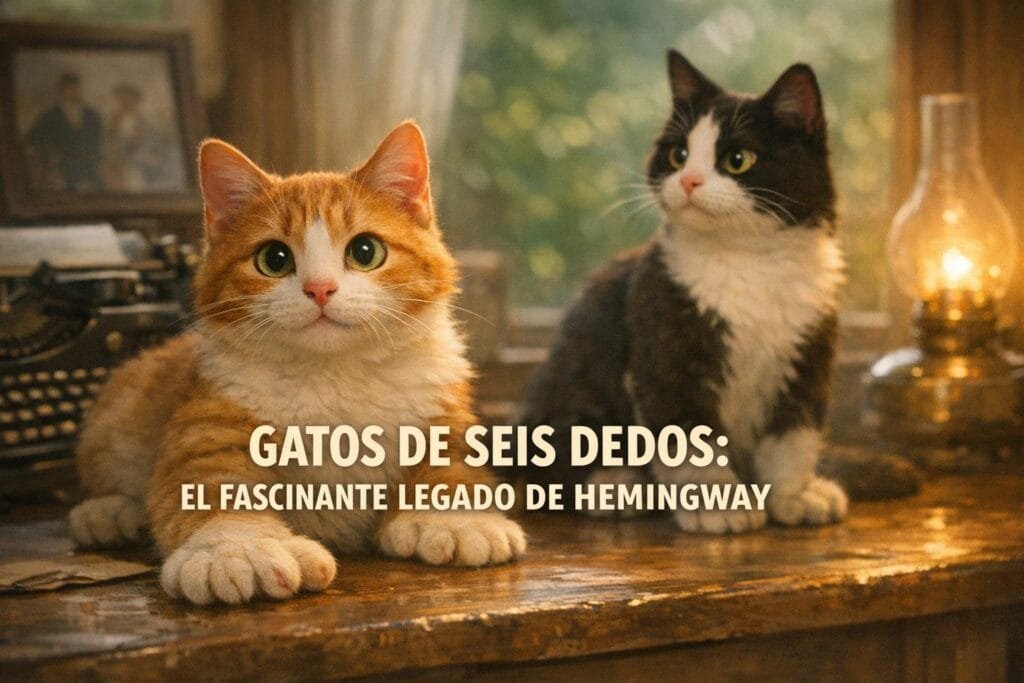
Let’s be honest: when you think of Ernest Hemingway, you probably do not picture a tender man cuddling a kitten. We imagine him hunting lions in Africa, hauling giant marlin from the Caribbean, or drinking rum with a defiant look. A tough guy, a bearded adventurer, a master of concise prose who seemed to exude testosterone from every pore. But what if I told you this icon of literary masculinity had an undeniable, almost heart-melting soft spot for some very particular creatures—and that they had an unusual anatomical quirk?
Forget the expeditions and wars. Today’s story begins somewhere far more domestic, though just as exotic: sunny Key West, Florida, in the early 1930s. This bohemian paradise became a refuge and, for a time, an inspiration to Papa Hemingway himself. Amid manuscripts, liquor bottles, and an atmosphere of camaraderie and revelry, the spark arrived that would ignite one of literature’s most endearing traditions.
For a quick orientation, here is a short video tour of the house museum and its most famous residents: the cats.
The cat who changed everything: Snow White
It all began with a gift. A ship’s captain named Stanley Dexter was a friend of Hemingway’s and knew how much he liked animals. On one visit, he gave the writer a small white cat who was special in more ways than one. They named her Snow White. Her distinction was not just her feline beauty: she had six toes on each front paw, and a few extras on her back paws, too. In cats, this is known as polydactyly.
Picture the scene: Hemingway, the man who faced bulls and waves, fascinated by a tiny genetic quirk. Sailors traditionally considered polydactyl cats lucky, especially because their extra “thumbs” helped them climb ship rigging. Perhaps Hemingway, always looking for good fortune or a touch of distinction, found the perfect pet in Snow White. What is certain is that she won a privileged place in his heart and home.
A home for feline extravagance
Polydactyly is a dominant genetic trait. That means when one parent has the mutation, there is a strong chance its kittens will inherit it. And so they did. Snow White, with her peculiar charm, became the matriarch of a dynasty. Her descendants populated the Key West house, inheriting the distinctive extra “thumbs” that gave them a comical, one-of-a-kind look.
To Hemingway, these cats were not just pets. They were family, characters in their own right. He named them after famous people, artists, or historical figures he admired—or gave them clever nicknames that reflected their personalities. He cared for them, fed them, and let them roam freely around his property, among his books, typewriters, and memories of a thousand battles. Hemingway is said to have found in them a quiet, honest companionship, far removed from the complexities of the human world he so often dissected in his writing.
It was a delightful contradiction: the writer who portrayed life’s brutality and the struggle to survive, surrounded by a court of “mitten-pawed” cats scampering about, indifferent to his fame. Perhaps with them Hemingway could let his guard down, shed the armor of the “tough guy,” and simply enjoy the company of his eccentric friends.
The legacy of the “Hemingway cats”
Ernest Hemingway’s life ended tragically and far too soon. But his love for these polydactyl cats outlasted him. When his Key West home became a museum after his death, one condition imposed by the family was that the cats be allowed to stay. And they have, decade after decade. Today, the Ernest Hemingway Home & Museum is famous not only for preserving the writer’s legacy, but also for being home to more than 50 direct descendants of Snow White.
These cats, affectionately known as the “Hemingway cats,” are treated like celebrities. They roam the gardens, sleep in the author’s original beds, and even have their own staff to care for them, feed them, and make sure they receive veterinary attention. Each has a distinctive name, continuing the tradition Hemingway began. Museum caretakers often point out that six-toed cats are so common in Key West that they have become a kind of local symbol.
The cats’ presence is a constant reminder of the writer’s most unexpected side: a man capable of deep tenderness and an enduring bond with the animal world. This living, furry legacy—with a few extra toes—invites us to look past the public image and discover the small, wonderful contradictions that make us human.
How many extra toes would you find if you dared to dig into the quirks of your own heroes? Maybe, as with Hemingway’s cats, the real magic is in the unexpected details.
If this story caught your interest…
If you enjoyed this unexpected side of a celebrated writer, you may also be fascinated by Patience Worth: Pearl Curran’s mystery of automatic writing. And while you’re here, take a look at the story of banned books and censorship.